What to remember
- Moisture clues should be investigated before coating.
- A moisture-mitigation primer is not automatically required on every slab.
- Water entry and vapor transmission are different problems.
- Testing and product limits belong in the written scope.
What this decision actually controls
Darkened concrete, mineral deposits, peeling paint, damp edges, condensation, and seasonal water entry can all point to different moisture conditions. A visual review starts the conversation but does not always finish it.
A vapor-mitigation primer may be specified when verified conditions and the selected coating family call for it. It cannot correct drainage, active leaks, foundation defects, or standing water by itself.
- Observed moisture patterns and seasonality
- Drainage, grading, doors, walls, and water paths
- Available test results and test limitations
- Moisture tolerance of the complete coating system
- Ventilation and protected cure conditions
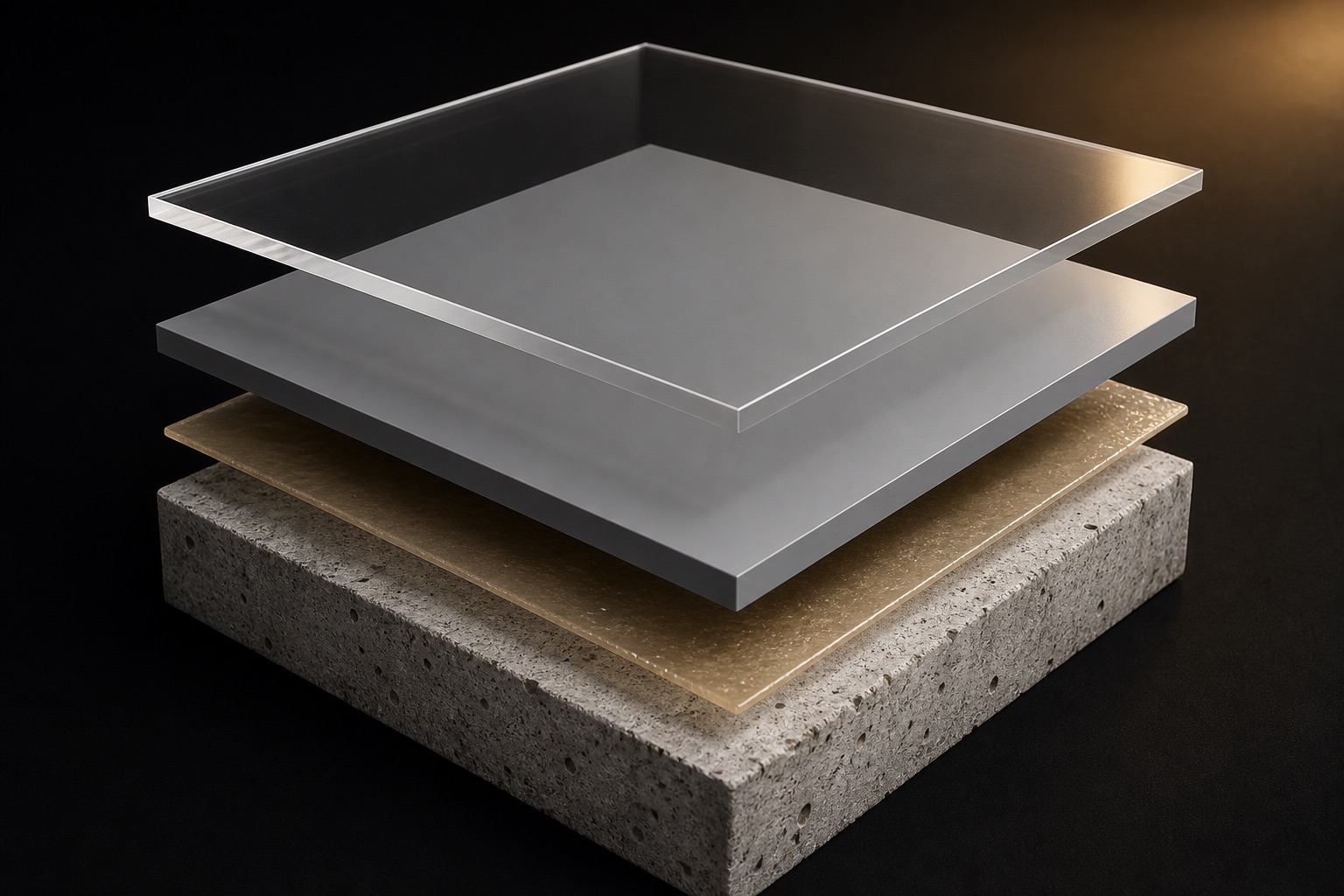
Plan the complete system
Separate the source question from the coating question. First address controllable bulk-water entry; then determine whether the slab and flooring system need additional vapor management.
The primer, base coat, broadcast or midcoat, and topcoat must be chemically and temporally compatible. Adding one premium layer does not rescue an incoherent build.
What the project review should confirm
The proposal should identify whether moisture evaluation is visual, measured, or performed by a specialist and should state the approved product limits without promising an impossible moisture-proof floor.
Conditions can change between assessment and installation, so the exposed slab should be reviewed again after preparation.
- Existing conditions and eligible preparation
- The selected system, finish, and performance direction
- Access, sequencing, protection, cure, or commissioning
- Care requirements and the limits of the approved scope
Questions homeowners ask
Quick answers.
Does every garage need a moisture-vapor barrier primer?+
No. The need depends on verified conditions, testing where appropriate, and the requirements of the selected system.
Can a coating stop water entering through a garage wall?+
No. Bulk-water entry, drainage, and building-envelope conditions require their own corrective plan.
What does MVB mean?+
In flooring conversations it commonly refers to a moisture-vapor-barrier or mitigation primer, but the exact product and performance limits must be documented.


Join the discussion.
Ask a garage-planning question or share what you learned. Comments are reviewed before publication.
No published comments yet. Start the conversation.