Up to about 600 sq ft
A small, generally sound asphalt driveway with straightforward cleaning, edge work, and access.
Asphalt protection · Greater Boston
Professional driveway sealcoating across Greater Boston, with condition assessment, surface preparation, eligible crack treatment, clean edge detailing, weather-aware application, and a protected cure.
Condition before coating
Sealcoating is a maintenance system for suitable asphalt. Choose the closest visible condition to understand the first question we would investigate on site.
Greater Boston planning prices
These installed planning ranges are for asphalt that is an appropriate sealcoat candidate. We measure the actual paved area and inspect cracks, contamination, drainage, edges, repairs, access, and cure conditions before providing a written price.
A small, generally sound asphalt driveway with straightforward cleaning, edge work, and access.
A common one- or two-car residential approach with normal preparation and eligible crack treatment.
A wider, longer, or multi-car driveway requiring more preparation, material, edge detailing, and traffic planning.
Long drives, circular layouts, parking areas, managed properties, commercial access, striping, or phased work.
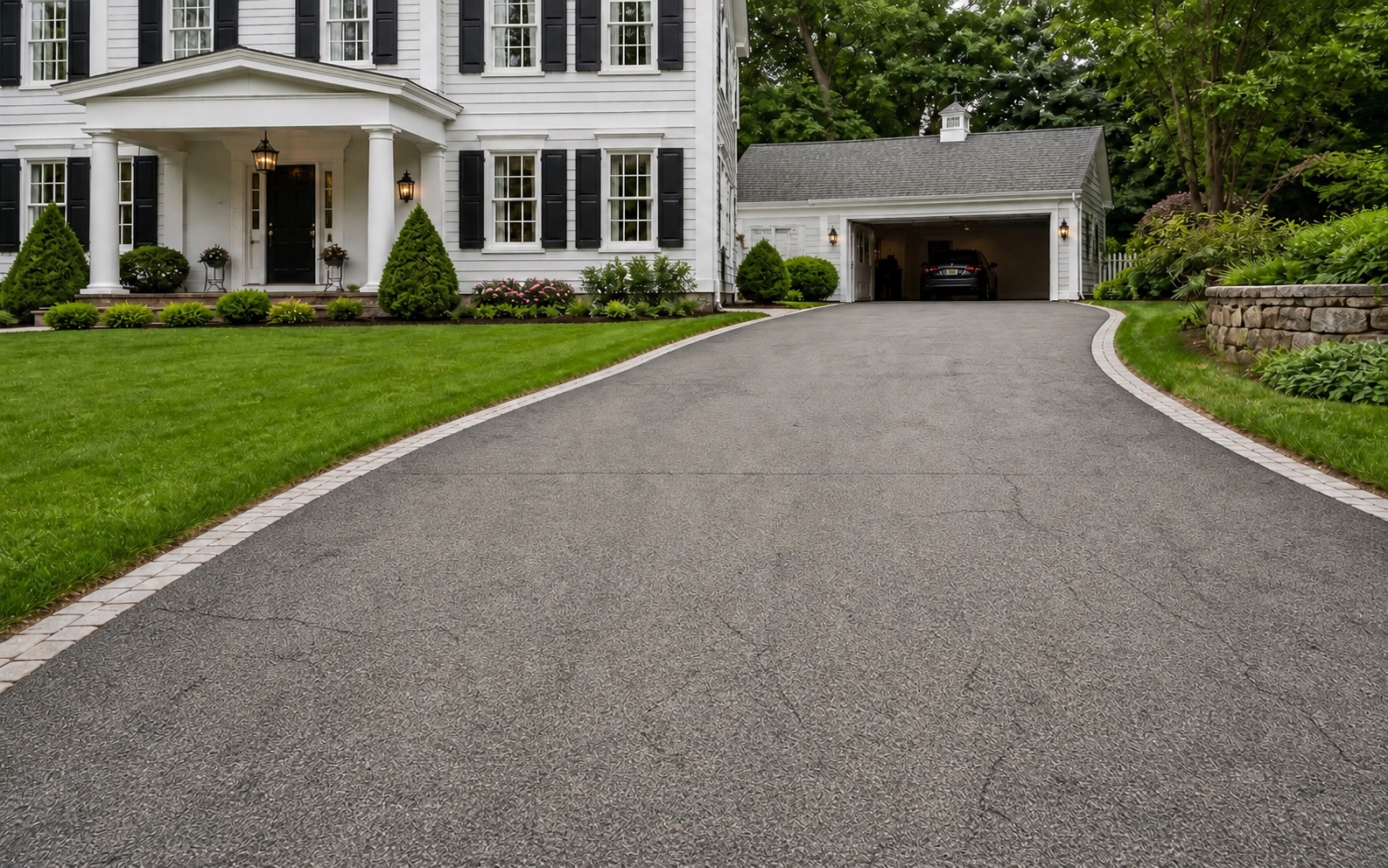
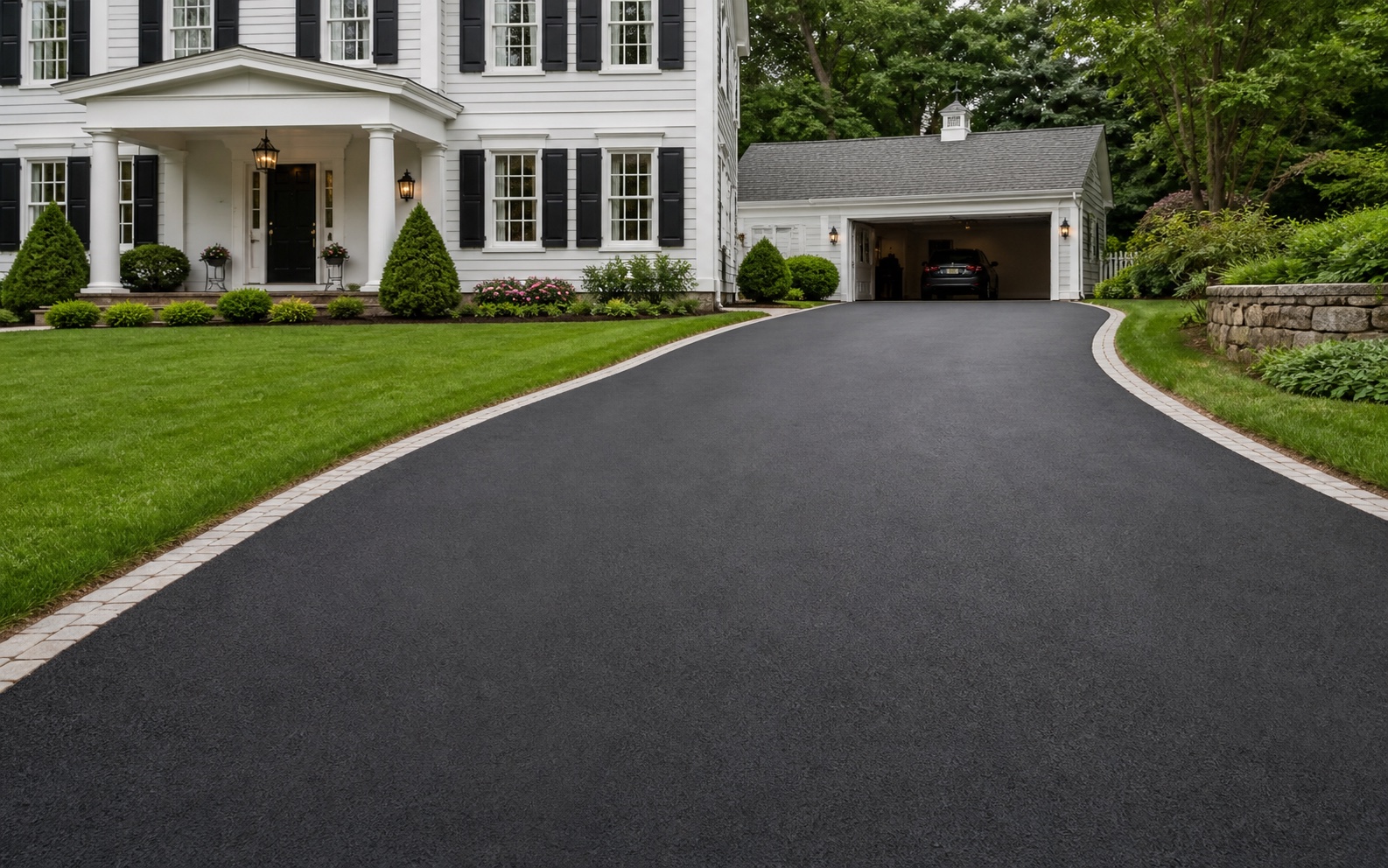
Same driveway · same viewpoint
Sealcoating renews the appearance of suitable asphalt and adds a maintenance layer. It does not hide structural failure, change the grade, or replace paving.
Use the right intervention
The best contractor recommendation is sometimes not sealcoating. We separate cosmetic maintenance, localized repair, and structural work so the finish is not asked to solve the wrong problem.
For sound asphalt showing oxidation, fading, and normal surface wear. The goal is a renewed finish and a protective maintenance layer—not structural repair.
For localized defects that need compatible crack treatment or repair before any finish coat is considered.
For widespread fatigue, base failure, settlement, severe edge loss, or drainage problems that a coating cannot correct.
A coordinated material system
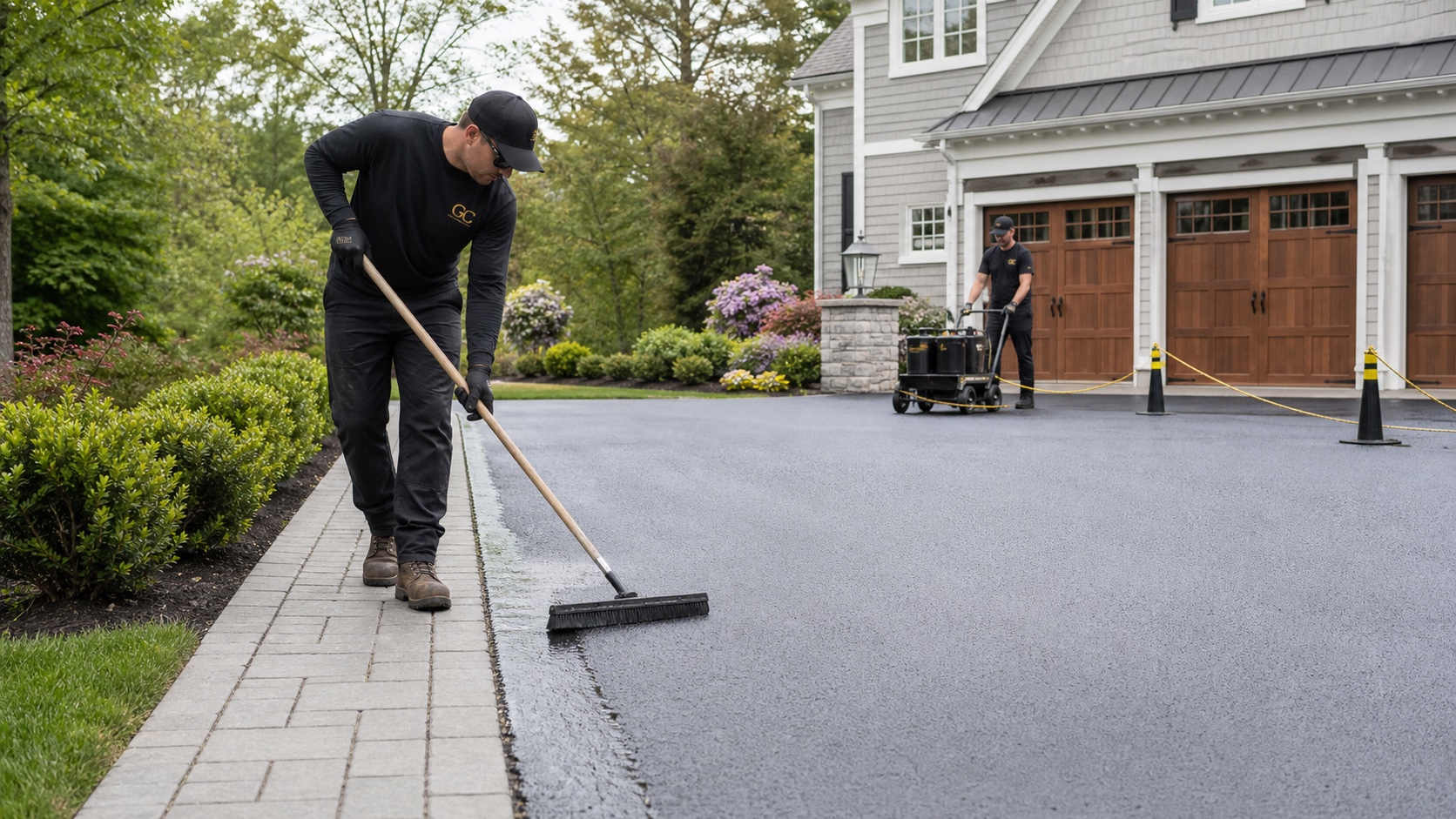
Retail categories distinguish driveway sealer, crack filler, resurfacer, and patch materials because they solve different conditions. We use the same discipline professionally: inspect first, match each material to its actual job, then quote one coordinated scope.
Mechanical cleaning, vegetation and debris removal, edge definition, spot treatment, and protection of adjacent materials.
Eligible cracks are cleaned and treated with a compatible material selected for crack type, dimensions, movement, and weather.
A project-appropriate asphalt maintenance coating is selected around existing pavement, expected use, temperature, cure, and finish goals.
Aggregate or sand content, application method, coat strategy, and final texture are confirmed for the selected professional system.
Complete application sequence
A clean finish depends on inspection, compatible repairs, disciplined edge work, consistent application, and a protected cure window. Skipping one stage weakens everything that follows.
Review age, crack pattern, repairs, contamination, drainage, shade, edges, and access.
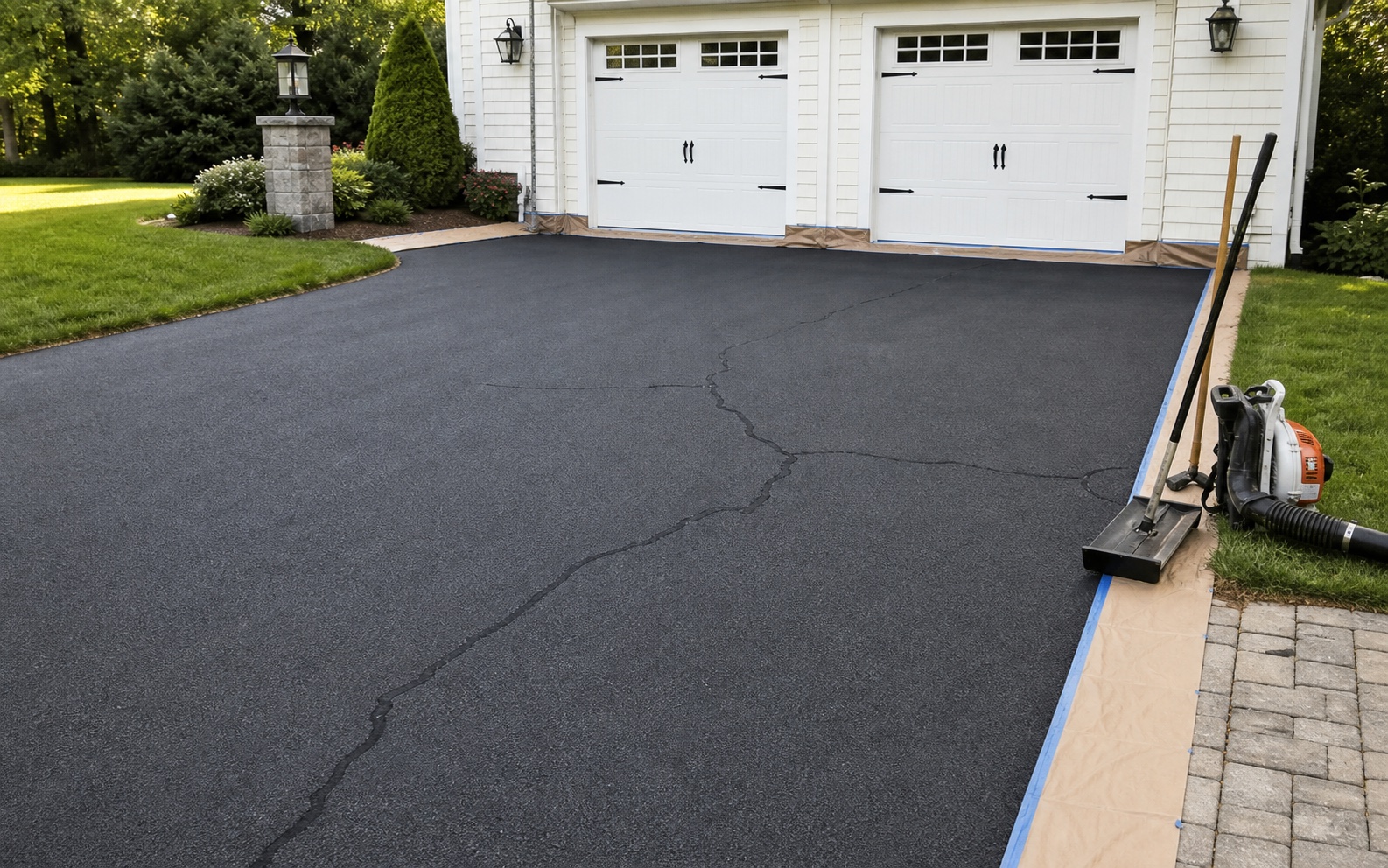
Clean the pavement, remove loose material and vegetation, and complete approved crack treatment.
Protect adjoining materials, cut clean edges, and place the approved coating consistently.
Secure the area, monitor conditions, confirm reopening time, and hand off care guidance.
Residential + managed property
Driveway geometry changes the edge strategy, access plan, application sequence, and reopening conversation.
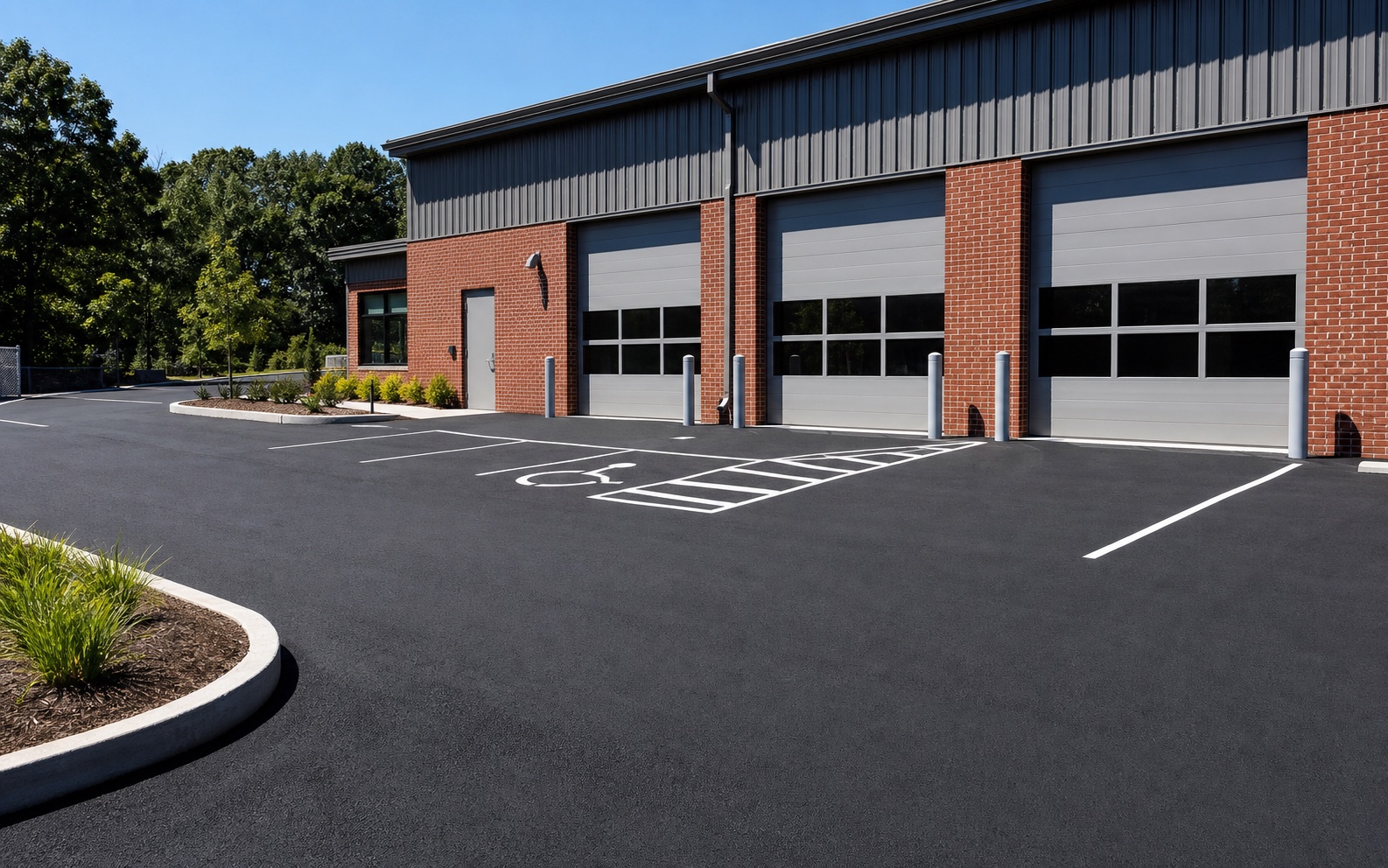
New England application window
Sealcoat cure is affected by product chemistry, pavement temperature, air temperature, shade, humidity, wind, coat thickness, and moisture. We confirm the real reopening time for the installed system instead of promising one universal number.
Discuss your driveway · 617 712 5423 ↗The pavement—not only the air—must remain inside the approved application and cure range.
Rain, irrigation, dew, and runoff can interrupt cure; the forecast and site exposure are checked before mobilization.
Shaded areas and humid conditions can cure differently from open, sunlit pavement.
Foot traffic and vehicle reopening are confirmed from the actual product, coat, temperature, and site conditions.
Driveway project planner
Share the condition and use of the driveway before the visit. This creates a focused starting brief; it is not a remote diagnosis, coverage calculation, or final estimate.
Sealcoating is a protective surface-maintenance treatment for suitable asphalt. Repaving or structural repair replaces or rebuilds failed pavement when cracking, settlement, potholes, drainage, or base conditions exceed what a coating can address.
No. Eligible cracks may receive a separate compatible treatment before coating, while potholes and failed areas require repair. Sealcoat should never be presented as structural correction.
We review pavement age, oxidation, crack pattern, prior coatings and repairs, drainage, settlement, edge loss, contamination, shade, expected traffic, and the available weather window before recommending work.
The reopening time depends on the approved product, coat strategy, surface and air temperature, humidity, shade, moisture, and site conditions. We communicate a project-specific time at handoff.
Possibly, but oil and chemical contamination can interfere with cleaning, adhesion, cure, and appearance. The affected areas require inspection, preparation, and realistic expectations before approval.
No coating can correct drainage or base failure. A suitable sealcoat can support surface maintenance, while grade, standing water, cracks, and structural conditions must be addressed separately.
The appropriate window is determined by the product requirements and actual site conditions, including pavement temperature, overnight temperatures, rain risk, humidity, shade, and curing time—not the calendar alone.
There is no universal interval. Pavement condition, traffic, exposure, snow operations, drainage, prior products, and the installed system all affect the next review date.
Driveway sealcoating · Greater Boston
Send full-driveway photos, close-ups of cracks or failed areas, and approximate dimensions. We’ll review suitability before recommending sealcoating.