Trim or feature scope
Garage-opening trim, an accent area, or a contained finishing scope with straightforward preparation and access.
Interior finishing · Greater Boston
Professional garage painting and trim finishing across Greater Boston, with substrate-specific preparation, coordinated wall and ceiling finishes, crisp interior details, and weather-aware exterior garage trim.
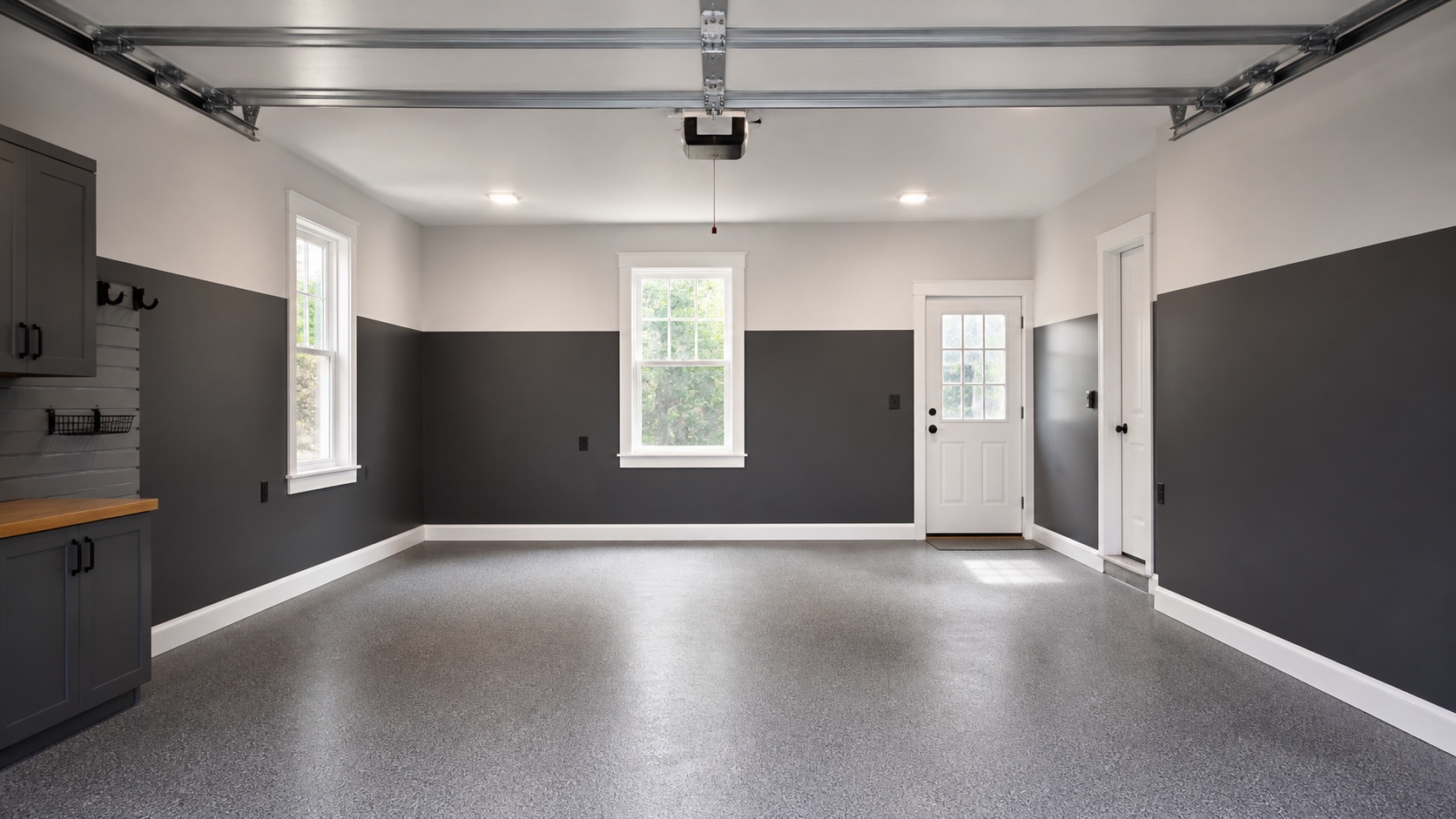
The envelope completes the garage
Painting is the final layer people see and one of the first layers that affects light, maintenance, and atmosphere. We coordinate walls, ceiling, trim, doors, flooring, storage, and fixtures as one composition.
Select the finish scope
Choose the closest need. The preparation, product family, protection, weather requirements, and installation sequence change with the surface and its exposure.
Greater Boston planning prices
These are early installed planning ranges—not fixed quotes. We verify the garage size, wall and ceiling condition, preparation, protection, colors, trim, access, and sequence before issuing the final written proposal.
Garage-opening trim, an accent area, or a contained finishing scope with straightforward preparation and access.
A typical one-car interior with generally sound surfaces, protection, preparation, and a coordinated coating system.
Walls, ceiling, and interior trim in a typical two-car garage, with normal patching and finish preparation.
Large garages, unfinished or damaged surfaces, extensive repair, masonry, two-tone designs, dark ceilings, or exterior trim.
Interactive garage color studio
Choose a wall layout, select a coordinated palette, then fine-tune the surface you want to change. The room preview and project brief stay synchronized.
Choose a color direction
A lighter upper wall and a durable darker contact zone below. A light upper wall and ceiling preserve brightness while a darker lower wall grounds the room and conceals normal contact-zone wear.
Best for · Daily-use garages and complete transformationsPreviewing two-tone walls · Performance contrast · editing lower wall
The work behind the finish
A premium finish is not just a new color. It is the protection around every fixed element, the corrected substrate beneath the coating, and the disciplined line where one material meets the next.
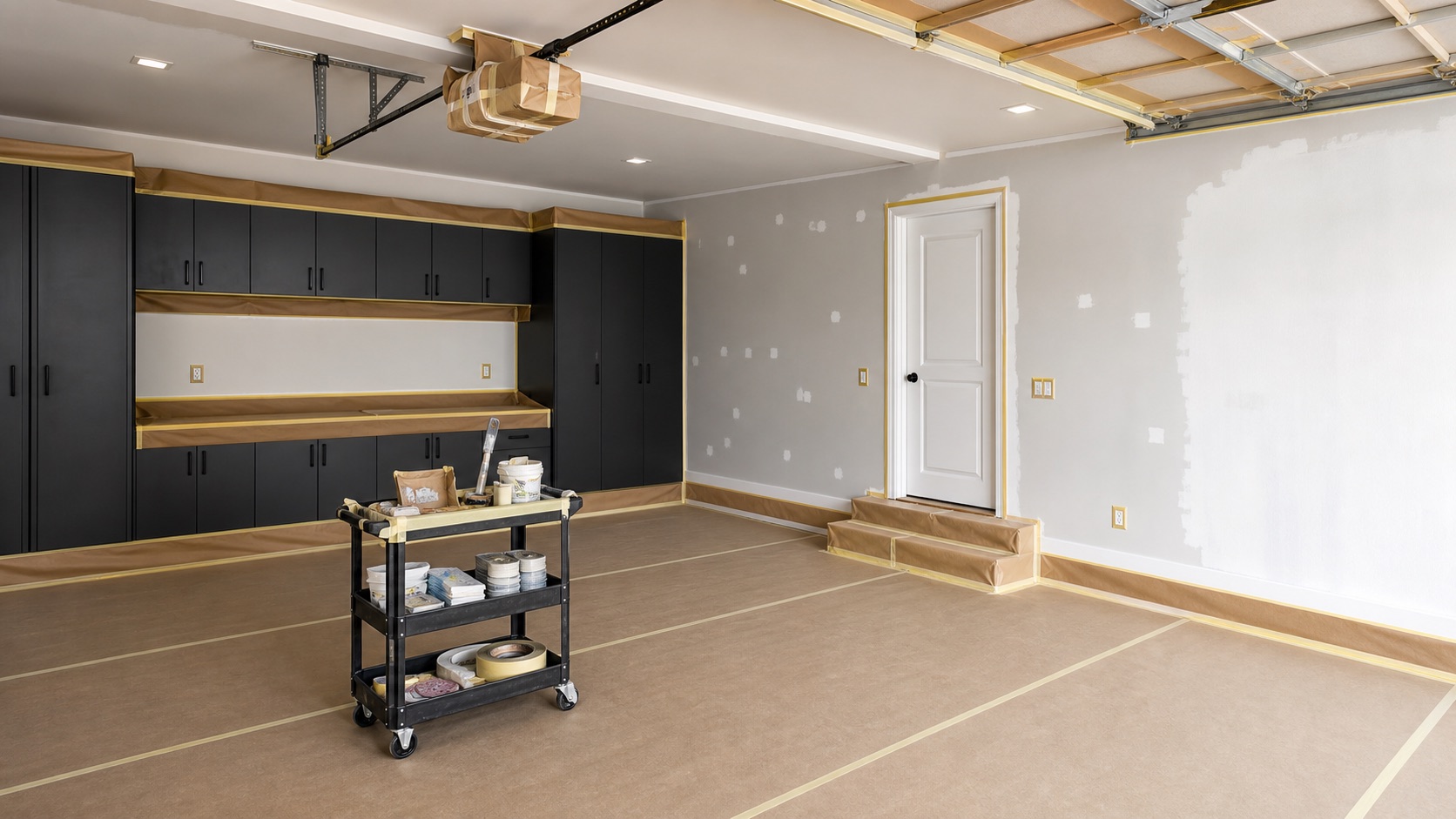
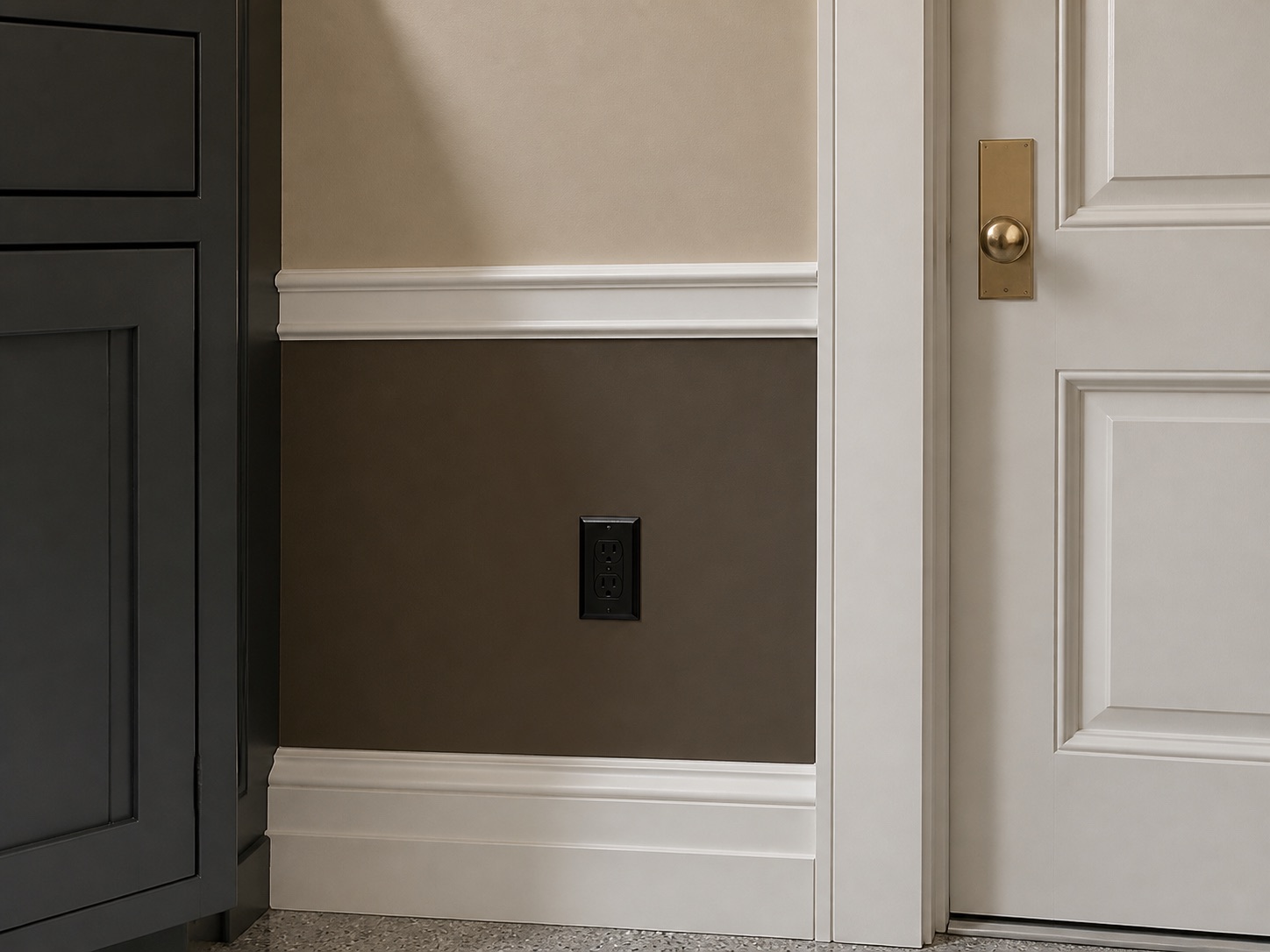
Flooring, storage, tracks, controls, fixtures, and adjacent finishes.
Cleaning, correction, sanding, caulking, adhesion, and primer.
Disciplined transitions at ceilings, trim, doors, outlets, and bands.
Coverage, edges, touch-ups, protection removal, cure, and handoff.
Preparation follows the substrate
Paint cannot correct active moisture, unstable material, serious movement, or incompatible existing layers. We identify the condition first, then define realistic preparation and finish expectations.
Review joint quality, dents, torn paper, stains, dust, and existing sheen before patching, sanding, priming, and coating.
Joint compound, paper, and repaired areas absorb differently; a suitable primer and consistent finish build help equalize appearance.
Moisture, efflorescence, cracks, alkalinity, prior coatings, and surface profile must be evaluated before any finish is selected.
Open joints, failed caulk, exposed fibers, weathering, knots, fasteners, and existing coatings determine repair and primer requirements.
Rust, factory coating, galvanizing, contaminants, and moving interfaces require product-specific preparation and careful masking.
Adhesion, gloss, chalking, stains, incompatible layers, and localized failure are assessed before recoating.
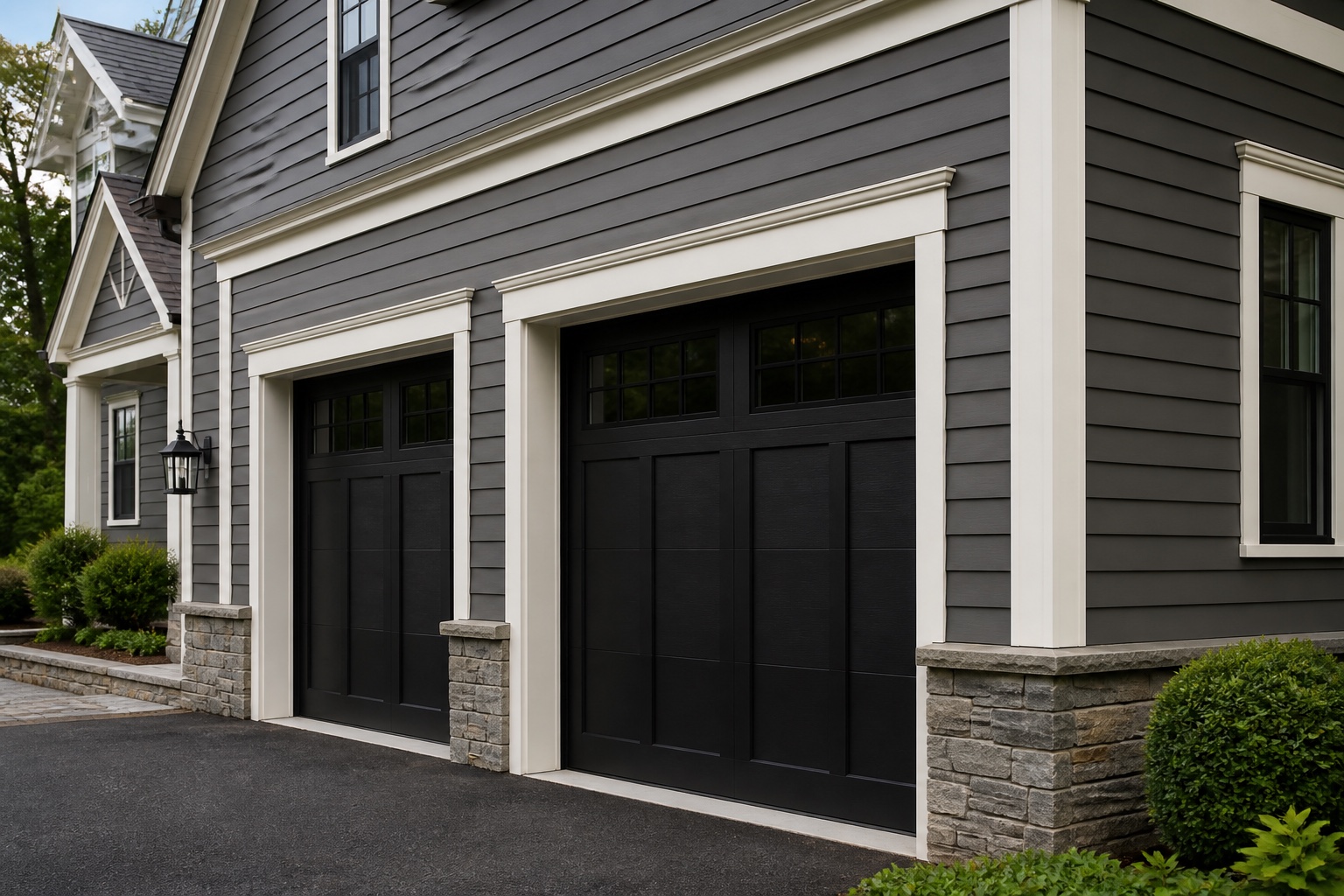
Frame the garage from the outside
Garage-door surrounds face sun, rain, snow, movement, and moisture. We coordinate the substrate, joints, door color, siding, and exterior finish as one durable opening.
Wood, PVC, composite, and metal each receive the correct preparation.
Open joints, failed caulk, ledges, and drainage details are resolved first.
Trim connects the garage doors with siding, windows, fascia, and masonry.
Temperature, rain, dew, wind, drying, and cure requirements guide scheduling.
Finish selection by role
Walls, ceilings, trim, and exterior details should coordinate visually without being treated as identical surfaces. Each finish is selected around its own wear, cleaning, reflectance, exposure, and substrate.
Finish selection balances cleanability, surface imperfections, reflected light, and the visual standard expected for the room.
Color and sheen are coordinated with lighting, opener rails, tracks, ceiling height, and the desired architectural effect.
A harder, compatible trim finish supports cleaning and creates deliberate edges around doors, windows, and transitions.
Sun, moisture, temperature cycling, joints, substrate movement, and surrounding materials guide the exterior coating system.
Complete finishing sequence
The result depends as much on project sequencing and protection as it does on application. We plan the coating work around floors, storage, lighting, doors, dust-producing work, access, and cure.
Review substrates, moisture clues, stains, repairs, existing coatings, adhesion, joints, trim, hardware, access, and related project work.
Confirm color direction, sheen, compatible preparation, primer, finish system, sample strategy, sequencing, exclusions, and cure requirements.
Mask floors, doors, tracks, openers, panels, cabinets, fixtures, outlets, windows, vehicles, exterior surfaces, and adjacent finishes.
Clean, patch, fill, sand, scrape, caulk, degloss, spot-prime, or otherwise prepare only as appropriate to the approved substrate and scope.
Apply the specified coating consistently with disciplined cut lines, coverage, dry time, recoat timing, ventilation, and environmental control.
Remove protection carefully, review edges and coverage, complete approved touch-ups, document finishes, and explain cure and cleaning guidance.
Painting + trim planner
Choose the closest starting conditions. Final recommendations depend on an on-site surface assessment, access, moisture and coating conditions, measurements, selected products, weather, sequencing, and finish samples.
Yes, after reviewing joint quality, exposed paper, repairs, dust, stains, and the required primer. Drywall paper and joint compound can absorb differently, so preparation and primer are important to a consistent finish.
Yes. Ceiling color and sheen are coordinated with ceiling height, light output, opener rails, tracks, fixtures, access panels, and whether the goal is brighter reflectance or a darker architectural effect.
Possibly, after moisture, efflorescence, cracks, surface profile, alkalinity, existing coatings, and water-entry conditions are evaluated. Active moisture and structural problems must be addressed before cosmetic coating.
Yes. The substrate, existing coating, joints, caulk, moisture exposure, sun, temperature, siding, masonry, and door finish determine preparation and the compatible exterior coating system.
Garage door panels are a separate service because their material, joints, seals, hardware, movement, and coating requirements differ from stationary wall and trim surfaces. The door and surrounding trim can still be planned as one exterior palette.
Often, but the strongest sequence depends on repairs, dust-producing work, anchoring, floor preparation, access, cure, and final touch-up needs. We coordinate painting with the complete garage schedule.
There is no universal sheen. Surface condition, cleaning expectations, reflected light, glare, imperfections, touch-up behavior, and whether the surface is a wall, ceiling, trim, masonry, or exterior detail all matter.
Yes, when ceiling reflectance, fixture output, distribution, trim contrast, floor color, and work zones are planned together. A dark room without an adequate light plan can reduce visibility.
Dry-to-touch, recoat time, and full cure are different. We provide project-specific guidance based on the approved product, film build, temperature, humidity, ventilation, substrate, and exposure.
We plan masking and protection around flooring, door panels, tracks, openers, springs, seals, cabinets, fixtures, outlets, windows, vehicles, and adjacent exterior materials before preparation and coating begin.
Garage painting and trim · Greater Boston
Send room photos, approximate dimensions, and the look you want. We’ll review walls, ceiling, trim, preparation, and color as one finish plan.