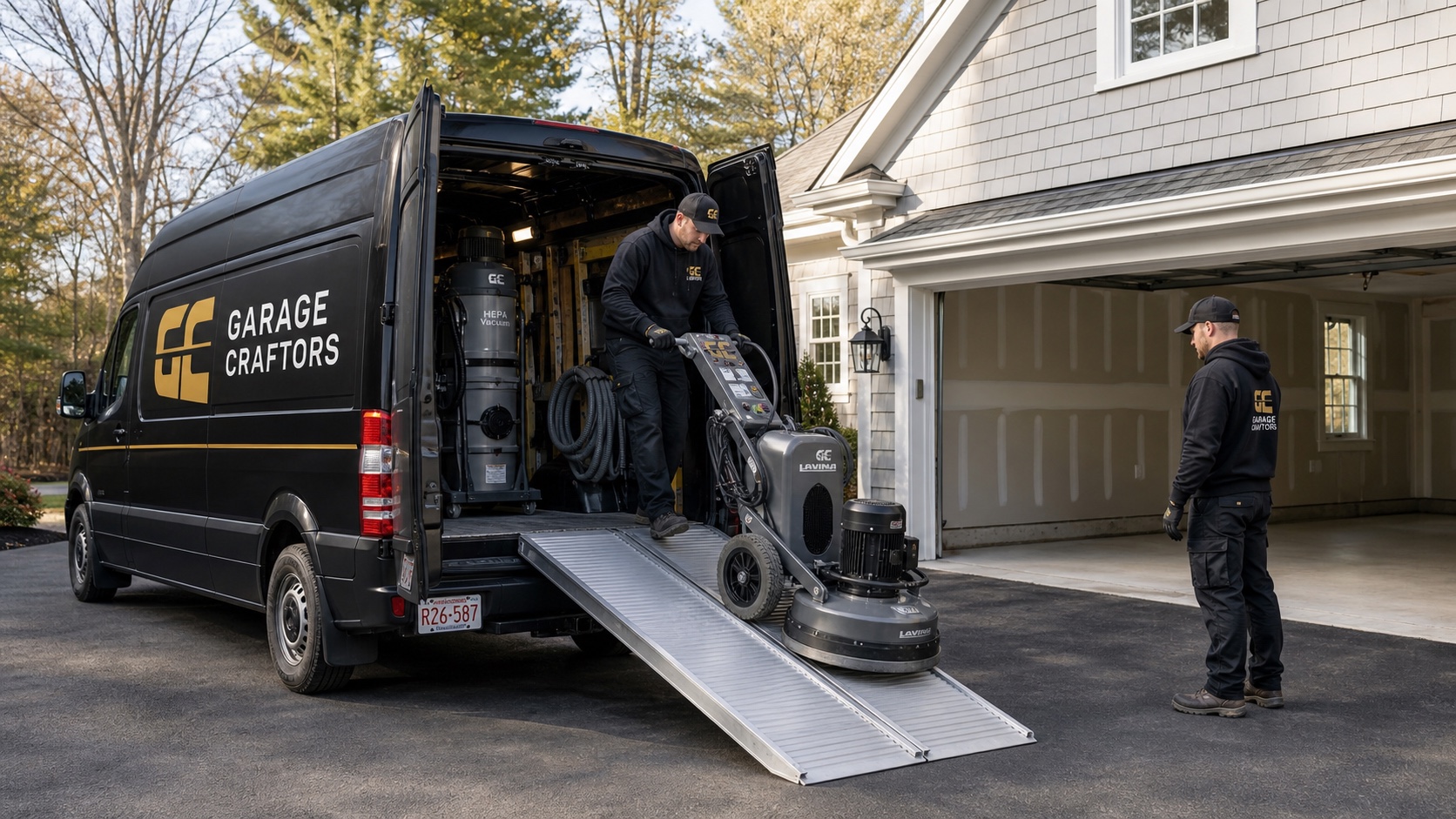
Professional preparation, condition-led repairs, a compatible coating system, and a finish selected around your vehicles, winter exposure, cleaning routine, and style.
Mechanical preparationNot acid etching or a paint-over shortcut
Written system scopePreparation, repairs, layers, finish, and timing
Garage-specific planningVehicles, road salt, moisture clues, and cleaning
Greater Boston serviceLocal assessment and accountable installation
Our recommended everyday garage direction
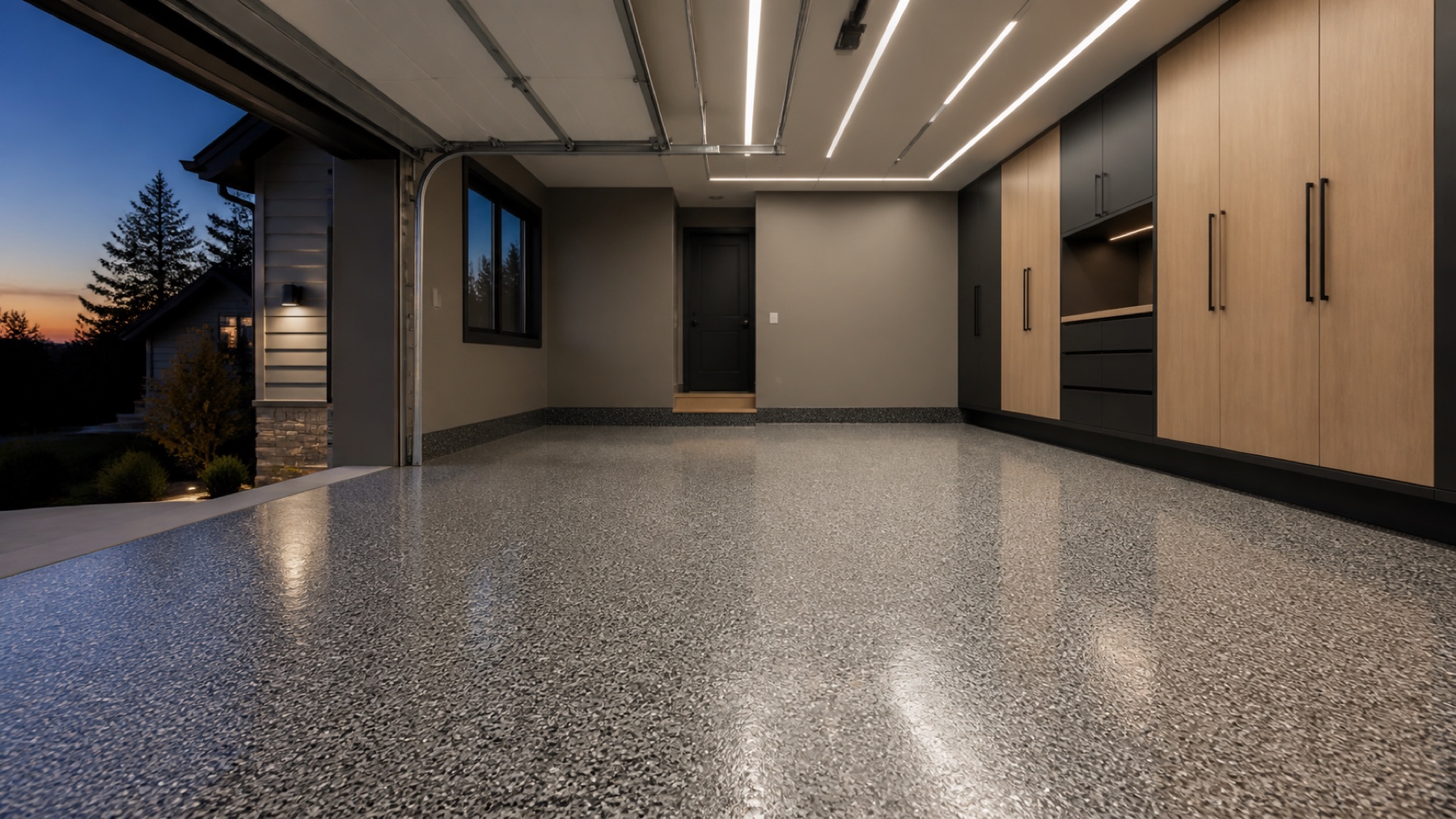
The Garage Craftors full-flake floor standard.
Most daily-driver garages do not need a confusing menu of “good, better, best” chemistry. They need a verified slab, disciplined preparation, full decorative coverage, a compatible protective topcoat, and written expectations.
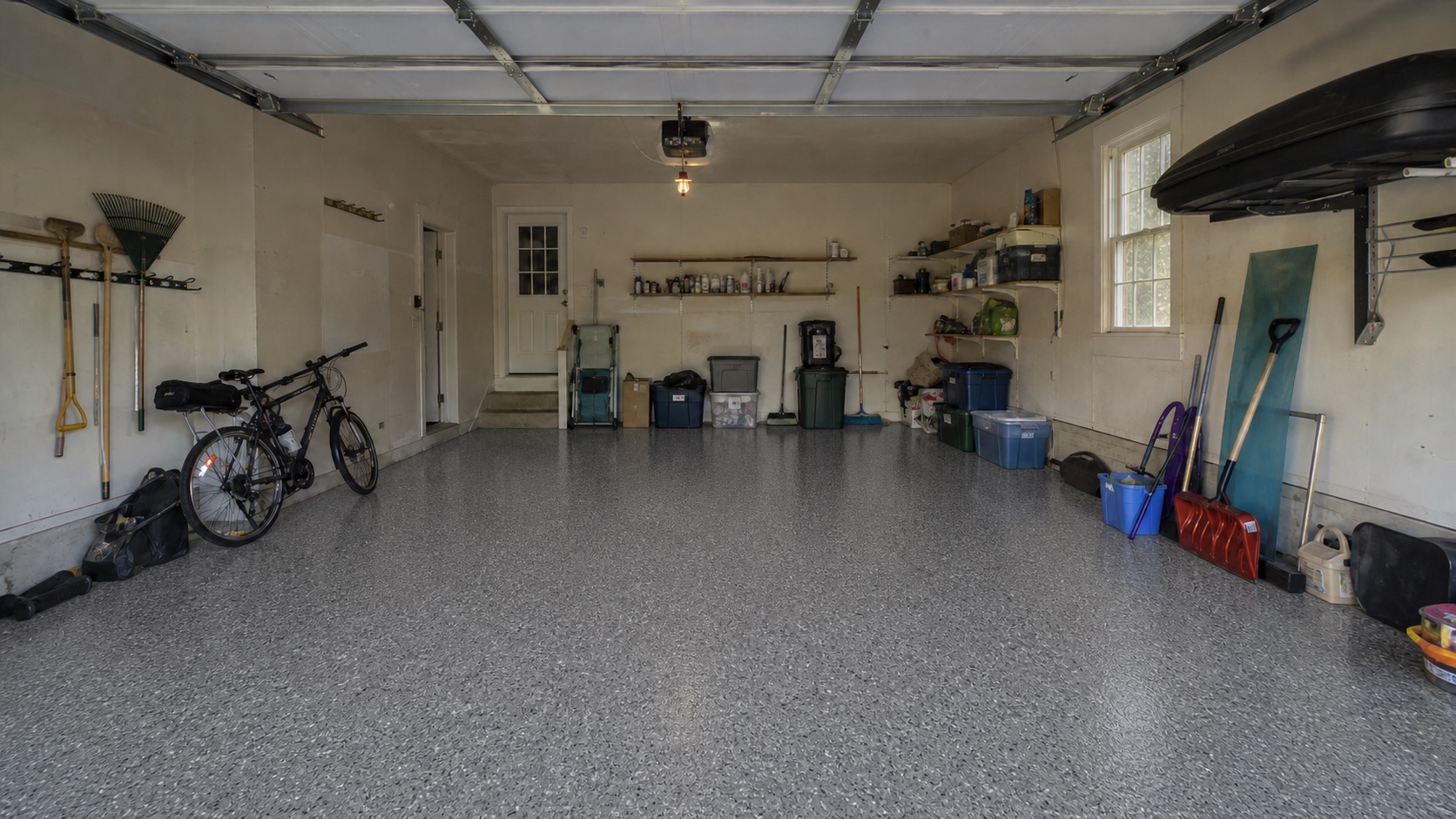
Installed character · full-broadcast decorative flake
Existing coatings, contamination, repairs, movement, drainage, and vapor clues are documented.
02
Mechanical preparation
Professional grinding and controlled dust collection create the specified concrete profile.
03
Eligible concrete repairs
Cracks, spalls, weak edges, joints, and transitions are addressed according to condition.
04
Compatible base system
Primer and body-coat decisions follow the actual slab, exposure, and installation window.
05
Full decorative broadcast
Flake is broadcast for complete visual coverage, then recovered and prepared for sealing.
06
Protective topcoat + handoff
Texture, cure, cleaning, and vehicle-return guidance are written for the selected system.
Our chemistry position
“Epoxy” and “polyaspartic” describe material families—not automatic quality levels. We use each product only where its tested properties and manufacturer requirements fit the project.
Three purposeful system builds
Same preparation discipline. Different performance paths.
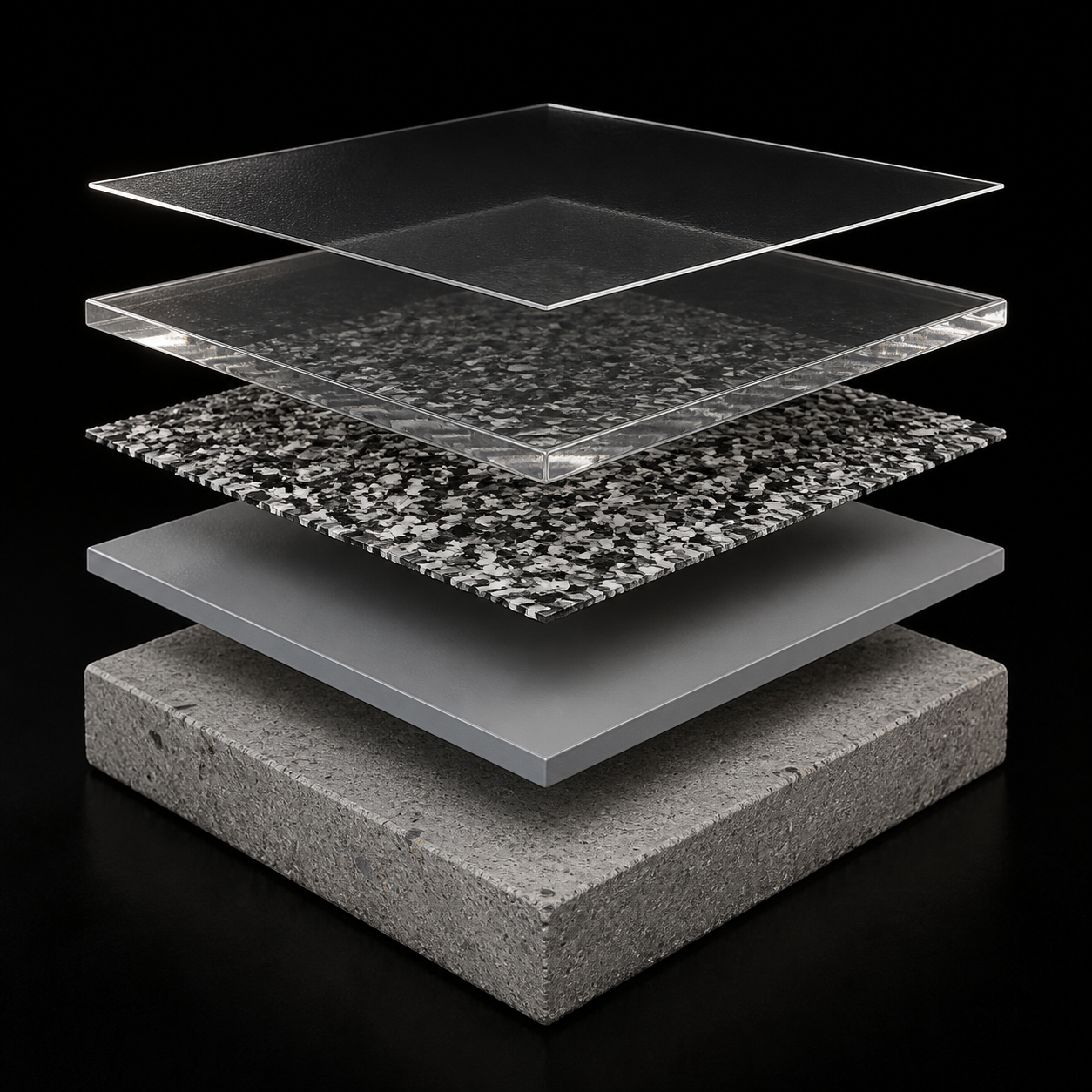
The written proposal identifies the actual products and layer roles. These diagrams are planning assemblies—not a promise that every slab needs every optional layer.
Swipe to compare all three systems →
01 / Everyday protection
Five-stage full-flake
Prepared concrete slab
Pigmented epoxy base
Full flake broadcast
Clear intermediate mid-coat
Protective wear topcoat
Best for daily-driver garages seeking full visual coverage, added build over the flake, practical cleaning, and a defined wear surface.
02 / Condition-led
Moisture-managed flake
Tested + prepared concrete
Qualified moisture-control primer
Compatible epoxy body coat
Decorative flake broadcast
Protective textured topcoat
Considered only after moisture testing and source review. Active water and unresolved drainage are corrected before coating.
03 / Workshop direction
High-build solid system
Prepared + repaired concrete
Condition-specific primer
High-build pigmented epoxy
Optional clear build coat
Compatible performance topcoat
A restrained, easier-to-zone finish for eligible workshops, storage garages, and customers who prefer solid architectural color.
Three clear appearance paths
Choose the look. We specify the build.
You do not need to become a coating expert. Start with the appearance you want; we verify the slab and define the compatible preparation, layers, texture, and cure schedule.
01 / Most popular
Decorative flake
The everyday residential choice: forgiving visual texture, broad color selection, and a clean finished-garage appearance.
Realistic starting points. Final pricing follows the slab.
These are early planning ranges, not site-specific quotes. Size, removal, repairs, moisture findings, edges, stairs, access, finish, and return-to-service requirements determine the proposal.
01 / Focused$2.8K–$4.5K
Small or one-car
Eligible slab, straightforward access, and a practical solid or flake direction.
02 / Most common$4.5K–$7.5K
Typical two-car
Mechanical preparation, eligible repairs, and a coordinated decorative floor.
03 / Condition-led$7K–$12K
Moisture or added layers
Testing, mitigation decisions, coating removal, repairs, or a more robust assembly.
04 / Signature$9K–$16K+
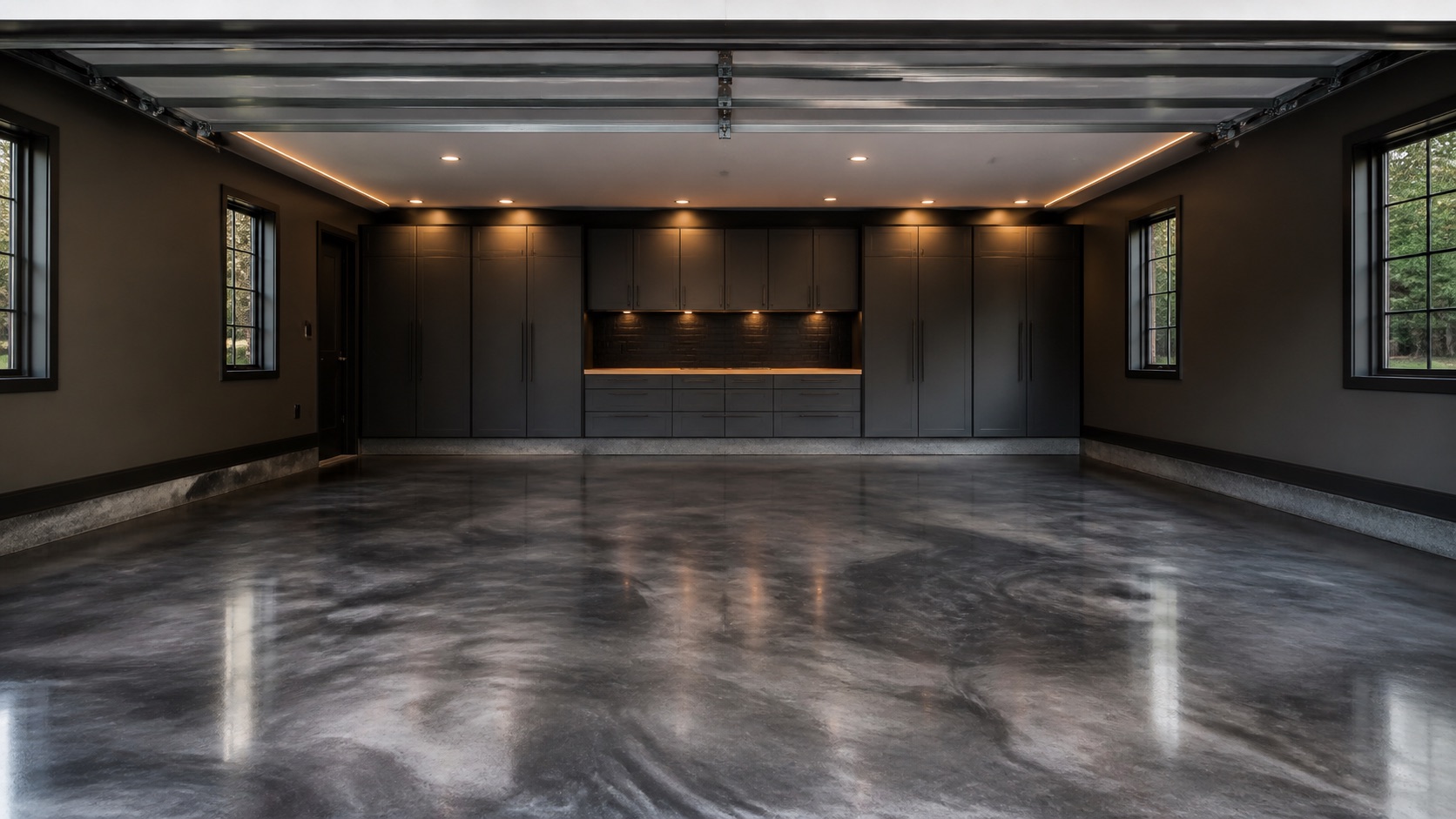
Metallic or specialty
Hand-worked appearance, specialty detailing, and project-specific protection.
Our value is not just the color on top. It is the disciplined work beneath it: documenting the slab, removing incompatible material, mechanically preparing the surface, completing eligible repairs, and building compatible layers.
01Inspect + document
02Mechanically prepare
03Repair eligible defects
04Install + verify cure
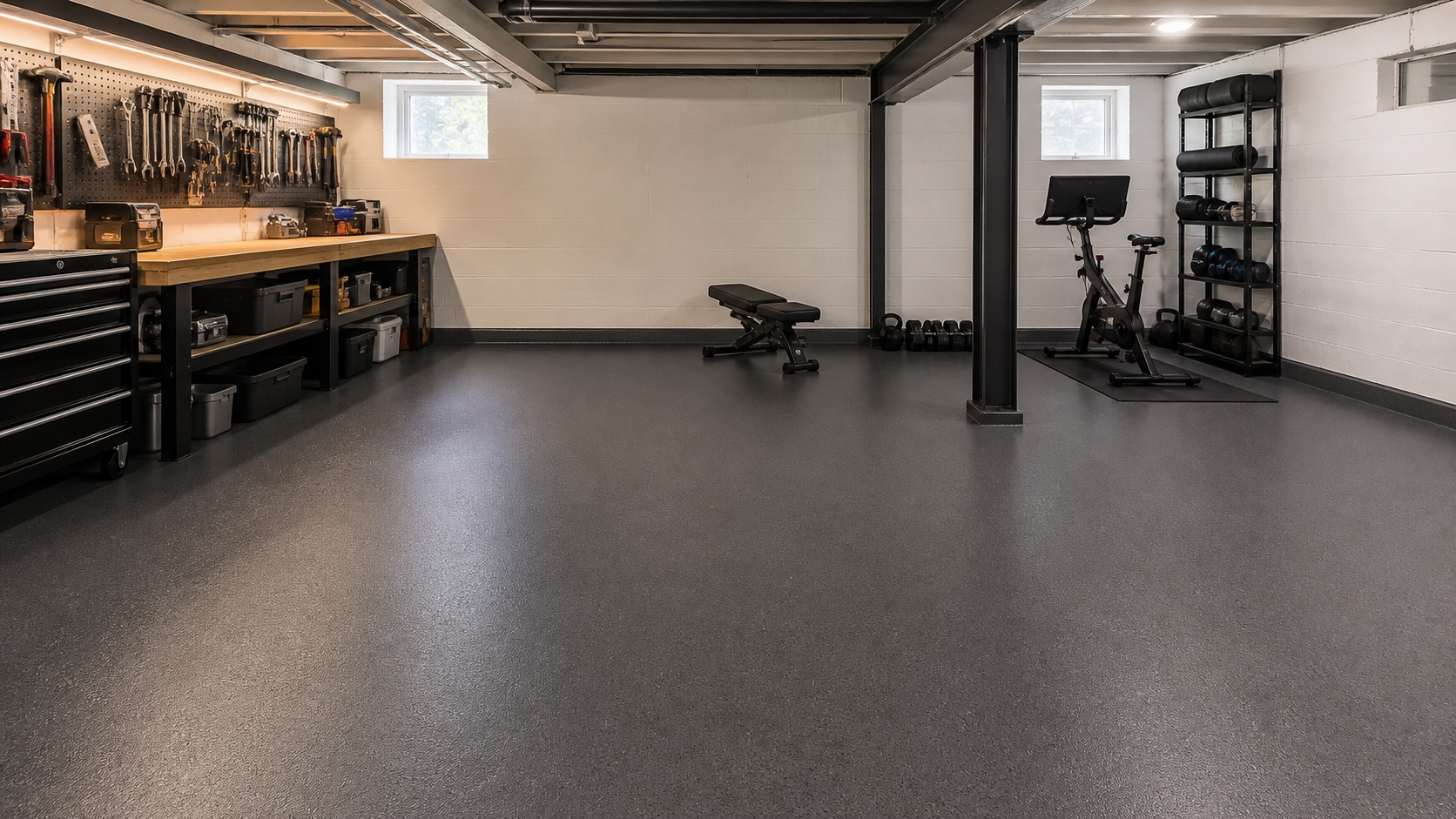
Real garage floor views
See the finish. In a complete garage.
Watch ten garage-floor directions rotate automatically, or choose any example to keep it on screen and inspect the finish.
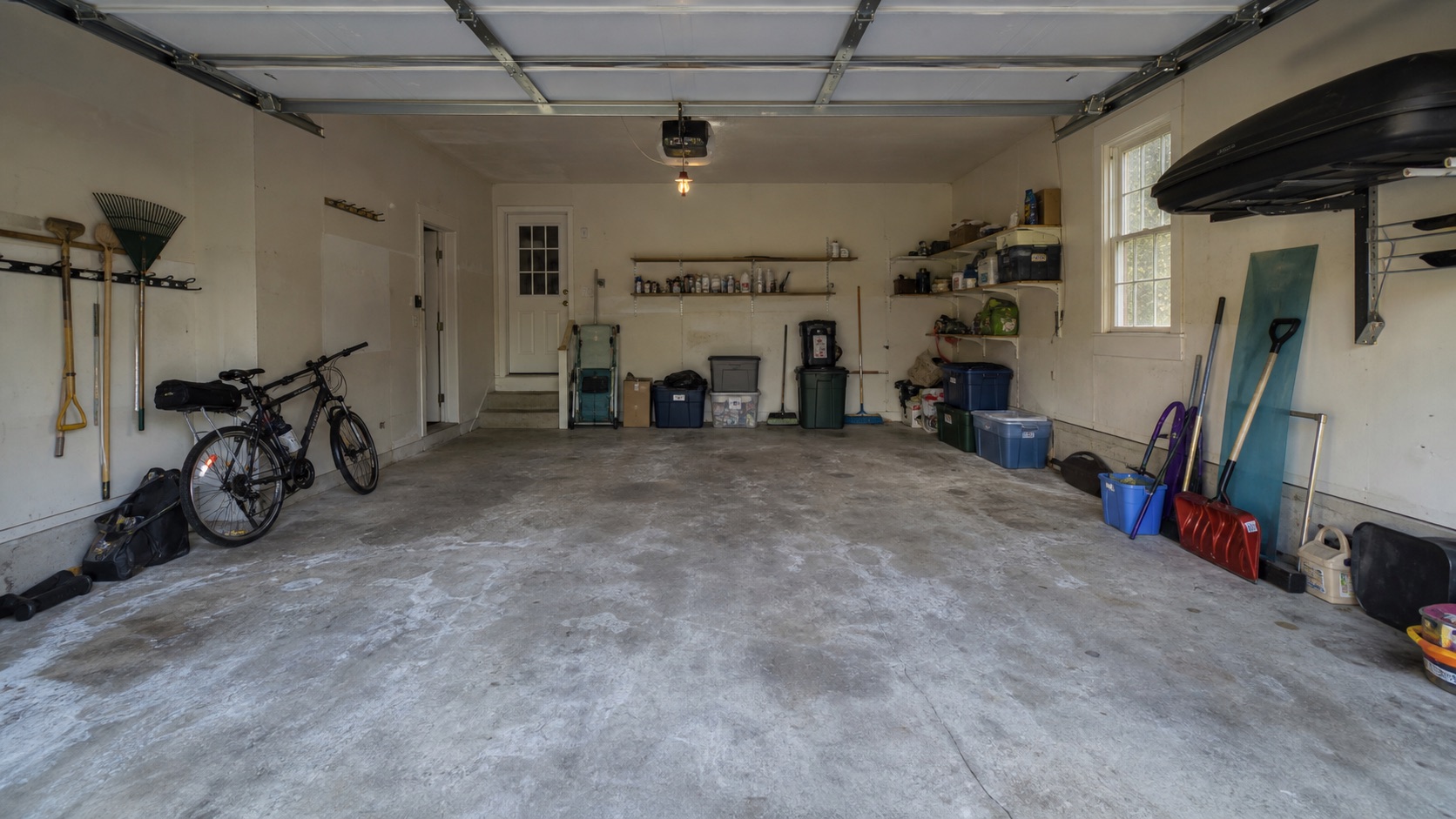
Before · existing concreteAfter · decorative flake↔
A better way to compare flooring companies
Compare the written scope. Not the biggest warranty headline.
Before choosing an installer, require clear answers to these six questions. Garage Craftors puts them in the proposal so the customer can make an informed comparison.
01
Preparation
What equipment and concrete profile are specified?
02
Moisture
How are vapor clues, active water, and testing handled?
03
Products
What are the manufacturer, product names, and intended layer roles?
04
Performance
What texture, UV exposure, chemical contact, and cleaning conditions apply?
05
Timing
When can people, storage, and vehicles safely return?
06
Warranty
What is covered, for how long, and what concrete or moisture conditions are excluded?
One accountable flooring team
Four steps. From photos to finished.
No mystery preparation, generic chemistry pitch, or vague return date. You receive one written floor system with the scope, products, finish, timing, care, and warranty terms made clear.
Most eligible two-car garage projects begin in the $6,500–$11,500 planning range. Existing-coating removal, repairs, moisture findings, edges, stairs, specialty finishes, and access can move the final price.
02Do you grind the concrete first?+
Eligible projects include mechanical surface preparation appropriate to the slab. We confirm removal, grinding, repairs, edges, and dust control in the written scope before installation.
03Which finish is best for an everyday garage?+
A full-broadcast decorative-flake floor is the most common direction because it provides forgiving visual texture, practical cleaning, and a broad range of color choices.
04Is polyaspartic better than epoxy?+
They perform different jobs. Epoxy may be used in primer, base, or build coats, while a compatible polyaspartic may be selected as a protective topcoat. We specify the complete assembly for the actual slab and exposure.
05Can you coat cracked or damp concrete?+
Many ordinary cracks and surface defects can be repaired, but active water entry, structural movement, and verified vapor conditions need separate evaluation. We do not hide unresolved water problems under a coating.
06How soon can vehicles return?+
The return-to-service schedule depends on the selected materials, temperature, humidity, ventilation, and project conditions. Your proposal states the specific foot-traffic and vehicle-return timing.
Quick estimate request
Tell us the basics. We’ll guide the rest.
No technical knowledge required. A city or ZIP, approximate size, and a short description are enough to begin.