Exposure
How deeply the process cuts into the slab and how much aggregate is revealed.
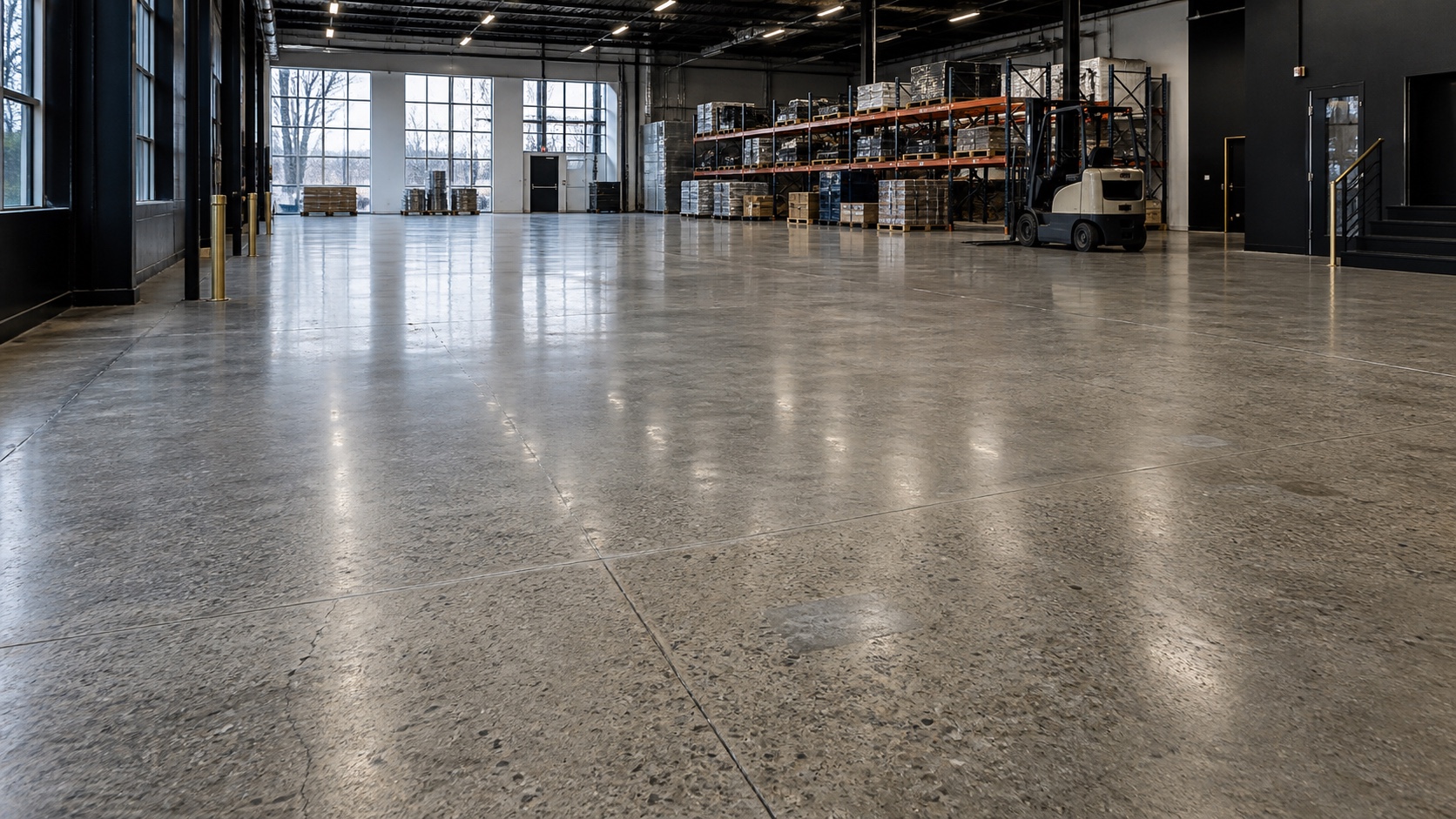
Concrete polishing · Massachusetts
Mechanical grinding, honing, densification, and polishing for suitable warehouses, retail, offices, hospitality, public facilities, and selected residential interiors.
Polishing, explained clearly
Polished concrete is produced with bonded abrasives that progressively grind, hone, and polish the existing surface to a specified aggregate exposure and appearance. The finished floor keeps the concrete’s natural color, aggregate, repairs, joints, and history visible.
How deeply the process cuts into the slab and how much aggregate is revealed.
How refined and reflective the finished surface becomes after the exposure is established.
The most reliable way to approve the target on the actual concrete before full production.
Interactive finish studio
Aggregate exposure and final appearance are separate decisions. The slab—not a computer rendering—determines the exact stone, color, repairs, and variation you will see.
These controls set a design target, not a guaranteed replica. Existing aggregate distribution, placement, finishing, repairs, contamination, cracks, and previous treatments can change the result.
Interior applications
Polishing is strongest when the desired appearance, traffic, cleaning, wet exposure, chemicals, joints, repairs, and operating schedule are resolved together.
A durable interior floor direction for open operating areas where abrasion, rolling traffic, cleanability, joints, and phased access shape the specification.
A natural concrete finish that can support an architectural interior without hiding the character of the original slab.
Refined exposure and controlled sheen for adaptive reuse, creative workplaces, entries, corridors, and shared amenity areas.
Front-of-house dining, café, and event areas after spill exposure, maintenance, traction, repairs, and substrate conditions are reviewed.
Long interior corridors, multipurpose rooms, libraries, and civic spaces planned around traffic, maintenance, and serviceability.
Selected dry residential and creative interiors where the slab is suitable and the owner values natural variation over a uniform coating.
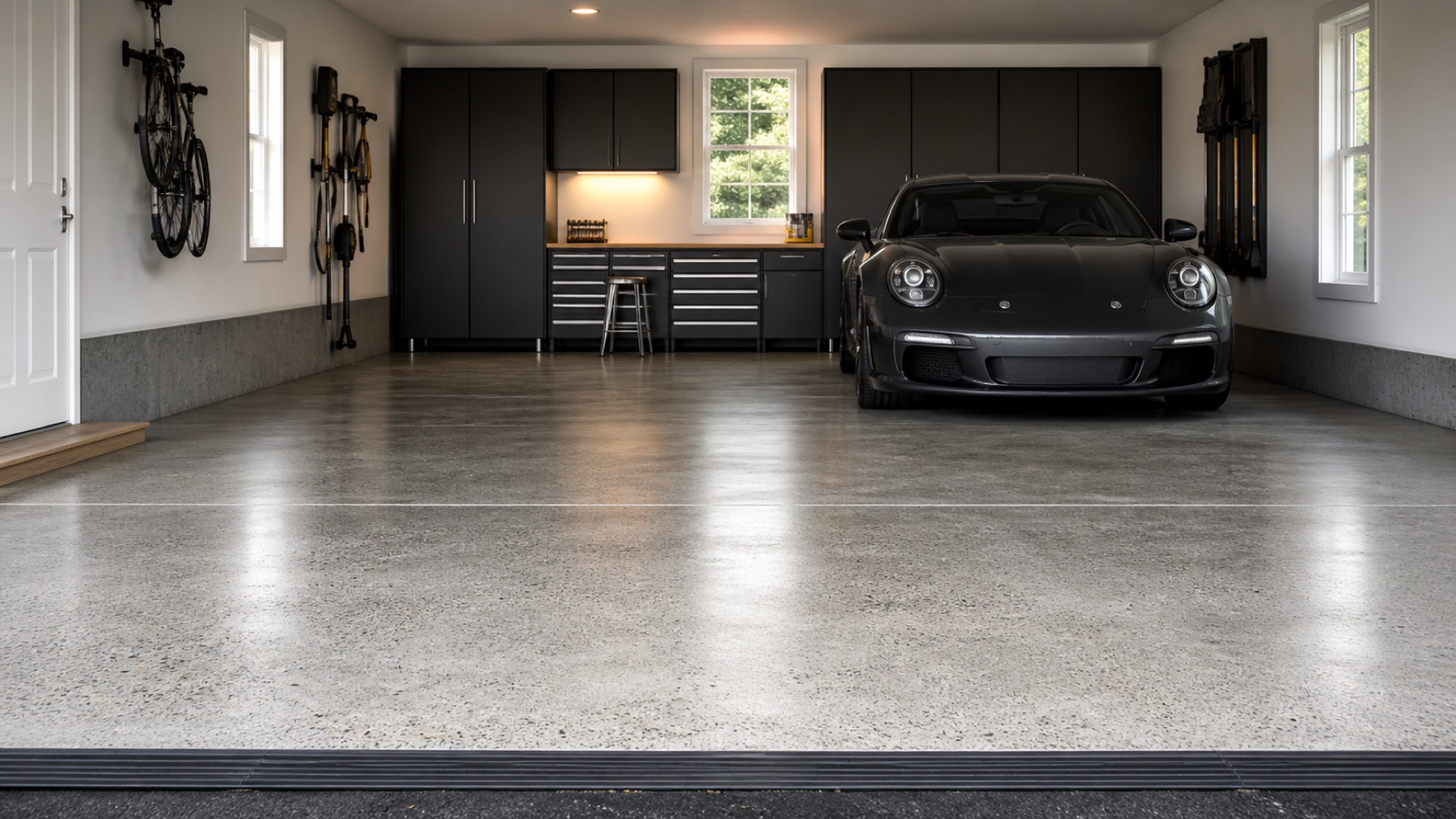
For the right garage slab
For a sound, suitable interior garage slab, mechanical grinding, densification, honing, and polishing can create a refined floor without covering the concrete with a resin coating.
Collector garages, workshops, climate-moderated residential garages, and design-led spaces where natural variation is part of the brief.
Slab hardness, contamination, cracks, patchwork, moisture and water history, aggregate exposure, traction needs, and the desired appearance level.
Polishing celebrates the slab; it does not visually hide repairs or perform like an epoxy or polyaspartic coating against every chemical or wet-use condition.
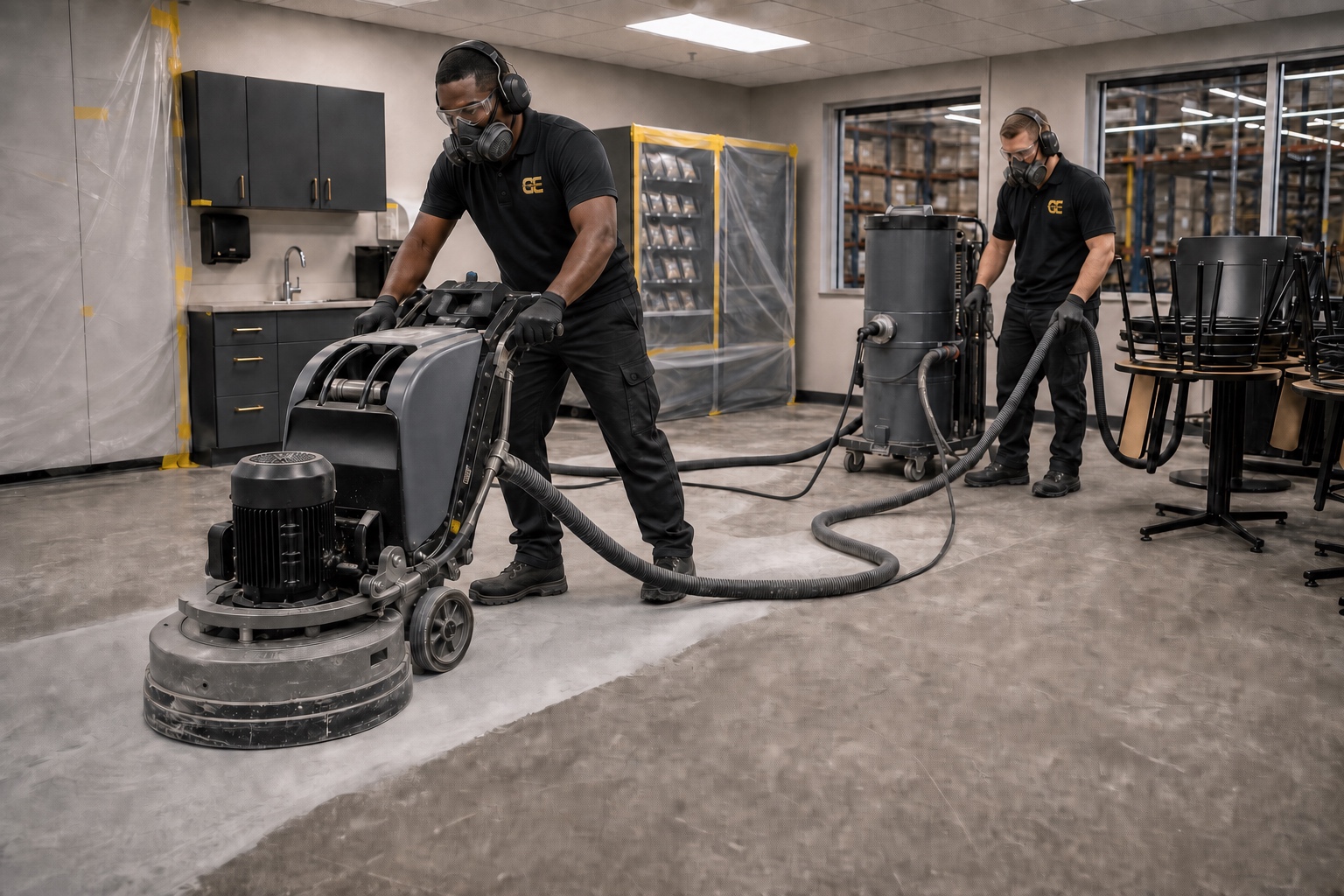
Field execution
The visual result begins with consistent machine control, correct tooling, edge work, dust management, and a sequence matched to the slab. We document the target, then refine the floor deliberately instead of promising a universal grit recipe.
Typical system path
The exact abrasive sequence, repair materials, densifier timing, protective treatment, and return-to-service plan are adjusted to the floor—not copied from a generic package.
We review flatness, strength clues, coatings, adhesive, contamination, cracks, joints, repairs, water history, access, and the finish target.
Bonded abrasives remove eligible surface material and establish the agreed Class A, B, or C aggregate-exposure direction.
Eligible defects are addressed, pinholes may be grouted, and the floor is progressively honed. Existing slab character remains visible.
A compatible densifier can be introduced at the appropriate stage to react with suitable concrete; it does not rescue weak or failing concrete.
The refinement sequence continues until the approved appearance level is achieved and verified on the actual floor.
A compatible guard or protective treatment is considered where the use calls for it, followed by final burnishing, cleaning, and maintenance guidance.
Before we recommend polishing
Polishing reveals the concrete; it does not hide it. The survey separates authentic character from conditions that can reduce performance or make another floor system the better investment.
Set the expectation correctly
A hard-wearing natural surface, controlled appearance, improved light response, simplified routine cleaning, and no decorative coating film across the main field.
Joints, repairs, aggregate variation, deep contamination, structural movement, water problems, and the history of the slab remain part of the condition review.
Remove abrasive soil, use an appropriate neutral cleaner, clean spills promptly, and schedule burnishing or restorative service according to traffic and appearance goals.
Specification basis
Our finish conversation follows the Concrete Polishing Council’s current separation of aggregate-exposure classes and appearance levels. Final project requirements, the approved mock-up, slab conditions, manufacturer instructions, and the written scope control the installation.
Review CPC technical resources View the CPC aggregate-exposure chartNo. Polished concrete mechanically refines the slab itself. Epoxy and other resinous systems add bonded layers over prepared concrete. The right choice depends on the slab, exposure, operations, appearance, and maintenance expectations.
No. Weak surfaces, severe contamination, widespread delamination, water problems, extensive patchwork, movement, or unsuitable existing treatments may limit the result or point to another flooring system.
No. Aggregate exposure follows the concrete that was originally placed and finished. Depth, distribution, repairs, edges, and color can vary. We use an actual-slab mock-up to set an honest expectation.
A compatible densifier may be specified during refinement where it fits the concrete and system. It is one part of a complete process—not a substitute for sound concrete or correct preparation.
No flooring should be sold with those blanket promises. Spill response, contaminants, maintenance, wet use, texture, footwear, and site-specific hazards still matter. We review exposure and care before recommending the finish.
Schedule depends on area, slab condition, exposure class, appearance level, repairs, edges, occupied operations, power, access, and curing requirements for any repair or protective materials. Your scope includes a project-specific sequence.
Concrete polishing · Massachusetts
Send the room, square footage, current slab condition, and desired sheen. We’ll assess whether polishing is suitable and define the right exposure level.