Read the slab
Condition, contamination, repairs, joints, previous coatings, and surface integrity.
Garage Craftors · Floor Protocol GC–FS–01
Products can change. The discipline cannot. Our responsibility is to assess the concrete, expose the risks, select compatible materials, control every layer, and give you one written system built around your space.
Our point of view
Garage Craftors is the accountable party between your concrete and the finished surface. We may specify different compatible manufacturers as conditions and availability require. What never changes is the protocol: assess, explain, specify, install, verify, and document.
No supplier becomes the hero.
Your finished floor does.
The GC specification framework
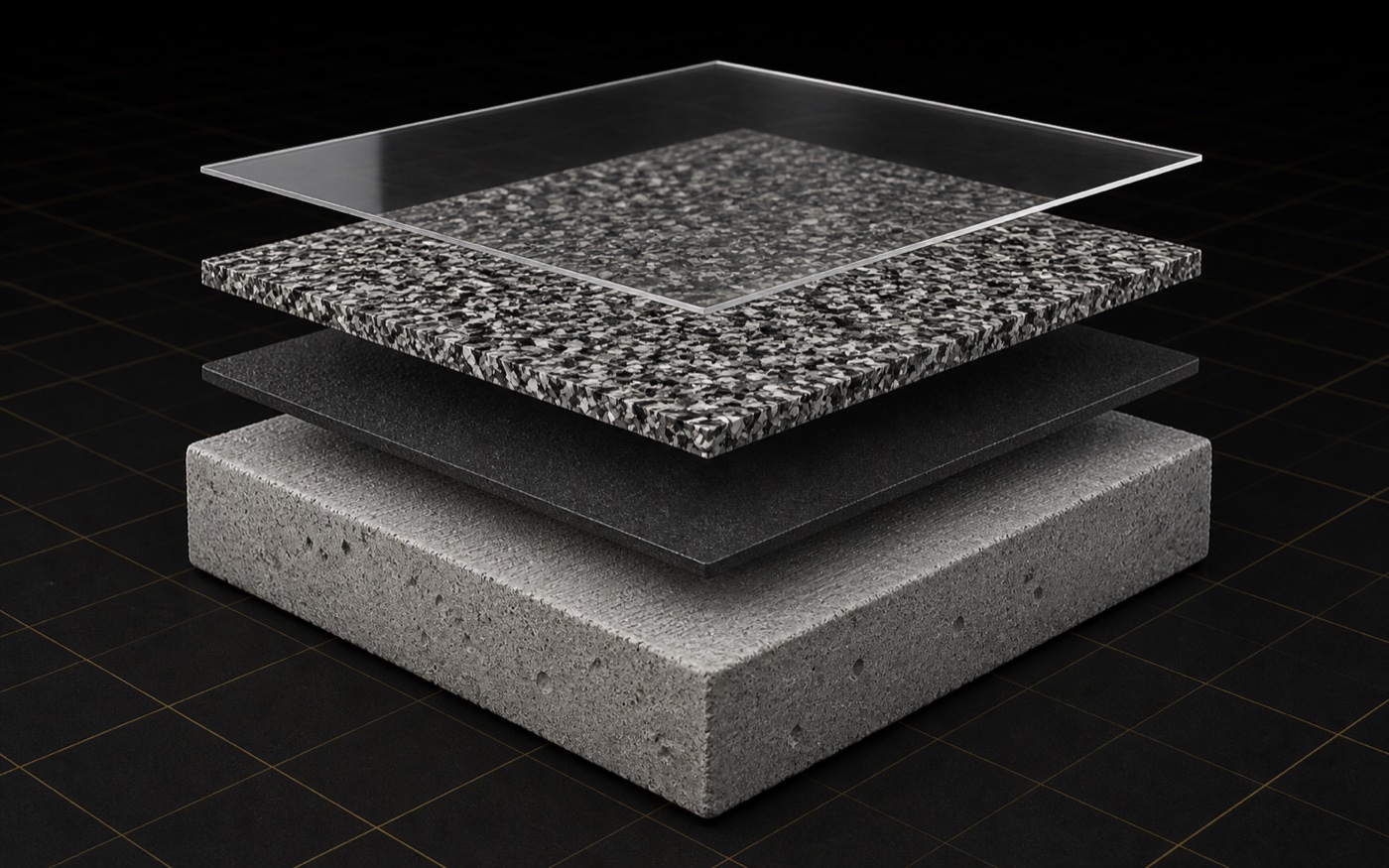
Counting coats is easy. Engineering the relationship between the slab, moisture strategy, bonding layer, body, broadcast, topcoat, and cure is the real work.
Condition, contamination, repairs, joints, previous coatings, and surface integrity.
Choose a standard bonding path, a moisture-managed path, or pause until another condition is corrected.
Match the primer or first resin layer to the prepared concrete and the complete compatible build.
Specify base color, resin chemistry, broadcast material, coverage, and the texture created after scraping.
Choose topcoat chemistry, sheen, texture, UV strategy, cleanability, and return-to-service.
Record cure windows, access restrictions, maintenance guidance, limitations, and project warranty.
System anatomy · not to scale
This visual is a decision map, not a universal recipe. Some projects use a standard primer path; some use a qualified moisture-mitigation primer in that position. Final products, application rates, layer count, and cure windows are written after assessment.
What we refuse to hide
A coating cannot create a reliable bond to contamination, weak laitance, incompatible material, or poorly prepared concrete.
Treating every slab as identical transfers a hidden condition into the customer’s finished floor.
A product category is not a specification. Every layer needs a purpose and a compatible neighbor.
The customer lives on the clear coat. Its chemistry, texture, exposure, and cure deserve a real decision.
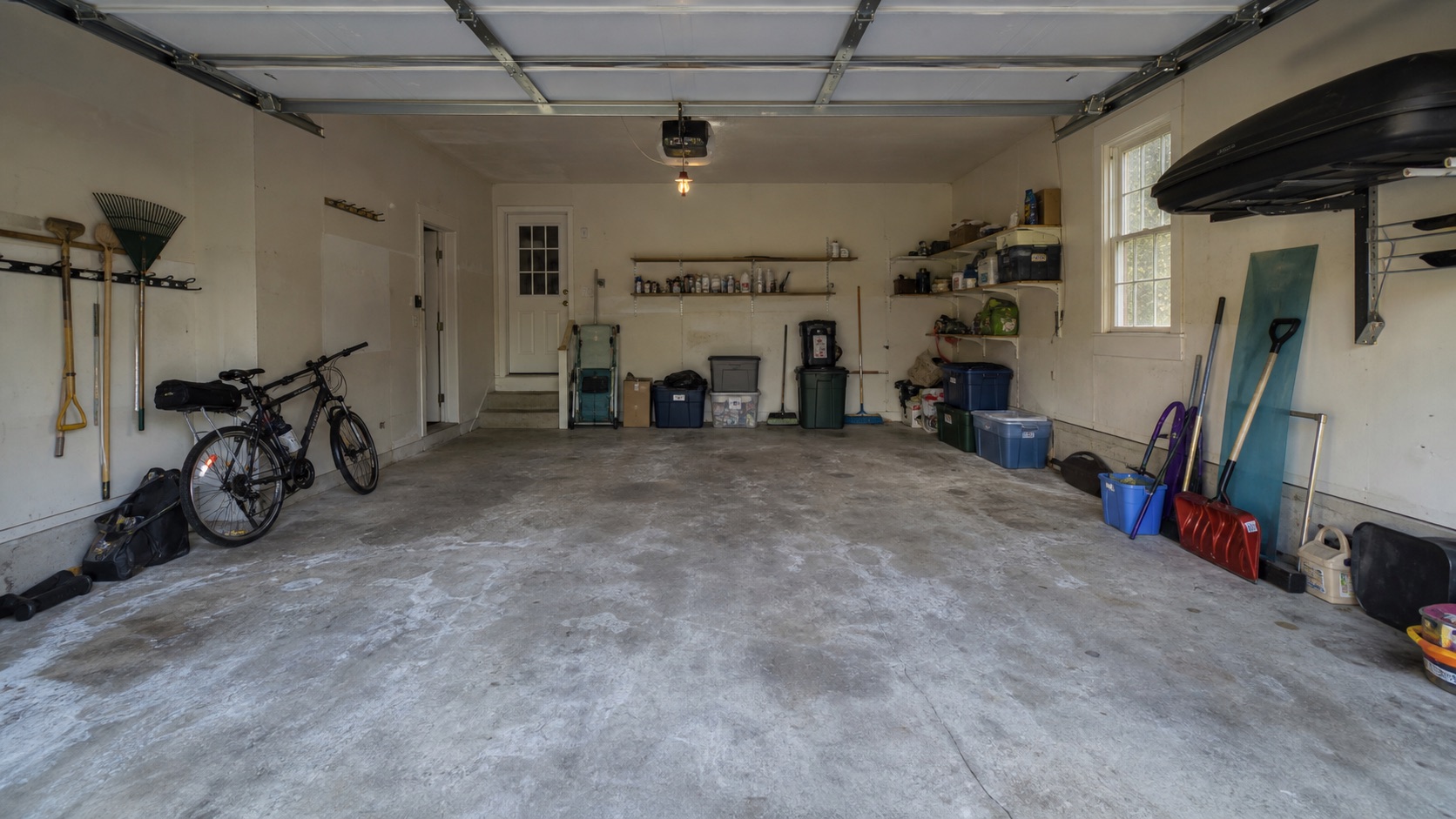
Assess before prescribing
We start with the concrete—not a color sample. Condition, contamination, previous coatings, cracks, joints, drainage, use, exposure, and project history shape the preparation and resin strategy.
GC Chapter 02 · Moisture strategy
MVBA moisture-vapor-barrier primer is a specialized first resin layer for conditions that require moisture mitigation. It may occupy the primer position in the complete compatible build. It is not an automatic upgrade, and it is not a cure for active leaks, drainage defects, hydrostatic pressure, or unsound concrete.
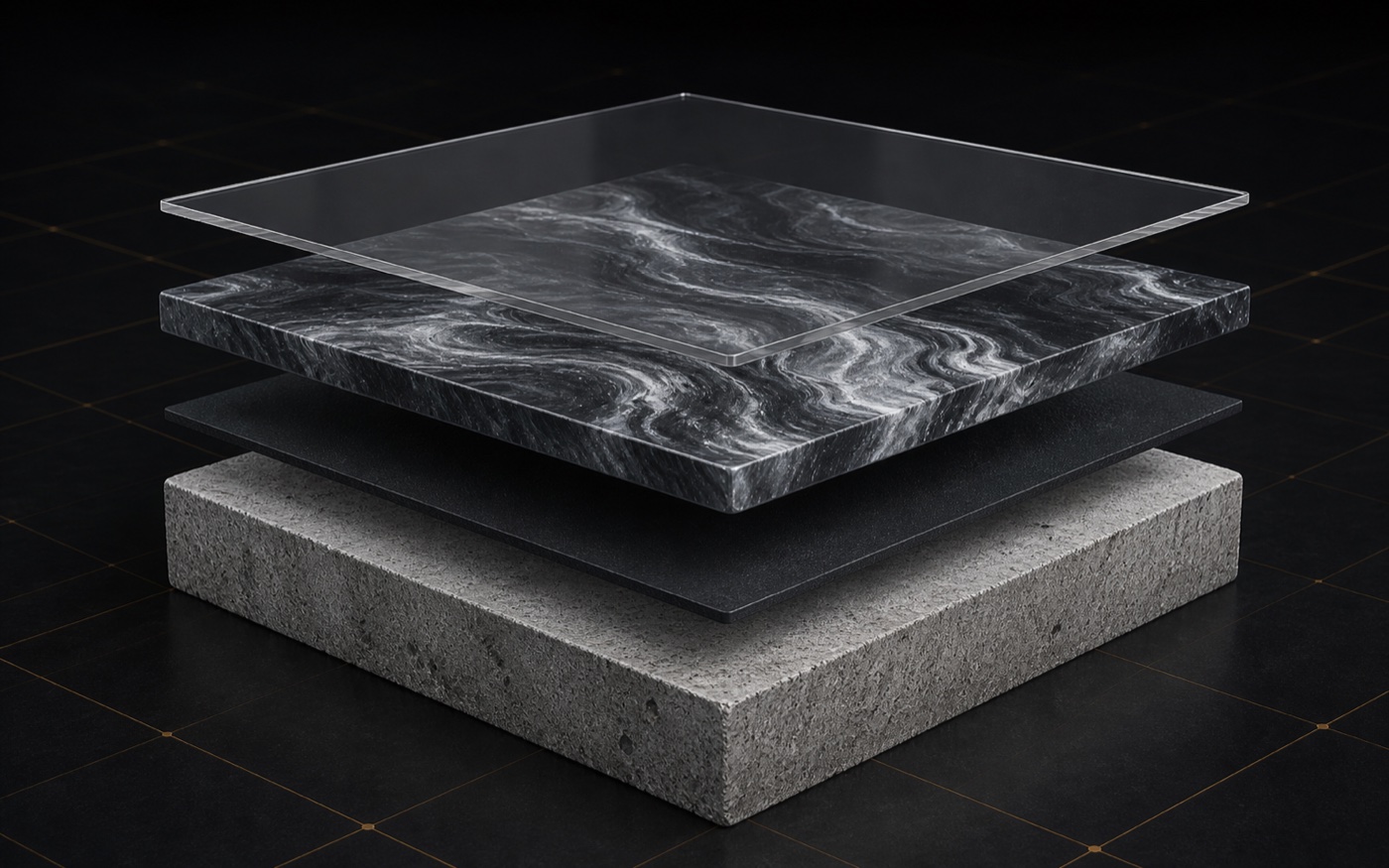
Standard primer path
BONDA compatible primer can wet and seal prepared porous concrete, support adhesion, and reduce surface defects associated with outgassing. It is selected because the slab and the complete system call for it—not simply because every quote needs another line item.
One position · two different jobs
A compatible standard primer or approved first resin layer when the assessed slab, environment, and complete system support it.
A qualified moisture-mitigation primer when evaluation and the written system require that protection.
GC Chapter 04 · Body + broadcast
BUILDThe body coat carries the base color and receives the decorative chip, quartz, or other approved aggregate. Broadcast density, scraping, recovery, inspection, and the selected material influence visual coverage, texture, and how the topcoat closes the surface.
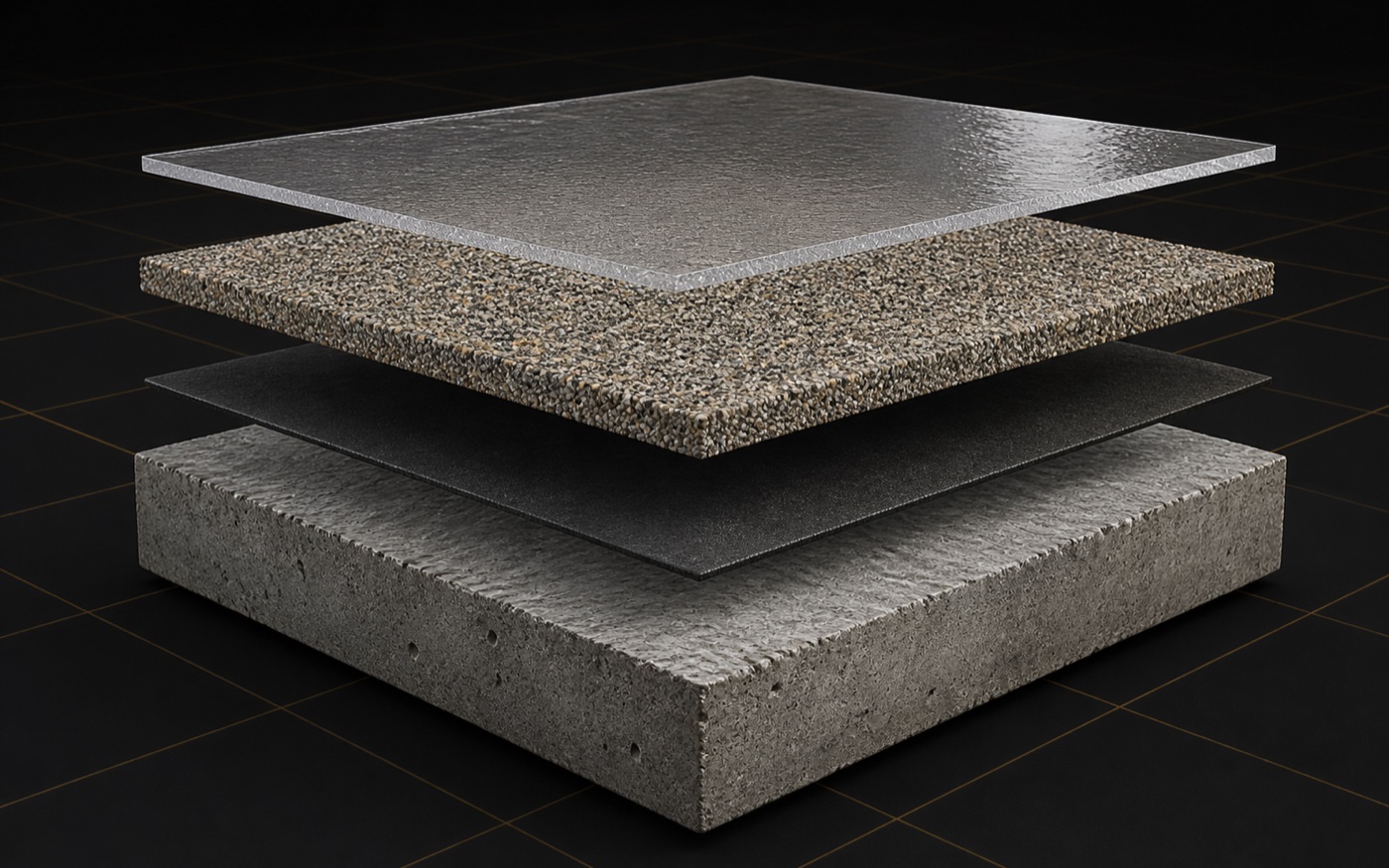
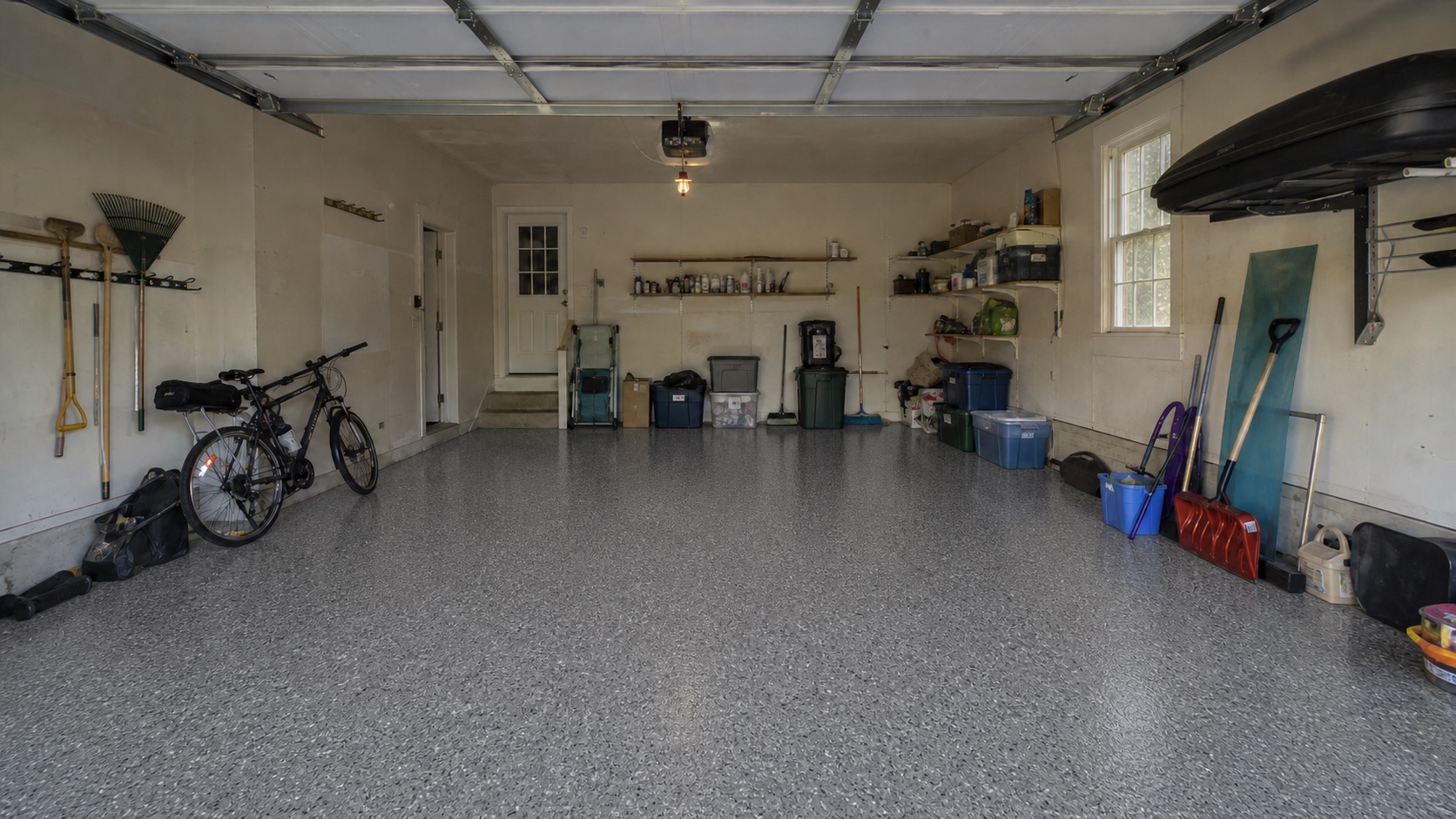
GC Chapter 05 · Clear protective topcoat
CLEARThe clear protective layer seals the broadcast and becomes the floor’s exposed surface. Garage Craftors specifies compatible chemistry, cure speed, application window, texture, sheen, coat count, UV strategy, cleaning expectations, and return-to-service for the actual project.
The Garage Craftors floor family
For a suitable residential slab, normal vehicles, and easy ownership.
For projects where the slab evaluation drives a moisture-mitigation strategy.
For shops, wet zones, service areas, and commercial operations.
Your protection is the written brief
A Garage Craftors proposal reduces ambiguity before installation starts. This checklist lets you compare systems—not slogans.
Request my written system brief ↗The Garage Craftors commitment
Premium service is not forcing every layer into every garage. It is making risk visible, explaining the tradeoffs, selecting compatible materials, and accepting responsibility for the finished system.
Questions worth asking
Good questions protect the project. We welcome them.
No. Moisture mitigation is a condition-driven specification, not an automatic sales upgrade. Slab history, evaluation, environment, and the complete compatible system determine whether it belongs.
No. A standard primer primarily supports wetting, sealing, and adhesion. A qualified MVB primer is selected when the floor system requires moisture-vapor mitigation. In some builds the MVB occupies the primer position.
It becomes the surface exposed to tires, dirt, chemicals, abrasion, sunlight, cleaning, and foot traffic. Its chemistry, texture, sheen, coat count, and cure schedule must be specified.
No. More material does not correct an incompatible or poorly prepared system. Every layer must have a defined purpose, correct application rate, suitable recoat window, and compatibility with its neighboring layers.
No coating should be presented as a universal repair for drainage defects, leaks, hydrostatic pressure, or an unsound slab. Those conditions must be identified and addressed responsibly.
The proposed preparation, repair scope, moisture decision, primer or MVB strategy, body coat, broadcast, topcoat, texture direction, cure schedule, exclusions, care guidance, and applicable project terms.
Garage Craftors is the system specifier and installer—not a storefront for a single coating brand. Exact manufacturers and products may vary by slab condition, exposure, compatibility, availability, project use, and the written proposal. Technical data sheets, safety requirements, application rates, environmental limits, and recoat windows are verified for the products selected for each project.
The product is not the promise. The completed system is.