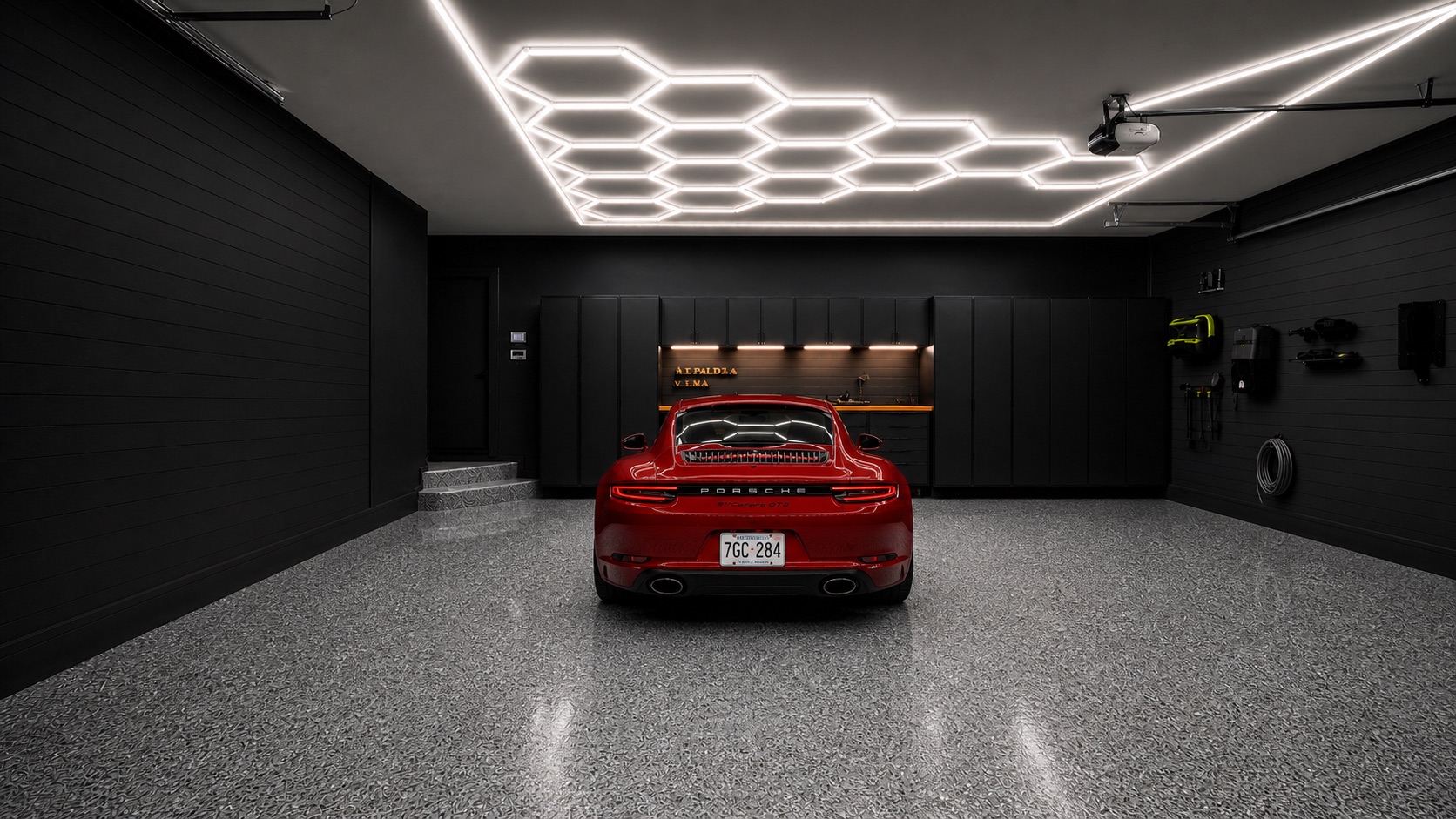
What to remember
- Start with slab condition and moisture—not color.
- Choose around winter contamination, vehicle use, maintenance, and repairability.
- A coating and a modular tile system solve different substrate and ownership needs.
- Final performance depends on preparation, installation, and cure discipline.
Start with the garage you actually have
The best-looking sample is not automatically the best system for your slab. Age, cracking, prior coatings, moisture clues, settlement, contamination, drainage, and transitions all affect what can be installed responsibly.
A useful flooring consultation begins with the room in motion: where snow melts, where tires turn, where a workbench creates point loads, and how the floor meets the driveway, stairs, walls, and door seal.
- Slab condition and existing repairs
- Moisture and water-entry clues
- Vehicle weight, turning, jacks, and rolling equipment
- Cleaning expectations and chemical exposure
- Desired appearance, texture, and repair strategy
Polyaspartic and epoxy coating systems
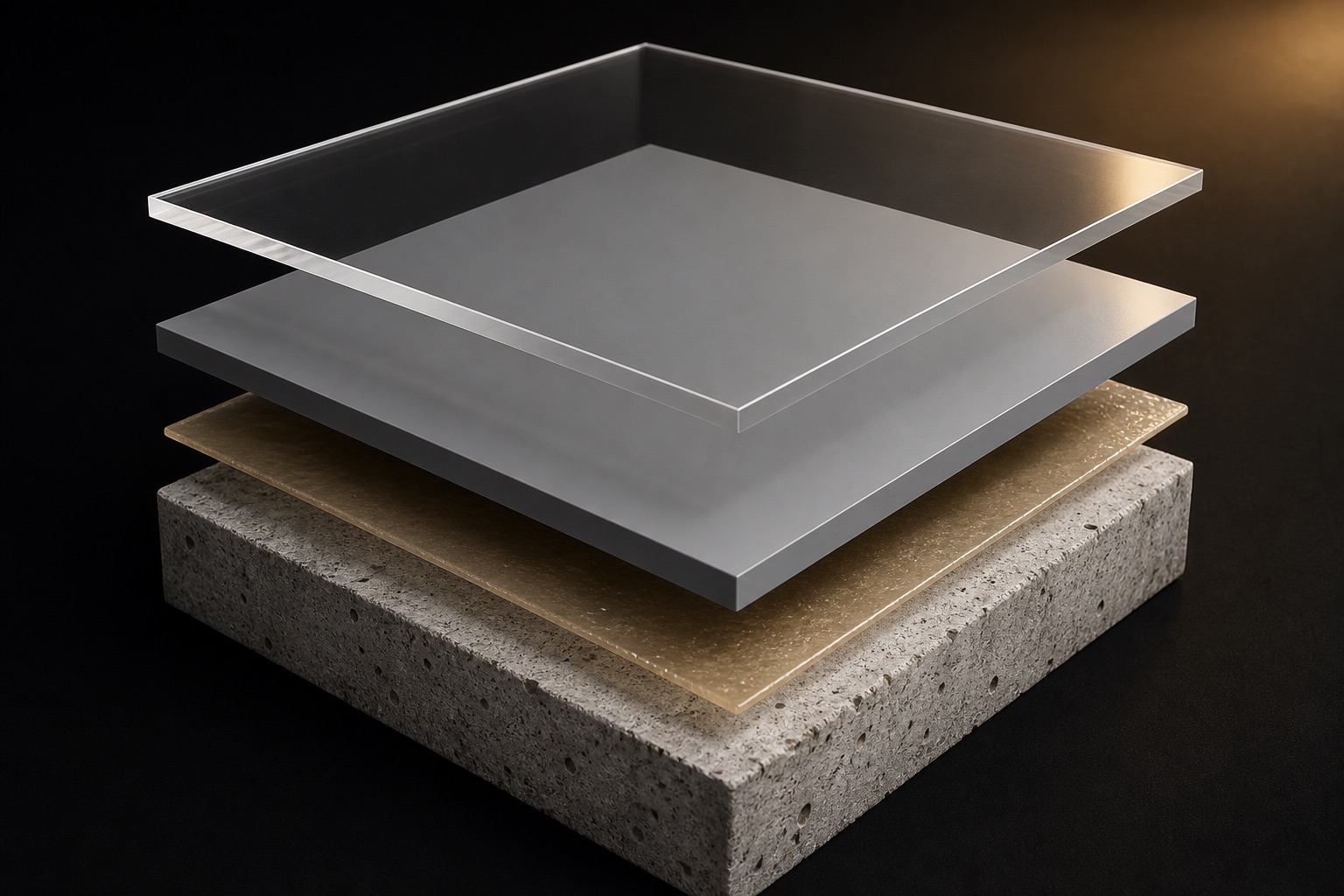
Resinous flooring can create a seamless, easy-to-clean surface with strong visual continuity. The installed system may include mechanical surface preparation, repairs, primer or base coat, decorative broadcast, and a protective topcoat selected for the project.
Product family alone does not guarantee the result. Surface preparation, coverage, broadcast consistency, edge work, environmental conditions, recoat timing, and cure protection matter just as much as the label on the container.
Modular garage tile
Engineered interlocking tile creates a ventilated, replaceable surface assembled above the slab. It can be a strong option where access, design flexibility, installation speed, or individual-tile replacement matters.
The layout still requires planning. Tile height, thresholds, wall edges, vehicle turning, expansion space, drainage behavior, cabinets, lifts, and rolling loads all need to be resolved before the pattern is approved.
New England conditions change the decision
Greater Boston garages see freeze-thaw cycling, road salt, wet tires, sand, snowmelt, humidity swings, and seasonal storage. Those conditions affect both the floor and the way it should be maintained.
A floor should be selected with realistic cleaning and drainage habits in mind. No decorative finish eliminates the need to manage standing water, aggressive chemicals, sharp impacts, or unresolved slab movement.
- Plan a winter cleaning routine before installation
- Confirm slip resistance with the selected texture
- Protect cure time from weather and vehicle access
- Review door seals and water paths at the same time
The decision framework
If seamless appearance and a continuous finish are the priority, evaluate a professionally prepared coating system. If modularity, replaceability, or avoiding a bonded finish is more important, evaluate interlocking tile.
The strongest recommendation is the one tied to verified conditions, documented products, and the way the garage will be used—not a universal claim that one floor is best for everyone.
- Inspect
- Compare complete installed systems
- Approve a physical sample
- Document preparation and scope
- Follow cure and care guidance
Questions homeowners ask
Quick answers.
Is polyaspartic always better than epoxy?+
No. The complete system, slab condition, preparation, installation environment, intended use, and maintenance expectations determine suitability.
Can a garage floor be coated in winter?+
Possibly, but slab temperature, air temperature, humidity, ventilation, product requirements, and protected cure conditions must all be verified.
Can modular tile go over a cracked slab?+
Minor stable conditions may be compatible, but active movement, severe displacement, moisture, drainage, and trip conditions still require assessment.
Join the discussion.
Ask a garage-planning question or share what you learned. Comments are reviewed before publication.
No published comments yet. Start the conversation.