What to remember
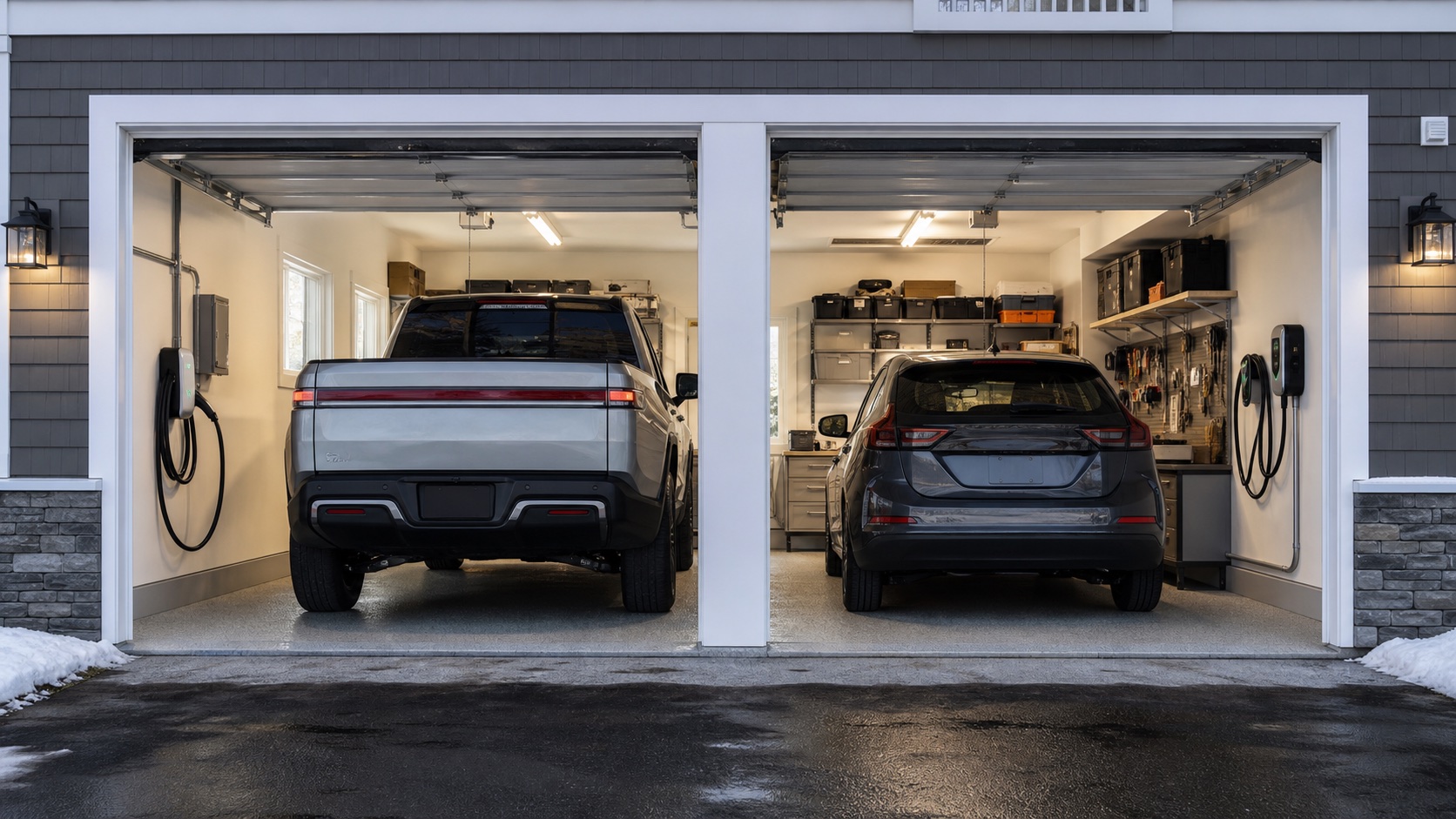
- The vehicle inlet and parking direction come before charger position.
- Pickups, multiple EVs, and plug-in hybrids create different charging routines.
- Cable reach should not create a walking or door hazard.
- A Massachusetts-licensed electrical partner evaluates capacity, permits, installation, and commissioning.
What this decision actually controls
An EV charger is not successful merely because it reaches the car. The garage must support daily parking, connector handling, snow and salt, storage, door travel, walking paths, networking, and future vehicles.
Vehicle category matters: a compact sedan, long pickup, SUV, plug-in hybrid, motorcycle, or van can place its inlet in a different part of the room and create a different electrical demand.
- Current and future vehicle types and charge inlets
- NACS, J1772, adapters and guest use
- Daily mileage, charging window and simultaneous loads
- Panel capacity, routing, load management and utility programs
- Mounting protection, Wi-Fi, lighting, storage and winter conditions
Plan the complete system
Mock the parking position and cable path before drilling or closing finishes. Keep the equipment serviceable and protect it from doors, vehicles, stored items, moisture, and impact.
For two vehicles, compare separate circuits, shared or managed charging, schedules, connector compatibility, and whether a future panel or service change should be prepared now.
What the project review should confirm
The electrical partner should verify load calculation, equipment listing, circuit, conductor and routing, disconnect or protection requirements, permit, labeling, testing, and commissioning.
The complete garage proposal should separate licensed electrical work from finish, storage, lighting-design, and equipment-coordination scopes.
- Existing conditions and eligible preparation
- The selected system, finish, and performance direction
- Access, sequencing, protection, cure, or commissioning
- Care requirements and the limits of the approved scope
Questions homeowners ask
Quick answers.
Does an electric pickup always need a larger charger?+
Not automatically. Battery size, daily mileage, onboard charging, available capacity, charging window, and utility rules determine the appropriate plan.
Can one charger serve two bays?+
Sometimes, if cable reach, parking patterns, equipment capability, scheduling, and safe routing genuinely support both positions.
Can Garage Craftors install the electrical circuit?+
Regulated electrical work is evaluated, permitted, installed, and commissioned by a properly licensed electrical partner.
Join the discussion.
Ask a garage-planning question or share what you learned. Comments are reviewed before publication.
No published comments yet. Start the conversation.