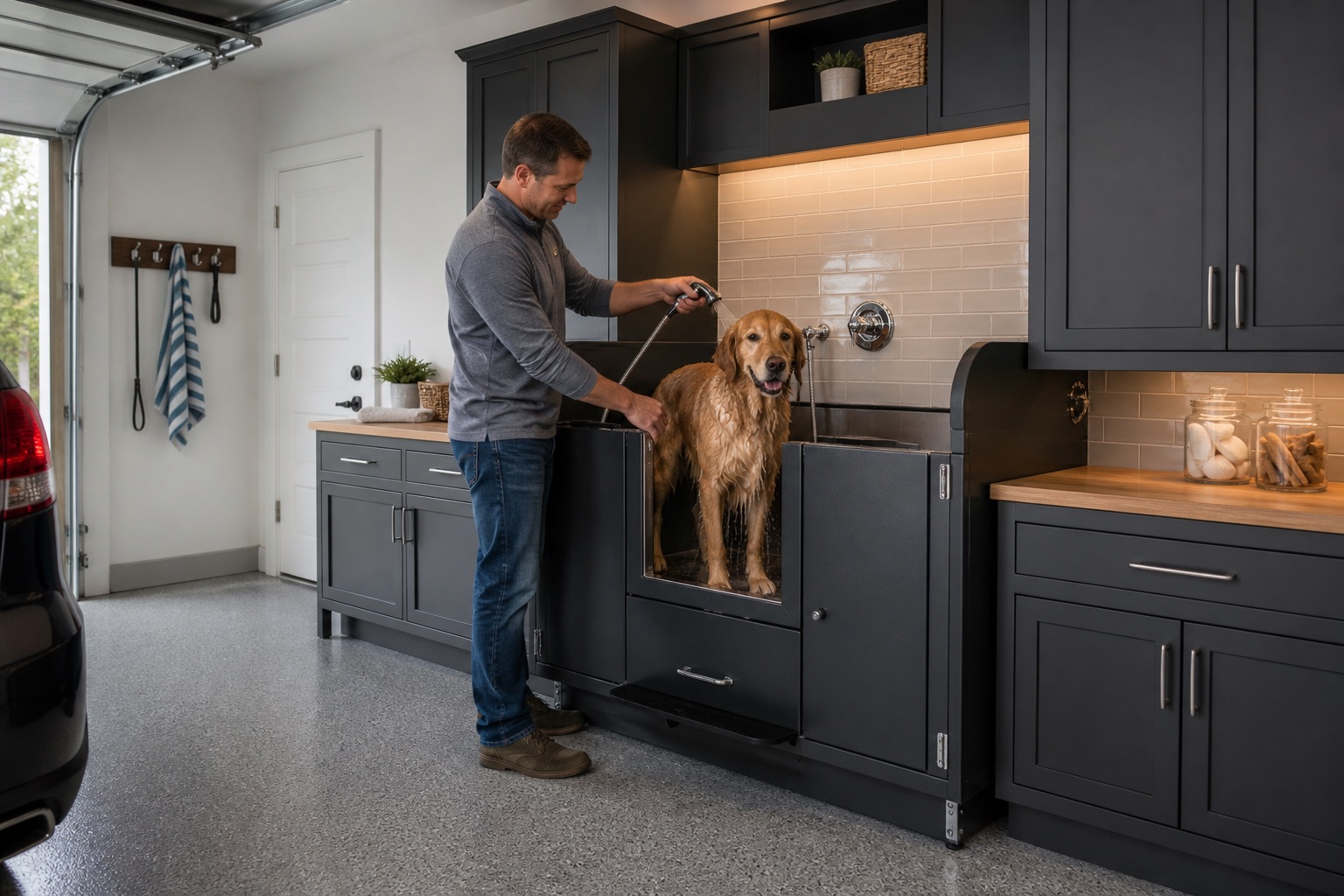
What to remember
- Choose access height around the dog and the person doing the washing.
- A manufactured tub and a custom tiled build create different installation scopes.
- Waterproofing, drainage, fur interception, ventilation, storage, and safe flooring matter as much as the tub.
- Licensed plumbing work and permits are coordinated with qualified partners.
What this decision actually controls
A garage pet wash can stop mud, road salt, water, and loose fur before they move into the house. The best station fits the pet, the handler, the garage, and the cleanup routine.
Small dogs may benefit from a raised ergonomic tub. Large, older, or mobility-limited dogs may need a low-entry or walk-in arrangement.
- Pet size, mobility, temperament and washing frequency
- Raised, ramped, walk-in or custom tiled access
- Hot and cold water, controls, spray reach and shutoffs
- Drainage, traps, fur interception and freeze protection
- Waterproof walls, floor traction, ventilation, towels and storage
Plan the complete system
Compare equipment as part of the complete wet zone. Leave access for valves, traps, hoses, filters, panels, and future replacement.
Coordinate the wash with cabinetry, towel drying, leash points, lighting, ventilation, laundry or utility functions, and the route from the exterior door.
What the project review should confirm
Confirm exact equipment, dimensions, drain side, fixtures, freight, waterproofing, wall and floor finishes, plumbing, electrical needs, ventilation, permits, installation, and warranties.
Published equipment prices are not complete installed prices; site conditions and licensed-trade work materially change the proposal.
- Existing conditions and eligible preparation
- The selected system, finish, and performance direction
- Access, sequencing, protection, cure, or commissioning
- Care requirements and the limits of the approved scope
Questions homeowners ask
Quick answers.
How much does a garage dog wash cost?+
Early planning may range from roughly $6,500–$12,000 for a compact station to $18,000–$40,000+ for a custom tiled utility environment, depending on conditions and scope.
Who connects the plumbing?+
Water supply, fixture connections, drainage, and related permits are handled by a properly licensed plumbing partner when required.
Is stainless steel better than tile?+
Neither is universally better. Stainless equipment can simplify the fixture package; custom tile offers architectural integration but increases waterproofing, detailing, and field labor.
Join the discussion.
Ask a garage-planning question or share what you learned. Comments are reviewed before publication.
No published comments yet. Start the conversation.