What to remember
- Equipment sizing begins with the envelope and intended use.
- Heating and cooling do not replace ventilation or moisture management.
- Garage-door leakage and frequent opening affect comfort and operating cost.
- Licensed HVAC and electrical partners handle regulated equipment and trade work.
What this decision actually controls
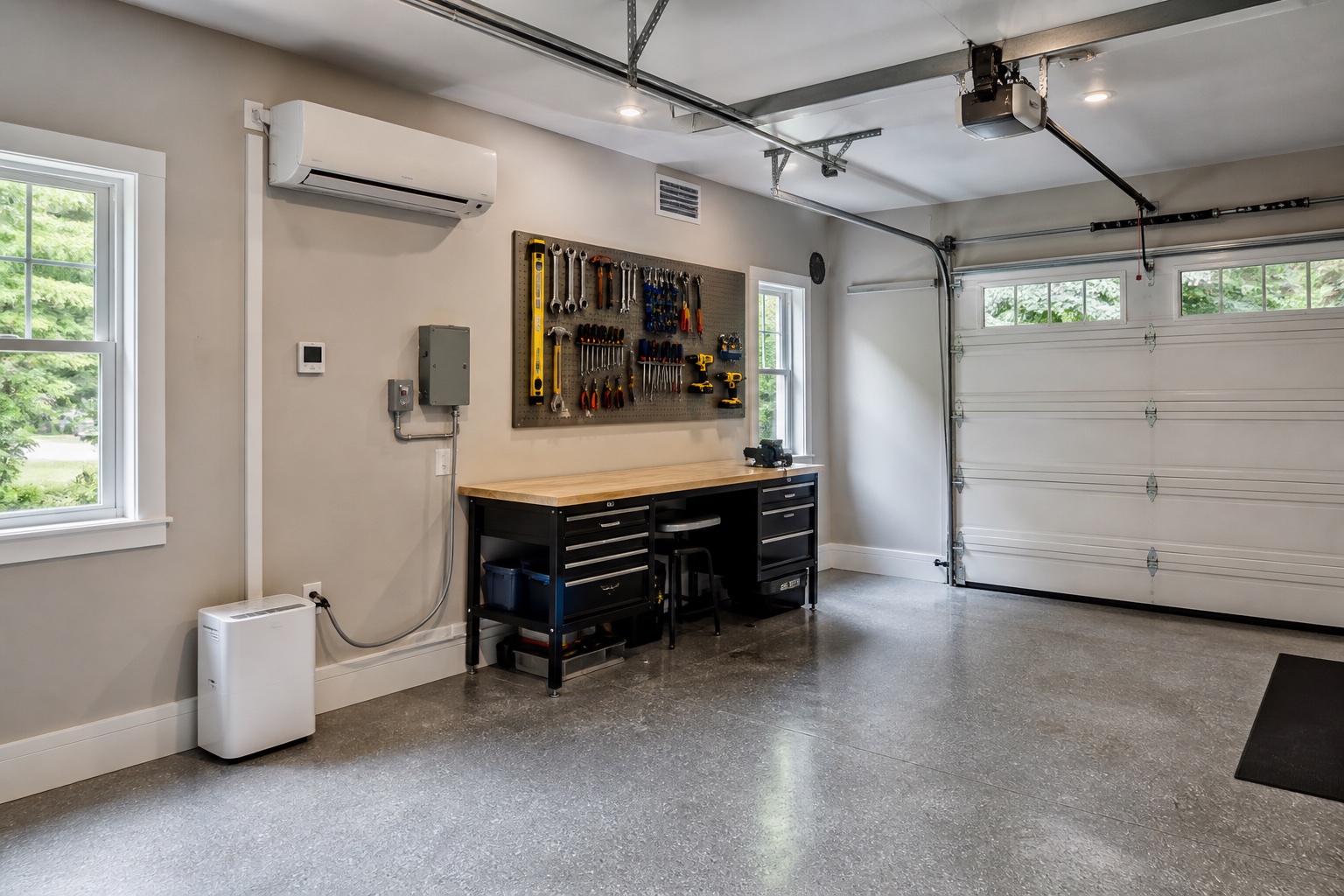
A garage used only for parking may not need living-room conditions. A gym, office, workshop, game room, or family flex space may benefit from more deliberate temperature and humidity control.
Before choosing a mini-split, review insulation, air leakage, the garage door, windows, moisture, activities, equipment loads, and how often the opening cycles.
- Primary use and hours of occupancy
- Insulation, air sealing, windows, and door performance
- Heating, cooling, ventilation, and humidity goals
- Electrical capacity, condensate, and outdoor-unit location
- Permits, partner responsibilities, and maintenance access
Plan the complete system
Treat the room as one thermal and moisture system. Envelope upgrades can reduce equipment demand and improve comfort, while ventilation requirements depend on actual activities and applicable rules.
Keep equipment, filters, drains, disconnects, sensors, and outdoor units reachable after cabinets, ceilings, storage, and lighting are installed.
What the project review should confirm
A qualified partner should verify load, equipment, electrical requirements, refrigerant routing, drainage, controls, commissioning, permits, and maintenance.
The proposal should separate Garage Craftors finish coordination from licensed HVAC and electrical scopes.
- Existing conditions and eligible preparation
- The selected system, finish, and performance direction
- Access, sequencing, protection, cure, or commissioning
- Care requirements and the limits of the approved scope
Questions homeowners ask
Quick answers.
Is a mini-split always best for a garage?+
No. Suitability depends on use, envelope, climate, equipment placement, electrical capacity, ventilation, moisture, and local requirements.
Can HVAC remove vehicle exhaust?+
Comfort HVAC is not a substitute for required ventilation or safe vehicle practices. Never idle a vehicle in a closed garage.
Will a dehumidifier solve all garage moisture?+
No. Water entry, drainage, slab moisture, air leakage, wet vehicles, and envelope conditions must also be addressed.
Join the discussion.
Ask a garage-planning question or share what you learned. Comments are reviewed before publication.
No published comments yet. Start the conversation.