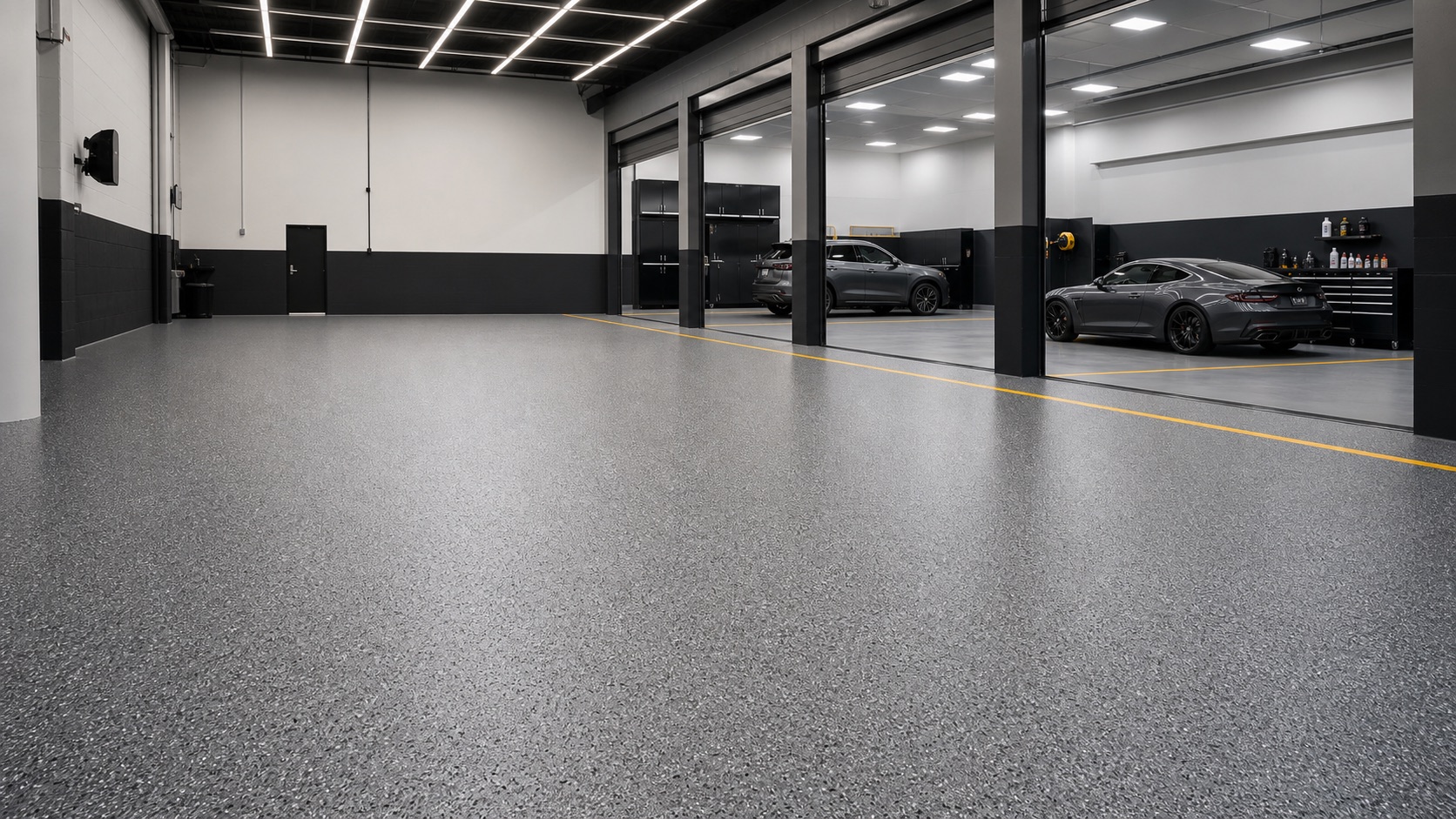
What to remember
- Compare complete systems, not one chemistry word.
- Preparation and moisture conditions can outweigh advertised cure speed.
- Topcoat, texture, UV exposure, and maintenance affect long-term appearance.
- Request a written layer-by-layer specification.
Why the comparison is often oversimplified
Epoxy and polyaspartic describe broad chemistry families, not one universal product. Formulation, solids, primer strategy, broadcast media, topcoat, coverage, and installation conditions vary widely.
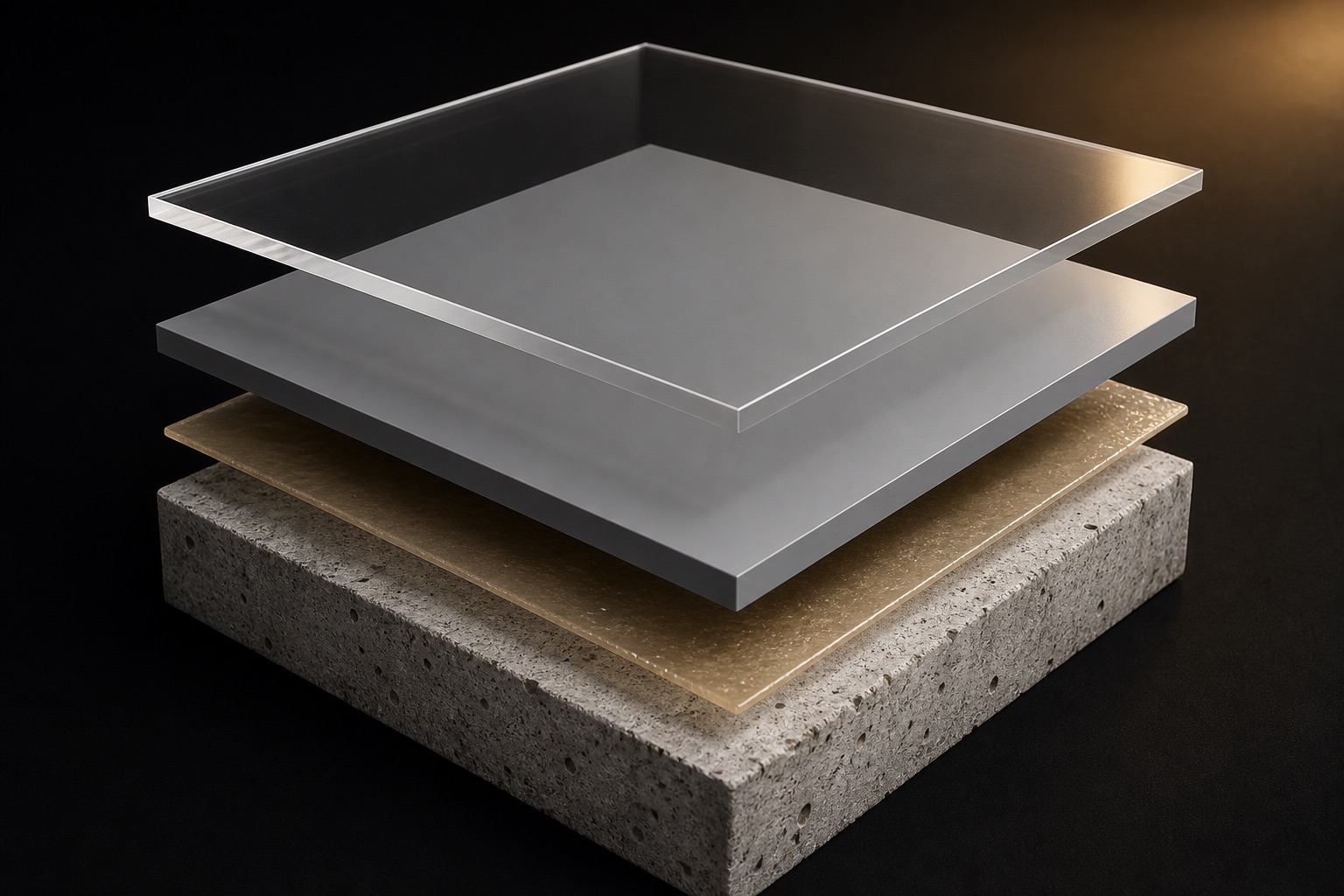
A fair comparison identifies each layer and its role. One system may combine an epoxy primer or build coat with a polyaspartic topcoat; another may use a different sequence entirely.
- Substrate preparation
- Primer or moisture-mitigation strategy
- Base or build coat
- Decorative broadcast
- Protective topcoat
- Required film thickness and cure conditions
Working time and cure speed
Fast return-to-service can be valuable, but a faster material also gives the installer less working time. Temperature, humidity, crew size, layout, edges, and broadcast technique become critical.
The right schedule protects every layer through its required recoat and cure window. Vehicle access should follow the documented system—not a generic promise.
UV, color, and appearance
Sunlight exposure at an open garage door can affect some resinous materials differently. The selected system should account for UV stability, color direction, decorative media, gloss, and the expected visual change over time.
Texture also changes how the floor looks and cleans. More texture may support traction but can require a more deliberate cleaning routine.
- Review samples in the actual garage light
- Discuss gloss and texture together
- Coordinate color with cabinets, walls, and driveway
- Document realistic variation and repair expectations
Preparation remains the foundation
Mechanical preparation creates the profile and clean surface the specified coating needs. Cracks, joints, contamination, weak concrete, moisture, and previous coatings are separate conditions requiring separate decisions.
A premium topcoat cannot compensate for an unstable or poorly prepared substrate. That is why a condition-first scope is more valuable than a chemistry-first sales pitch.
What to request in a proposal
A professional proposal should identify the area, substrate assumptions, preparation method, repairs, layer sequence, decorative system, texture, exclusions, cure restrictions, and care guidance.
When two quotes differ, compare what is actually included. The lowest number may represent fewer preparation steps, less material, different repairs, or a narrower warranty—not the same system for less money.
- Product and layer names
- Surface-preparation method
- Coverage and broadcast approach
- Crack and joint treatment
- Return-to-service schedule
- Care and warranty terms
Questions homeowners ask
Quick answers.
Which system cures faster?+
Many polyaspartic products cure quickly, but exact timing depends on the specified product, layer thickness, temperature, humidity, and installation conditions.
Will a coating stop every crack?+
No. Crack treatment can improve the surface, but active slab movement may telegraph through or affect a bonded finish.
Are glossy floors slippery?+
Traction depends on texture, contaminants, footwear, water, and the complete finish—not gloss alone.
Join the discussion.
Ask a garage-planning question or share what you learned. Comments are reviewed before publication.
No published comments yet. Start the conversation.