What to remember
- Review the whole garage once a year, not just the broken item.
- Winter exposes seals, drainage, coating, and door problems.
- Document small changes before they become failures.
- Safety-critical door work belongs to trained professionals.
What this decision actually controls
A garage concentrates moving doors, vehicles, electrical equipment, storage loads, coatings, moisture, salt, tools, and building-envelope transitions in one room. Annual review helps identify change before it interrupts daily use.
The goal is not to replace every component on a schedule. It is to observe, clean, test, document, and prioritize based on actual condition.
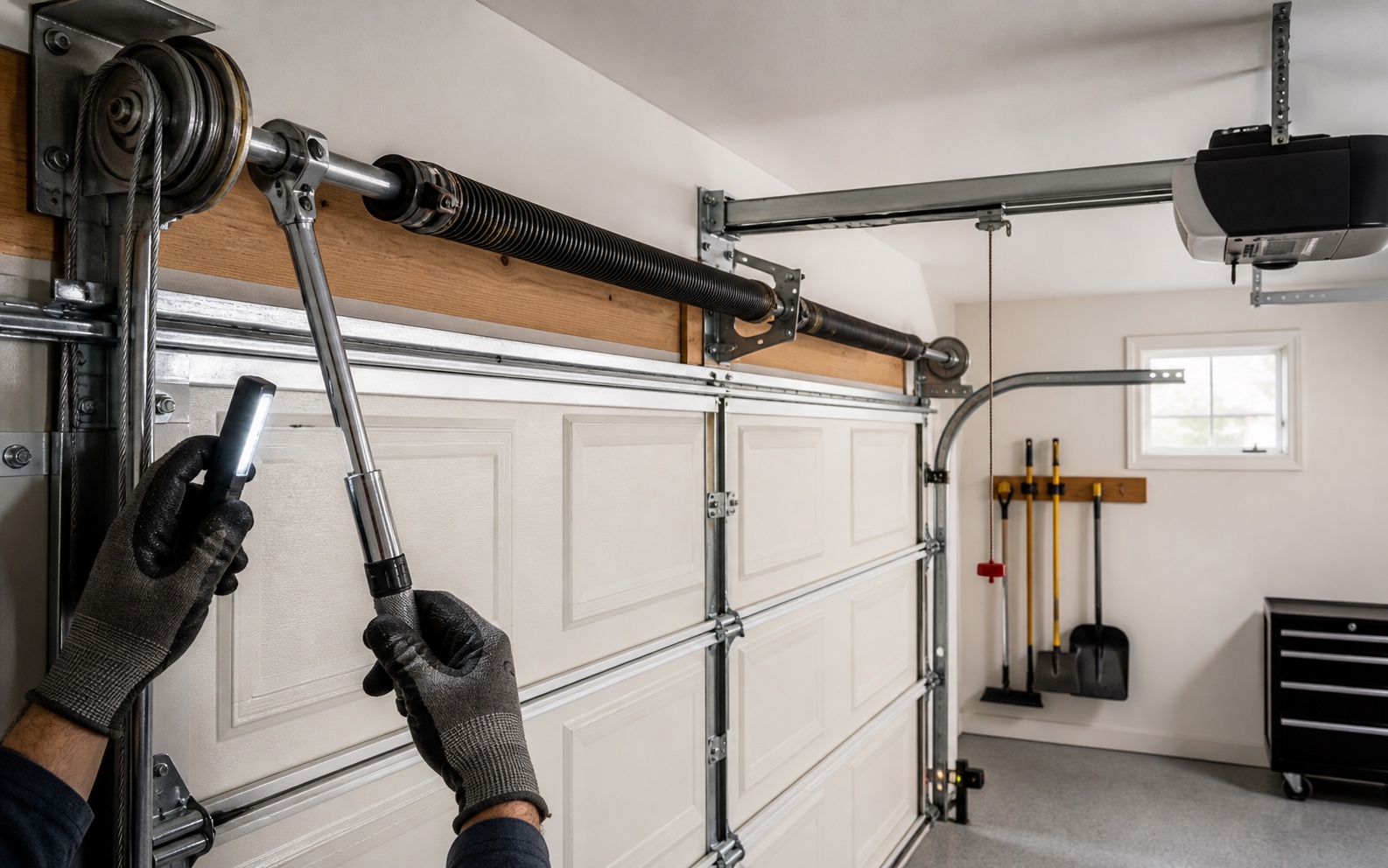
- Door balance, travel, hardware, seals, and safety reversal
- Floor wear, coating damage, joints, cracks, and winter contamination
- Wall, ceiling, trim, and water-entry clues
- Lighting, controls, outlets, and visible damage
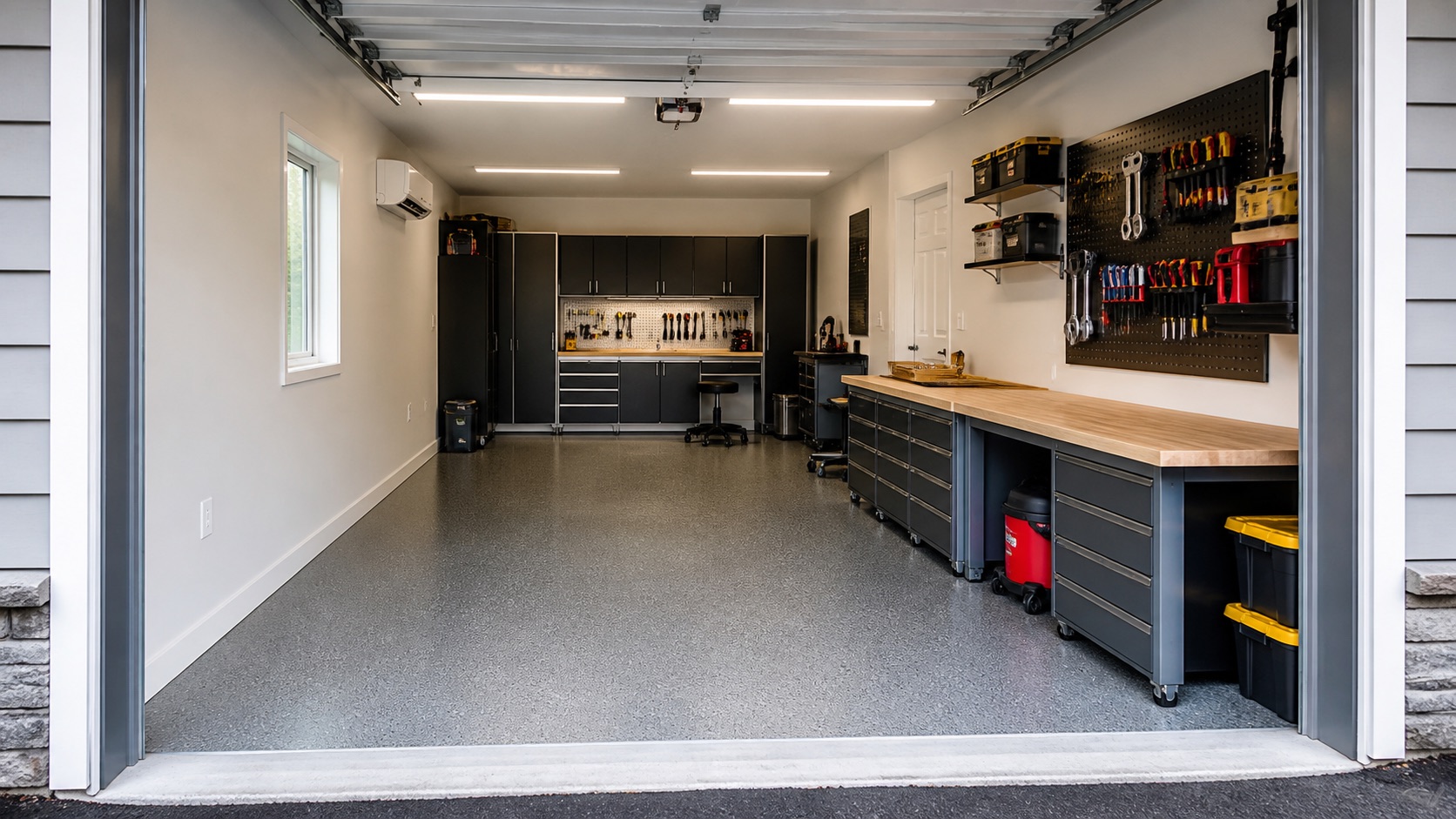
- Cabinet, slatwall, rack, anchor, and load condition
Plan the complete system
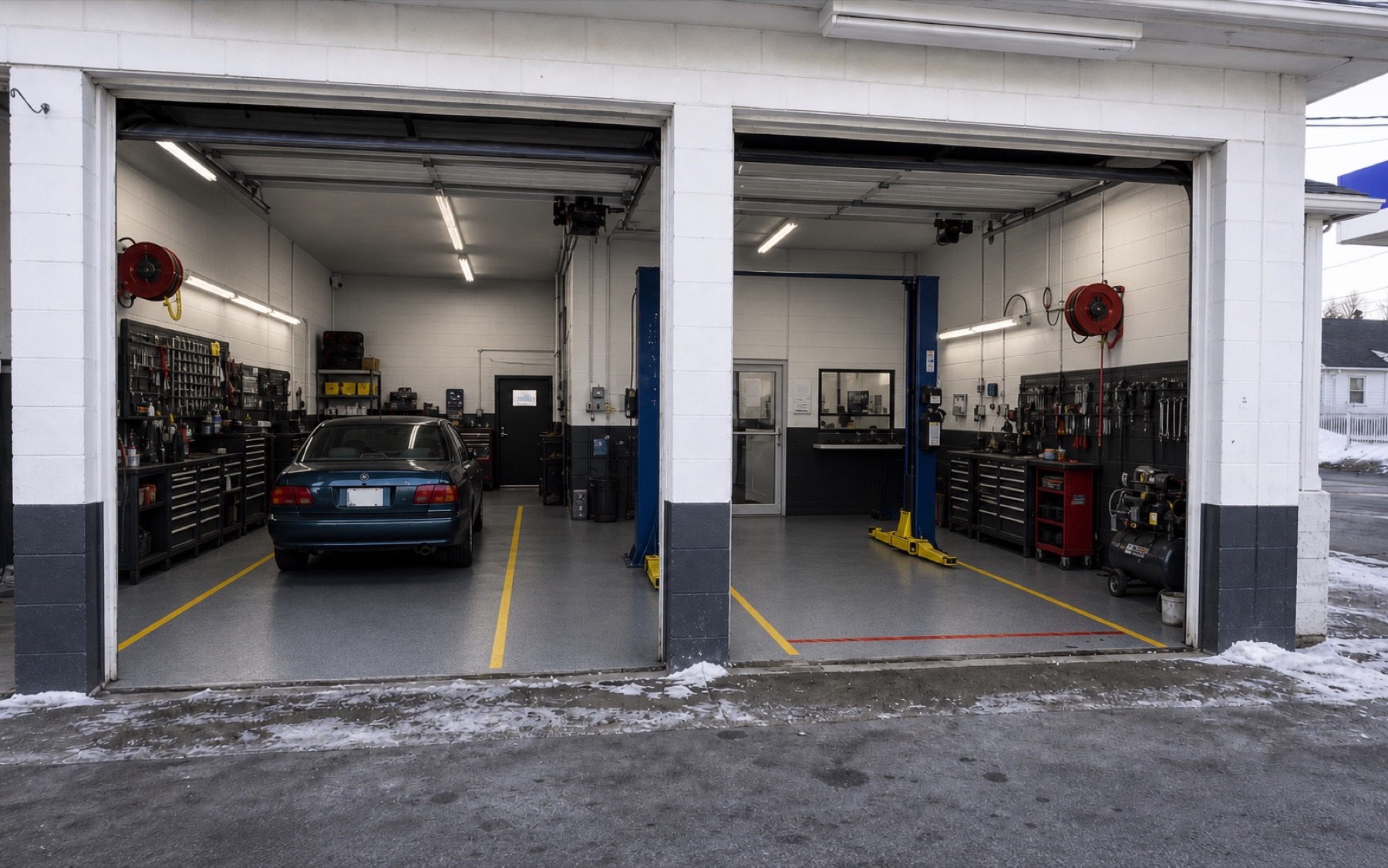
Use spring and fall as natural checkpoints. Before winter, clear drains and thresholds, review seals, organize snow equipment, and protect the floor. After winter, wash salt, inspect transitions, and document new wear.
Keep a simple photo record so changes in cracks, coating, corrosion, hardware, or water patterns can be compared over time.
What the project review should confirm
A professional care visit should define what was inspected, maintained, tested, excluded, and recommended. Repairs should be quoted separately unless the plan explicitly includes them.
Membership value comes from scheduled attention, service history, and included maintenance—not vague promises that no future repair will be needed.
- Existing conditions and eligible preparation
- The selected system, finish, and performance direction
- Access, sequencing, protection, cure, or commissioning
- Care requirements and the limits of the approved scope
Questions homeowners ask
Quick answers.
What garage maintenance can a homeowner do?+
Routine cleaning, visual observation, clearing safe access, and testing owner-level controls are useful. High-tension door parts, electrical faults, structural anchors, and uncertain conditions need qualified service.
Does a membership include every repair?+
Not automatically. The plan should list included visits and tasks; parts, repairs, recoating, repainting, and specialty work may be separate.
Why document the garage each year?+
Comparable photos and notes help distinguish gradual wear from sudden change and make future repair decisions more informed.

Join the discussion.
Ask a garage-planning question or share what you learned. Comments are reviewed before publication.
No published comments yet. Start the conversation.