What to remember
- Refinishing is an exterior finish service for eligible, serviceable doors—not a repair for structural or mechanical failure.
- Door material, factory finish, prior coatings, contamination, corrosion, sun, and moisture determine compatibility.
- Preparation, primer strategy, color coats, curing, and operating-clearance checks form one complete process.
- Replacement should come first when condition, safety, panel integrity, or system performance cannot support refinishing.
Begin with eligibility, not color
A faded or outdated garage door can dominate the front elevation of a home, which makes refinishing appealing. The first question, however, is whether the door remains a responsible candidate for another finish system.
Panel integrity, corrosion, delamination, material type, existing coating, prior repairs, weather exposure, seals, hardware, and mechanical operation should be reviewed before a palette is selected.
Good refinishing candidates
Refinishing may make sense when the door is structurally sound, operates safely, has a surface that can be prepared for a compatible coating, and needs an architectural update rather than a system replacement.
Fading, chalking, uneven sheen, dated color, minor eligible surface wear, and an exterior renovation can create a strong case for condition-specific refinishing.
- Serviceable panels and attachment points
- Controlled, balanced door operation
- Surface compatible with preparation and coating
- No severe corrosion or widespread delamination
- A color change meaningfully improves the elevation
When repair or replacement comes first
Coating cannot restore structural strength, correct an unsafe counterbalance system, straighten a severely damaged panel, stop active corrosion, or make incompatible materials accept a finish responsibly.
Repair may address an isolated mechanical or surface condition before refinishing. Replacement may be the better path when damage, age, obsolete components, insulation goals, design change, or repeated failure affects the complete system.
The coating system is more than paint
A professional scope may include cleaning and decontamination, controlled abrasion, repair of eligible minor defects, masking, material-specific primer where required, compatible color coats, cure protection, and a final operational review.
The exact sequence changes with steel, aluminum, wood, overlays, factory finishes, previous field coatings, exposure, and the selected product family. Universal preparation instructions are not responsible for every door.
- Identify the substrate and existing finish
- Test and document surface condition
- Protect joints, seals, glass, hardware, siding, and pavement
- Use compatible preparation, primer, and finish products
- Respect recoat and cure requirements
- Verify clean travel and operating clearances
Choose color against the whole home
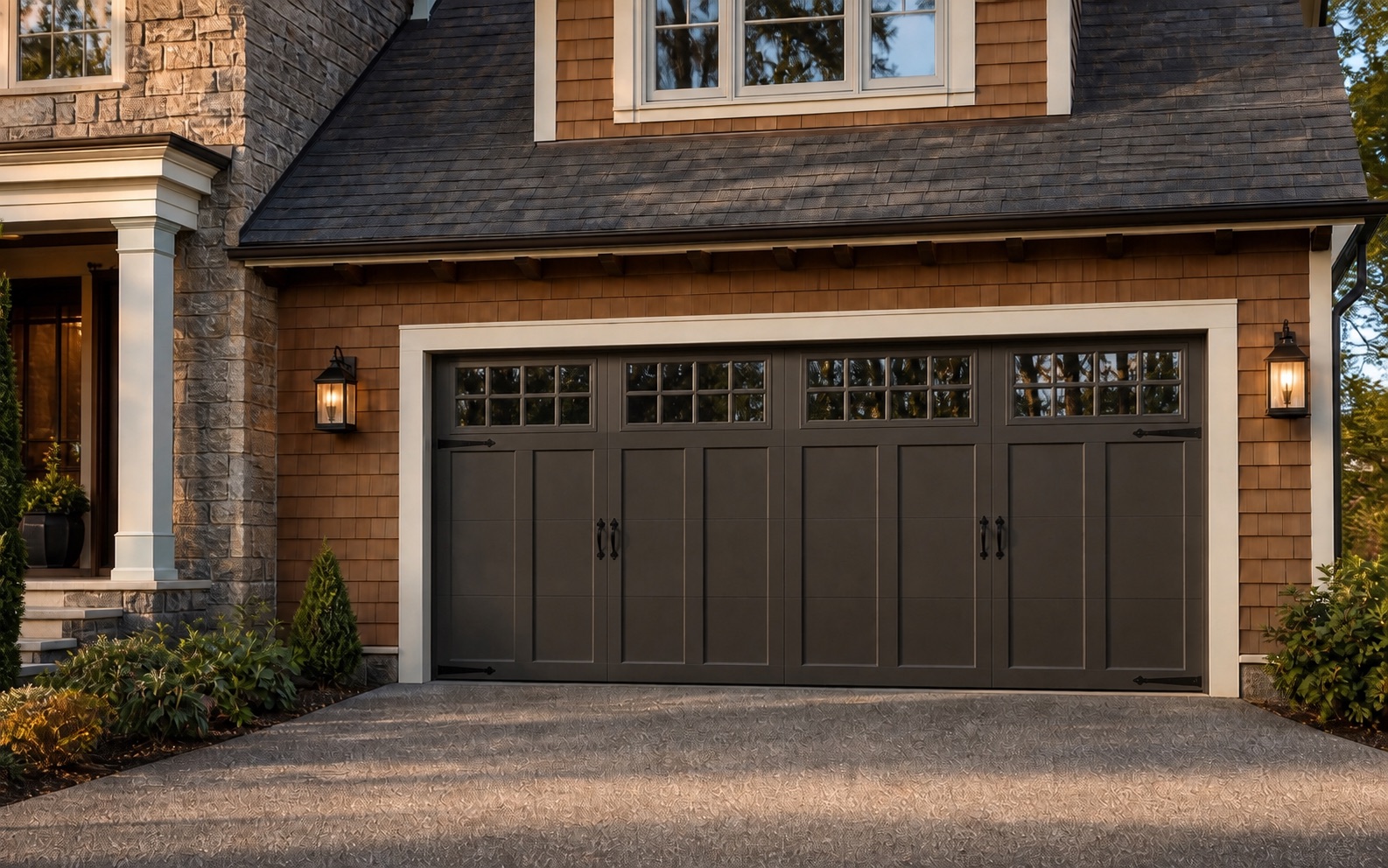
The garage door should be evaluated with siding, trim, masonry, roofing, windows, lighting, landscaping, driveway, and sun exposure. The same sample can look substantially different across a large articulated surface.
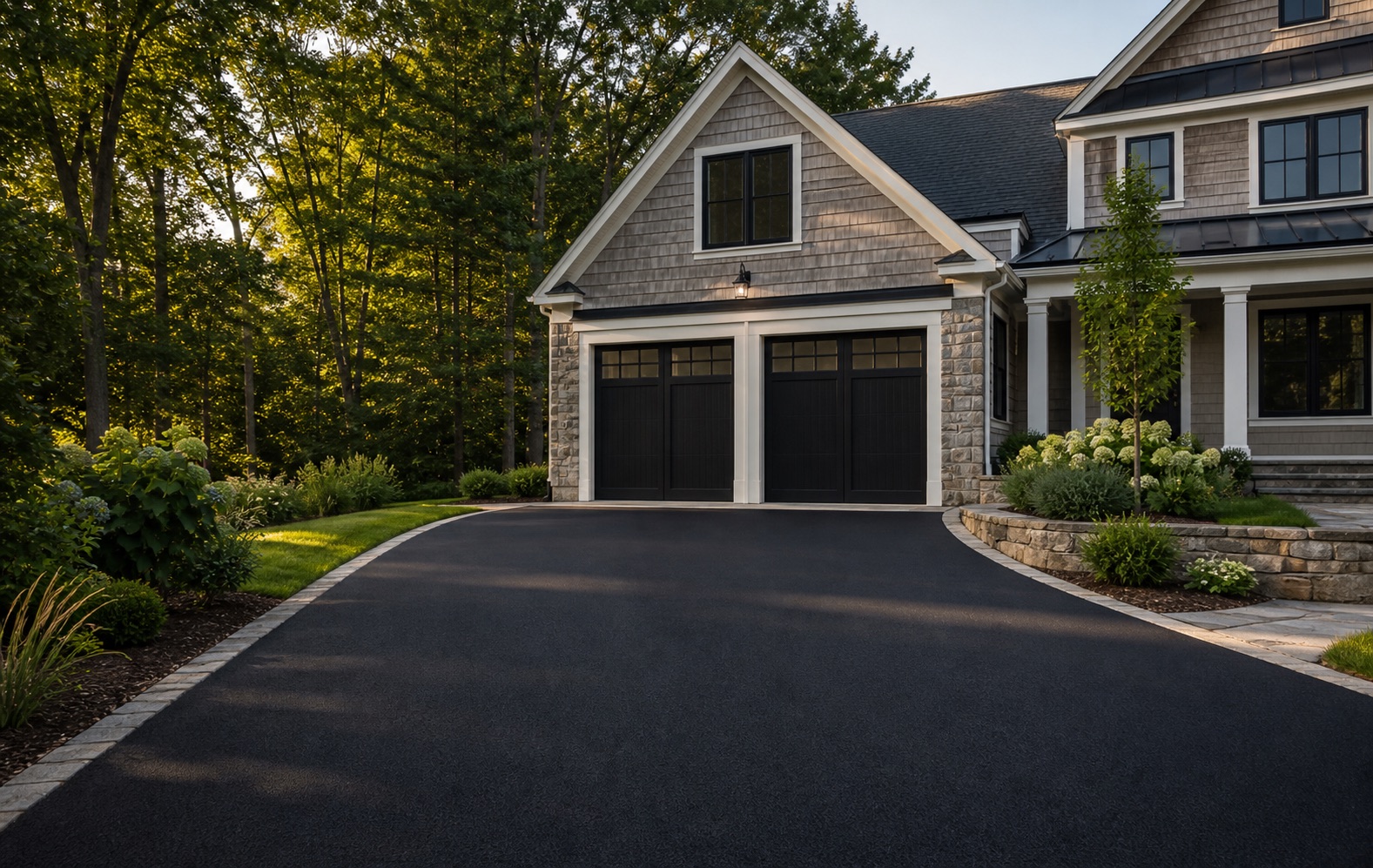
Warm neutrals can soften contrast, bronze and charcoal can create architectural depth, and selected heritage colors can establish identity. Sheen and texture should be approved with color because they change reflectance and the visibility of surface variation.
Protect the finish after handoff
Follow the documented cure window before washing, touching up, or exposing the surface to avoidable abrasion. Keep harsh cleaners, aggressive pressure, incompatible chemicals, and scraping tools away from the finish.
Inspect the door seasonally for impact, edge wear, seal contact, corrosion, coating change, and mechanical issues. A finish can be maintained, but it should never conceal a developing operating problem.
Use a three-path decision
Choose refinishing when the system is sound and the surface can accept a compatible finish. Choose repair-first when an isolated eligible condition must be corrected before coating. Choose replacement when structure, safety, compatibility, or performance no longer supports responsible refinishing.
A written assessment makes the recommendation easy to understand and keeps cosmetic goals aligned with the long-term condition of the door.
- Refinish: sound door, tired appearance
- Repair first: correctable condition, then reassess
- Replace: failed or unsuitable system
Questions homeowners ask
Quick answers.
Can every metal garage door be painted or refinished?+
No. Material, factory finish, prior coatings, contamination, corrosion, adhesion, exposure, manufacturer guidance, and warranty conditions must be evaluated.
Will refinishing make an old garage door operate better?+
Not by itself. Mechanical inspection, adjustment, repair, or replacement is a separate scope from the exterior finish.
How long does garage-door refinishing take?+
The schedule depends on door size, condition, preparation, repairs, product requirements, weather, recoat windows, cure protection, and the approved scope.
Join the discussion.
Ask a garage-planning question or share what you learned. Comments are reviewed before publication.
No published comments yet. Start the conversation.