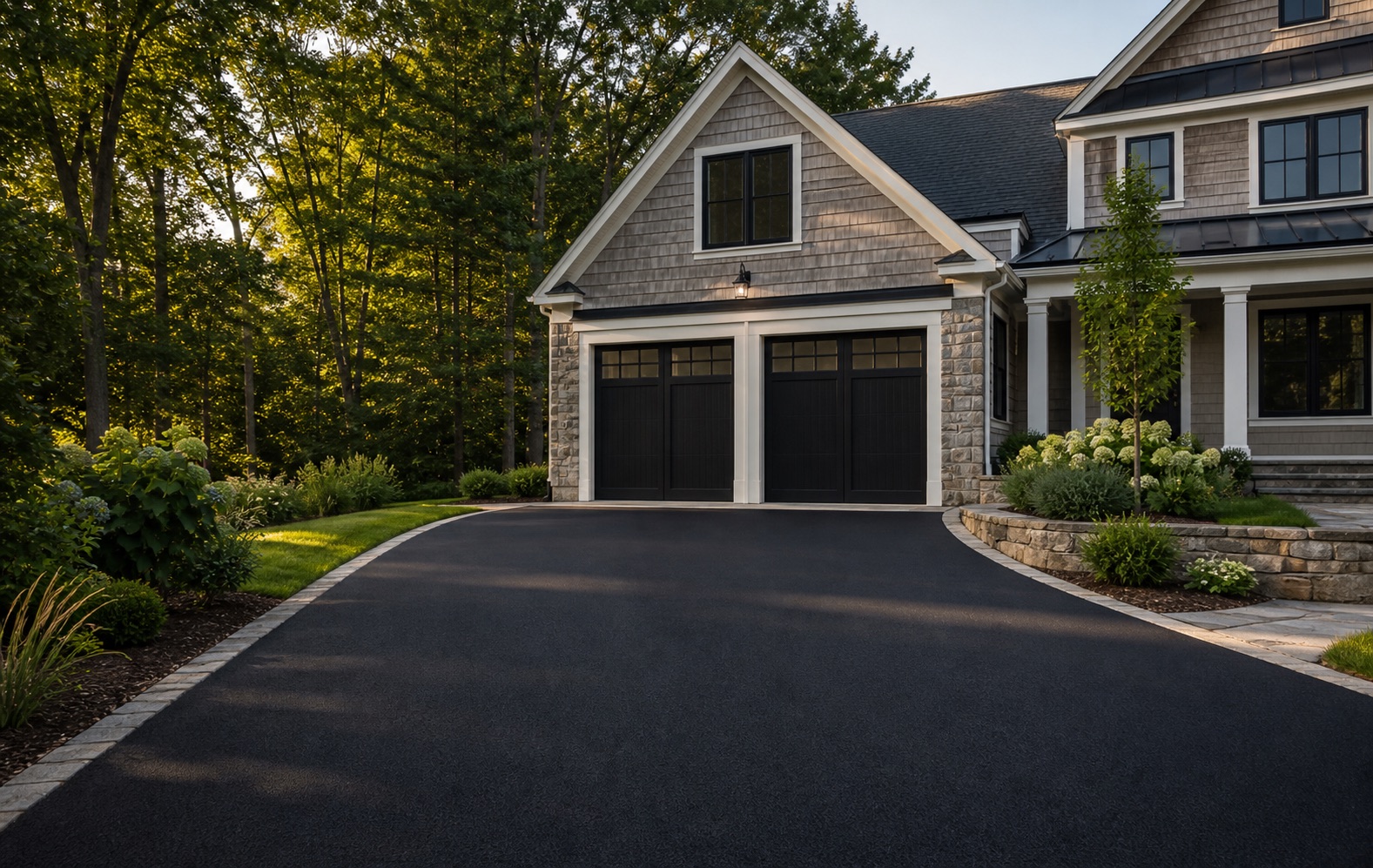
What to remember
- Sealcoat protects eligible asphalt; it does not rebuild failed pavement.
- Surface and weather conditions control the schedule.
- Preparation and compatible crack treatment come before coating.
- Traffic must remain off until the confirmed reopening time.
Sealcoating is maintenance, not reconstruction
A maintenance coating can refresh appearance and protect an eligible asphalt surface from weather and normal exposure. It cannot correct a failed base, deep settlement, severe alligator cracking, potholes, drainage failure, or major edge collapse.
The first decision is therefore suitability. Repair or replacement may be the better investment when structural symptoms are present.
- Widespread interconnected cracking
- Potholes or loose unstable material
- Deep settlement or heaving
- Severe edge loss
- Persistent drainage failure
Condition matters more than a calendar rule
There is no responsible universal interval for every driveway. Pavement age, prior products, traffic, sun, drainage, snow removal, repairs, contamination, and current wear all influence timing.
A condition review should separate normal surface aging from defects that need treatment or reconstruction before a maintenance coating is considered.
Weather controls application and cure
Pavement temperature, air temperature, humidity, shade, wind, dew, rain risk, and irrigation can affect application and drying. Forecast requirements must be matched to the selected material.
Cool shaded areas may dry differently from sun-exposed pavement. The reopening time should be confirmed after considering the actual site and forecast—not copied from a generic label.
Preparation builds the result
The surface needs to be cleaned and evaluated so the approved material can contact suitable asphalt. Vegetation, loose debris, dirt, incompatible prior material, and automotive contamination can interfere with adhesion and appearance.
Cracks and repairs are separate scope items. Treatment depends on dimensions, movement, condition, and compatibility; sealcoat itself should not be presented as crack repair.
- Clean and dry eligible pavement
- Define edges and protect adjacent surfaces
- Treat approved cracks and repairs separately
- Keep vehicles and landscaping clear
- Confirm coat strategy and coverage
Plan the driveway back into service
The project is not complete when the coating looks dry. Foot traffic, tires, turning, kickstands, delivery vehicles, irrigation, and shade can affect a curing surface.
Arrange alternate parking and communicate the reopening time to everyone who uses the property. After cure, clean spills promptly and review the pavement after winter for new cracking, drainage changes, or plow damage.
Questions homeowners ask
Quick answers.
Does sealcoating fill driveway cracks?+
No. Eligible cracks require separate preparation and compatible treatment; structural movement and pavement failure require a different response.
Can sealcoating be applied before rain?+
The selected product requires a protected weather and cure window. Rain, dew, irrigation, temperature, and humidity must be checked before scheduling.
How soon can I drive on a sealcoated driveway?+
Follow the site-specific reopening time provided after application. Weather, shade, coat thickness, product, and pavement conditions can change timing.
Join the discussion.
Ask a garage-planning question or share what you learned. Comments are reviewed before publication.
No published comments yet. Start the conversation.