What to remember
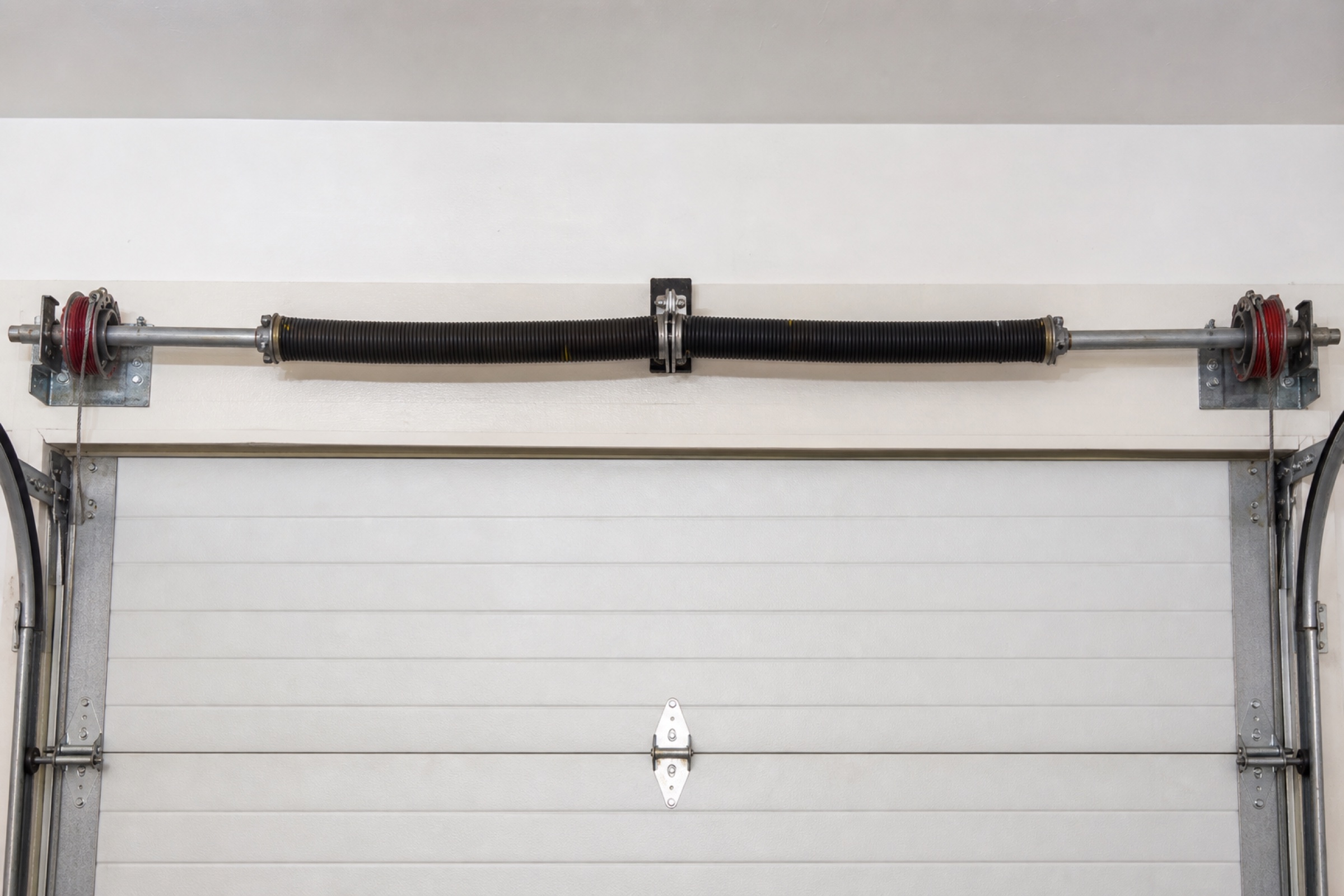
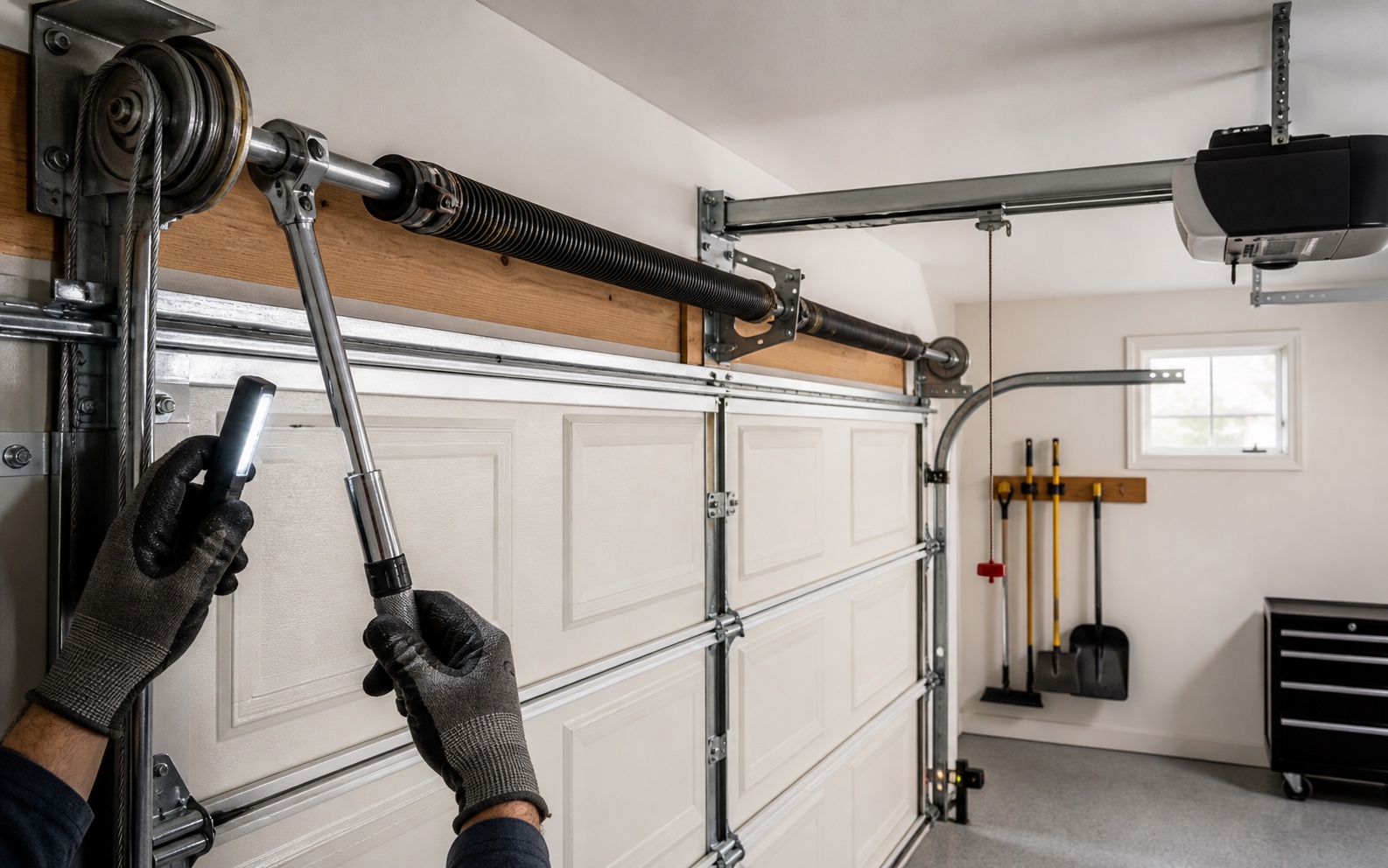
- Springs and cables are high-tension components.
- A visible symptom may have more than one cause.
- Stop operating a door that is crooked, jammed, or structurally unsafe.
- A complete repair ends with balance and safety testing.
What this decision actually controls
Springs counterbalance the weight of the door while drums, cables, tracks, rollers, hinges, sections, and the opener guide controlled travel. When one part changes, the symptoms can appear somewhere else.
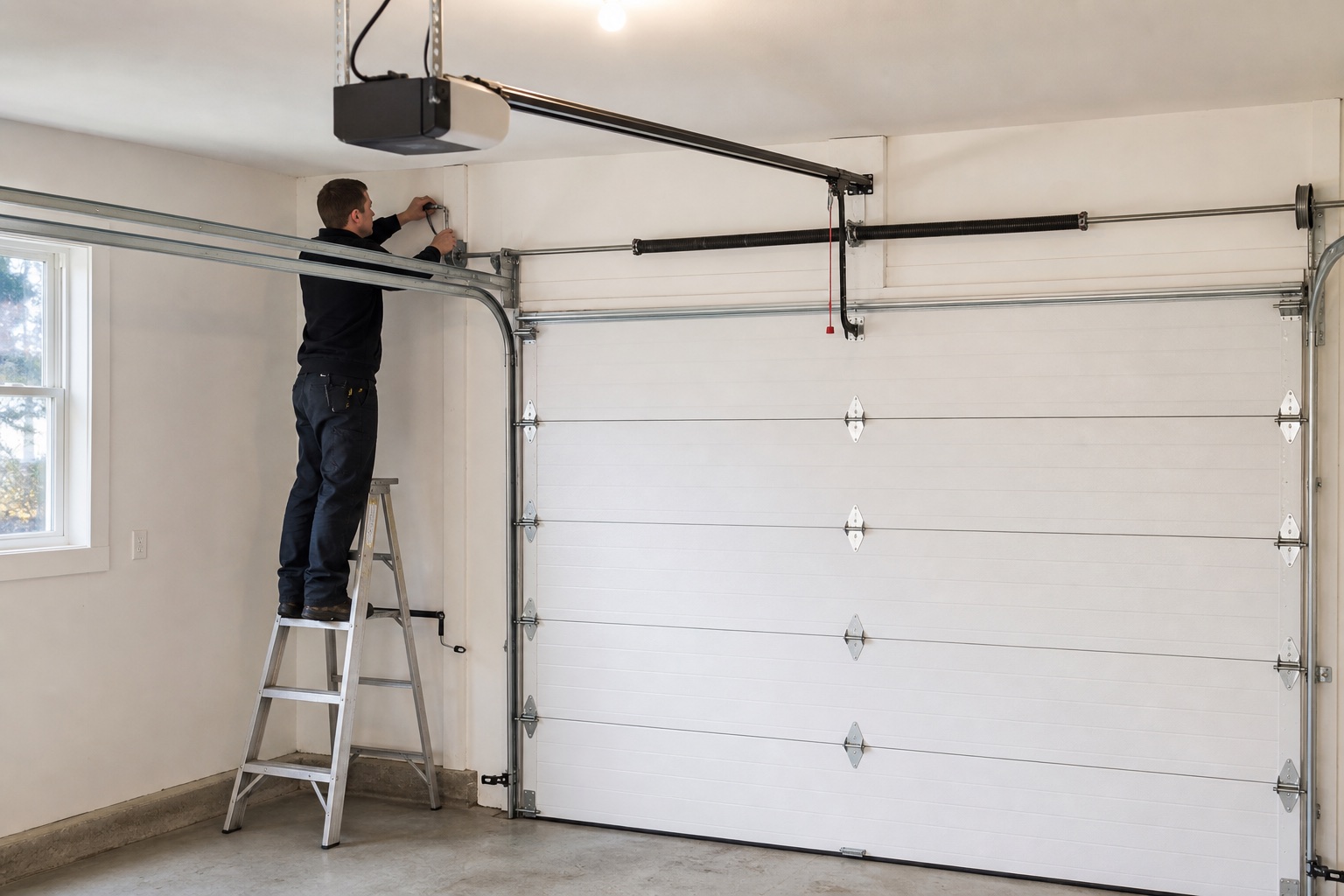
Homeowners can observe noise, uneven travel, loose cable, gaps, damaged panels, delayed reversal, or a door that feels unusually heavy. They should not release tension, remove bottom fixtures, or improvise a cable or spring repair.
- Door balance and full travel
- Spring condition and matched replacement
- Cable seating, drums, bearings, and attachments
- Track alignment, rollers, hinges, and fasteners
- Photo eyes, reversal, limits, force, and emergency release
Plan the complete system
Describe the symptom, stop forcing the door, keep people and vehicles clear, and photograph the system from a safe distance. A technician should diagnose the complete operating path before authorizing parts.
Replacement components must match the door, weight, geometry, hardware, cycle needs, and manufacturer or service specification. Similar-looking parts are not automatically interchangeable.
What the project review should confirm
The service record should identify the condition found, work performed, parts used where applicable, and the final operating and safety checks.
If sections, framing, tracks, or the opening are damaged, the repair may need a broader scope than a spring or opener visit.
- Existing conditions and eligible preparation
- The selected system, finish, and performance direction
- Access, sequencing, protection, cure, or commissioning
- Care requirements and the limits of the approved scope
Questions homeowners ask
Quick answers.
Can I open a garage door with a broken spring?+
Do not force it. The door may be extremely heavy or unstable; contact a qualified garage door professional.
Why did a cable come off the drum?+
Possible causes include imbalance, obstruction, track or hardware problems, spring issues, impact, or cable condition. The system needs diagnosis.
Does a new opener fix a heavy door?+
No. The door should be properly balanced and mechanically sound; the opener is not designed to compensate for a failed counterbalance system.
Join the discussion.
Ask a garage-planning question or share what you learned. Comments are reviewed before publication.
No published comments yet. Start the conversation.