What to remember
- Repair is often appropriate when the door is structurally sound and the problem is isolated and serviceable.
- Replacement becomes more responsible when panels, structure, corrosion, compatibility, safety, or repeated failures compromise the complete system.
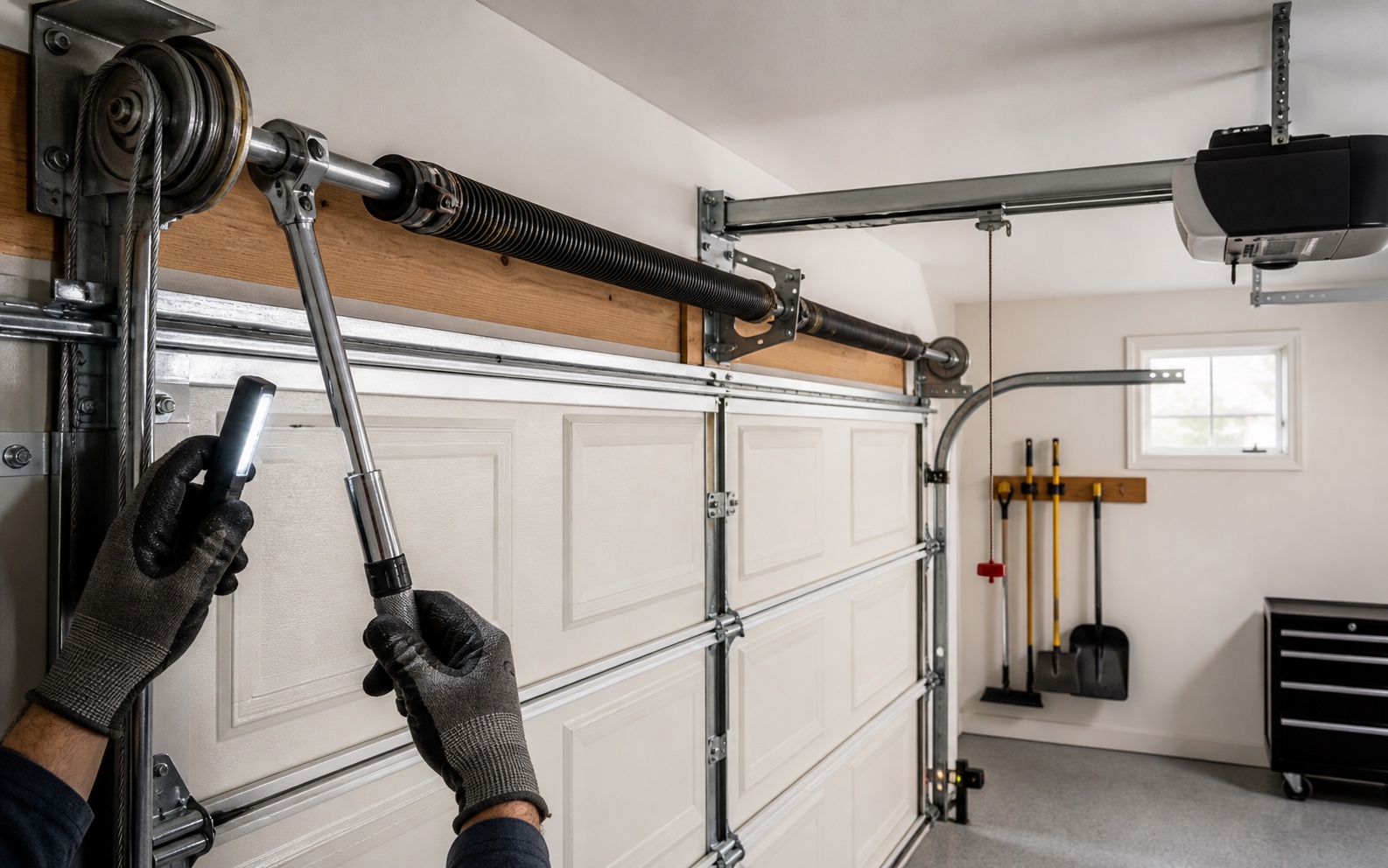
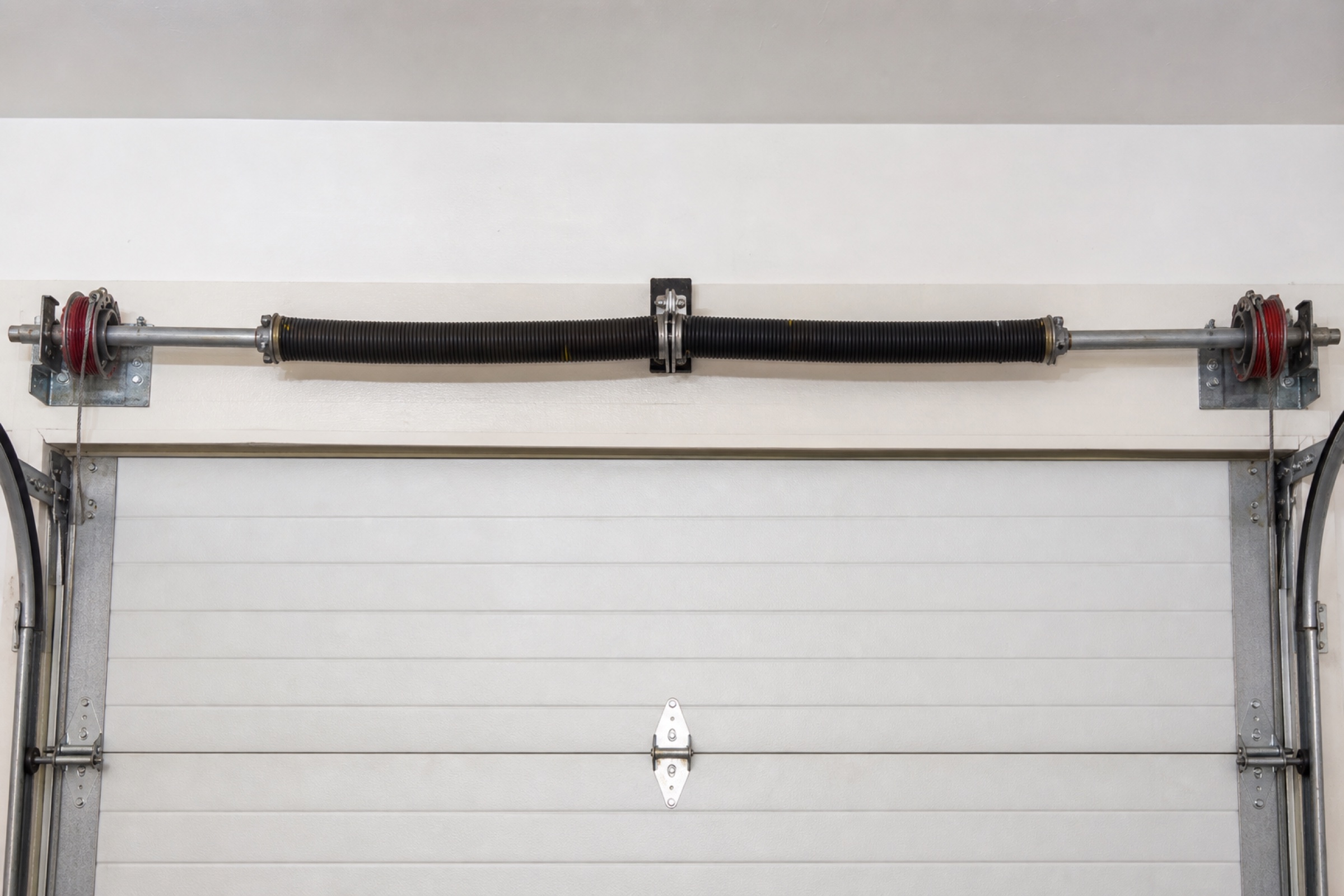
- Springs, cables, drums, and bottom fixtures are high-tension components for trained professionals only.
- Evaluate the door, counterbalance, tracks, opener, controls, seals, and opening as one operating system.
Treat the garage door as a machine
A garage door is a large moving assembly made of panels, hinges, rollers, tracks, counterbalance components, an opener, controls, safety devices, seals, and attachment points. A symptom in one area may be caused by a problem somewhere else.
A useful assessment separates appearance, mechanical operation, structural condition, safety response, energy performance, and convenience. That prevents a cosmetic issue from automatically becoming a replacement—and prevents a serious system problem from being treated as a minor adjustment.
When targeted repair may make sense
Repair can be appropriate when the door sections and opening remain serviceable, parts are available and compatible, and the fault can be corrected without leaving a compromised system in operation.
Common repair scopes may involve rollers, hinges, track alignment, controls, sensors, seals, opener components, cables, or counterbalance parts. The exact work follows inspection and manufacturer-compatible component selection.
- Isolated serviceable component failure
- Sound panels and attachment points
- Compatible replacement parts available
- No severe corrosion or widespread damage
- A repair restores controlled, balanced operation
When replacement deserves serious consideration
Complete replacement may be more responsible when damage is widespread, panels are structurally compromised, corrosion is advanced, the door is repeatedly failing, parts are obsolete, or the system no longer fits the opening and intended use.
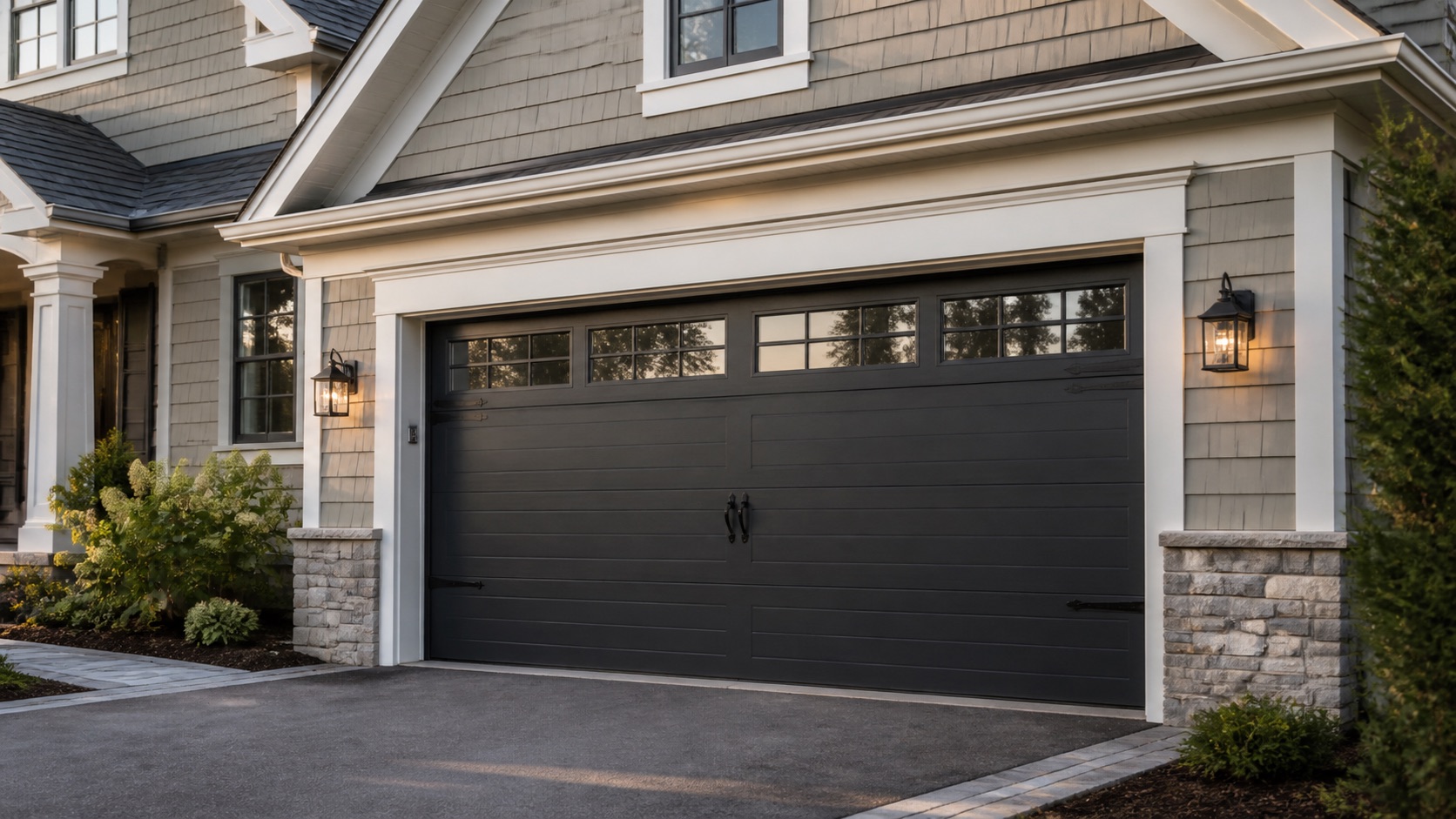
Replacement can also make sense when the project needs a major change in insulation, glazing, width, height, headroom configuration, exterior architecture, controls, or commercial duty.
- Severe panel damage or delamination
- Advanced corrosion or failing attachment points
- Repeated repairs across an aging system
- Obsolete or incompatible components
- Major performance or architectural change
Do not ignore safety boundaries
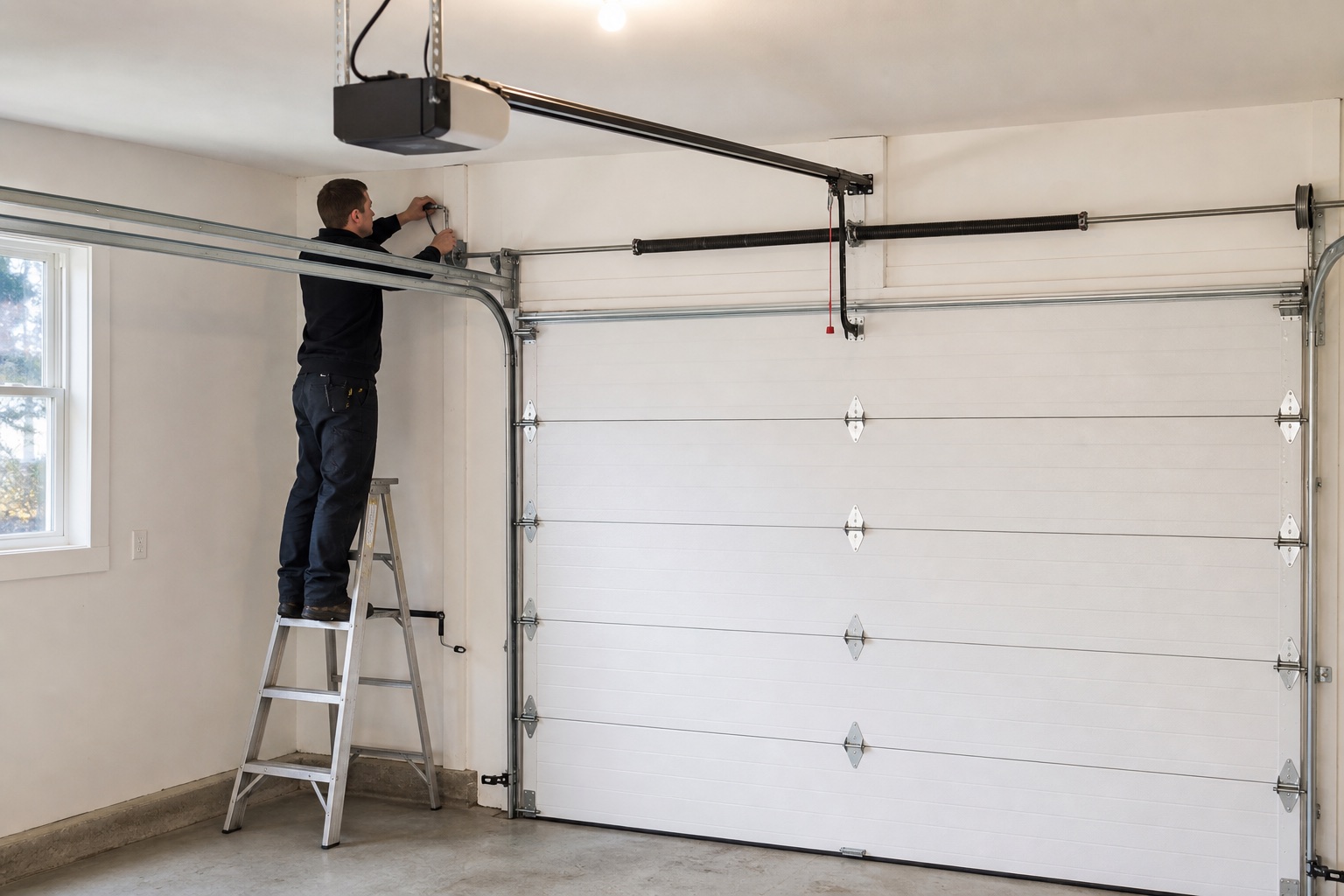
A door that is off-track, uncontrolled, visibly damaged, supported unevenly, or affected by a loose cable or broken spring should not continue operating. Keep people and vehicles clear and arrange professional service.
Do not loosen, wind, cut, clamp, or adjust springs, cables, drums, bottom fixtures, or other high-tension components. The apparent simplicity of the hardware does not reflect the energy stored in the system.
Include the opener and opening in the decision
A new opener cannot correct an unbalanced or structurally compromised door. Likewise, a sound door may still need control, sensor, lighting, seal, or opener upgrades to meet the project goal.
Headroom, sideroom, backroom, ceiling obstructions, electrical supply, framing, weather exposure, floor condition, and adjacent storage or lighting affect both repair and replacement planning.
Use a written decision record
Ask the technician to separate immediate safety priorities, corrective repair, preventive maintenance, optional upgrades, refinishing possibilities, and replacement considerations.
A clear condition record makes it easier to compare the cost and disruption of continued repair with the value of a complete new system. The best decision is the one that restores safe, reliable operation and fits the way the opening will be used.
- Observed condition and test results
- Immediate safety priorities
- Repair scope and compatible parts
- Expected remaining limitations
- Replacement option when relevant
- Maintenance and next review window
Questions homeowners ask
Quick answers.
Is a noisy garage door always ready for replacement?+
No. Noise can come from rollers, hinges, alignment, balance, opener strain, loose hardware, seals, or other serviceable conditions. It still deserves a complete inspection.
Can I replace only one damaged garage-door panel?+
Sometimes, if a compatible panel is available and the remaining system is suitable. Color, design, age, track configuration, weight, balance, and manufacturer compatibility all matter.
Should the opener be replaced with the door?+
Not automatically. The opener should be evaluated for compatibility, condition, controls, safety response, duty, and desired features as part of the complete project.
Join the discussion.
Ask a garage-planning question or share what you learned. Comments are reviewed before publication.
No published comments yet. Start the conversation.