What to remember
- More lumens do not automatically create better visibility.
- Glare can reduce comfort and hide detail.
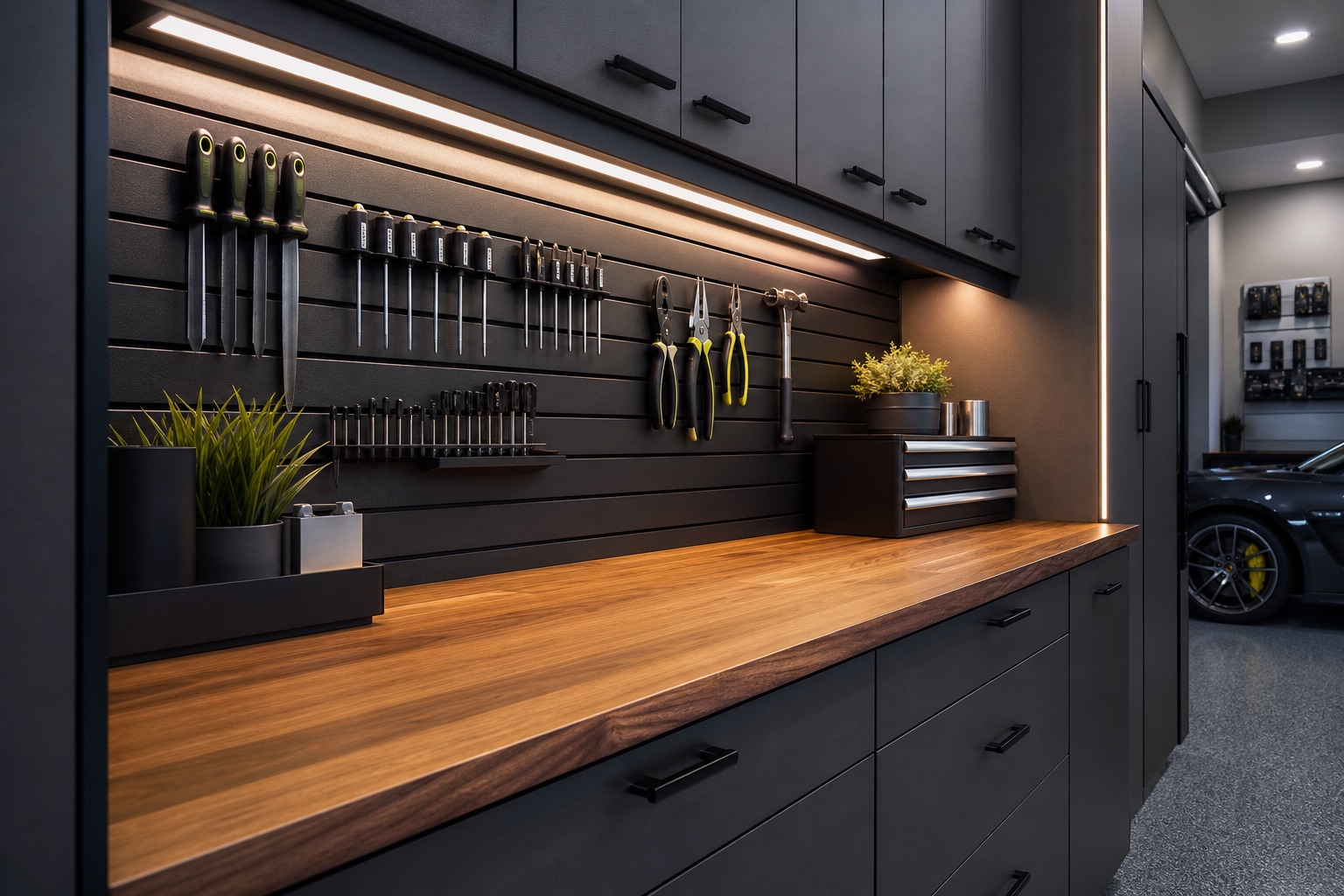
- Vertical surfaces need deliberate light.
- Controls let one garage support parking, work, cleaning, and display.
What this decision actually controls
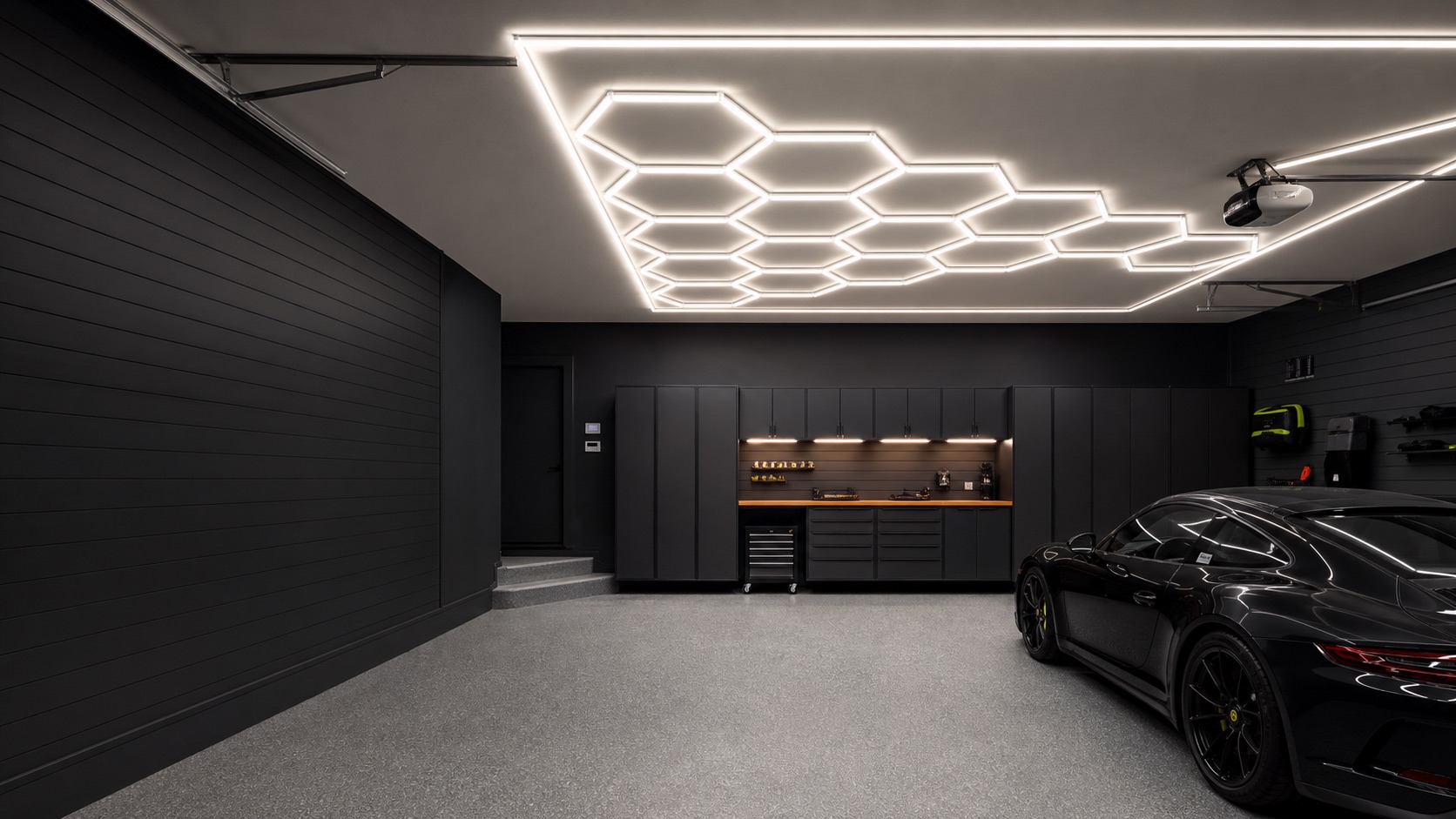
A garage can measure bright and still feel visually difficult. Exposed high-output sources, uneven spacing, deep shadows, shiny floors, dark cabinets, and light reflected in glass or paint all affect what the eye can resolve.
Color temperature describes the visual warmth or coolness of the source; color rendering describes how faithfully surfaces and objects appear. Both should support the work and the architecture.
- Uniform ambient visibility
- High-detail task zones
- Vertical storage and wall illumination
- Reflections on floors, cars, and windows
- Dimming, zoning, occupancy, and scene control
Plan the complete system
Instead of chasing one maximum brightness number, define scenes: arrival, general use, project work, detailing, cleaning, and low-level evening access.
Place task light to the front or sides of the work—not directly behind the person—and use shielding, diffusion, mounting height, and fixture distribution to manage glare.
What the project review should confirm
Confirm the fixture photometrics or coverage basis, output, color temperature, color rendering, mounting, controls, and intended scene behavior.
The completed installation should be reviewed with the garage door both open and closed and with vehicles or major equipment in their normal positions.
- Existing conditions and eligible preparation
- The selected system, finish, and performance direction
- Access, sequencing, protection, cure, or commissioning
- Care requirements and the limits of the approved scope
Questions homeowners ask
Quick answers.
Is 5000K always best for garages?+
No. Cooler light can feel crisp, but comfort, finishes, color rendering, tasks, and adjacent spaces should guide the selection.
Why do bright lights still create shadows?+
Poor spacing, one-directional light, obstructions, and light placed behind the user can produce strong shadowing despite high output.
Should garage lights be dimmable?+
Dimming or zoning can be useful when the room supports several activities, provided the fixtures, drivers, controls, and electrical design are compatible.
Join the discussion.
Ask a garage-planning question or share what you learned. Comments are reviewed before publication.
No published comments yet. Start the conversation.