What to remember
- Inventory first, then assign storage by frequency, size, and weight.
- Measure the room with vehicles and doors in their real positions.
- Protect utilities, electrical equipment, controls, and service access.
- A clear floor is the result of a repeatable storage routine.
Storage is a movement problem
A cabinet can fit the wall and still fail the garage. Door swing, vehicle doors, mirrors, walking paths, charging cables, opener controls, trash bins, stairs, and seasonal equipment all compete for the same space.
The layout should be tested with the actual vehicle profile and the garage door in motion. This avoids solving clutter by creating a new daily obstruction.
- Vehicle width, length, mirrors, and hatch travel
- Entry-door and cabinet-door swing
- Garage-door tracks, sections, and opener
- Steps, handrails, columns, and utilities
- Electrical panels, outlets, charging, and service zones
Build an honest inventory
Sort contents by frequency, size, weight, cleanliness, security, and season. Frequently used tools belong in reachable active zones; archive bins can move higher or deeper.
Plan around the container and the retrieval path, not only the object. A heavy bin technically stored overhead is not useful if it cannot be removed safely.
- Daily access
- Weekly projects
- Seasonal rotation
- Long-term archive
- Hazardous, temperature-sensitive, or prohibited contents
Cabinets, slatwall, and racks have different roles
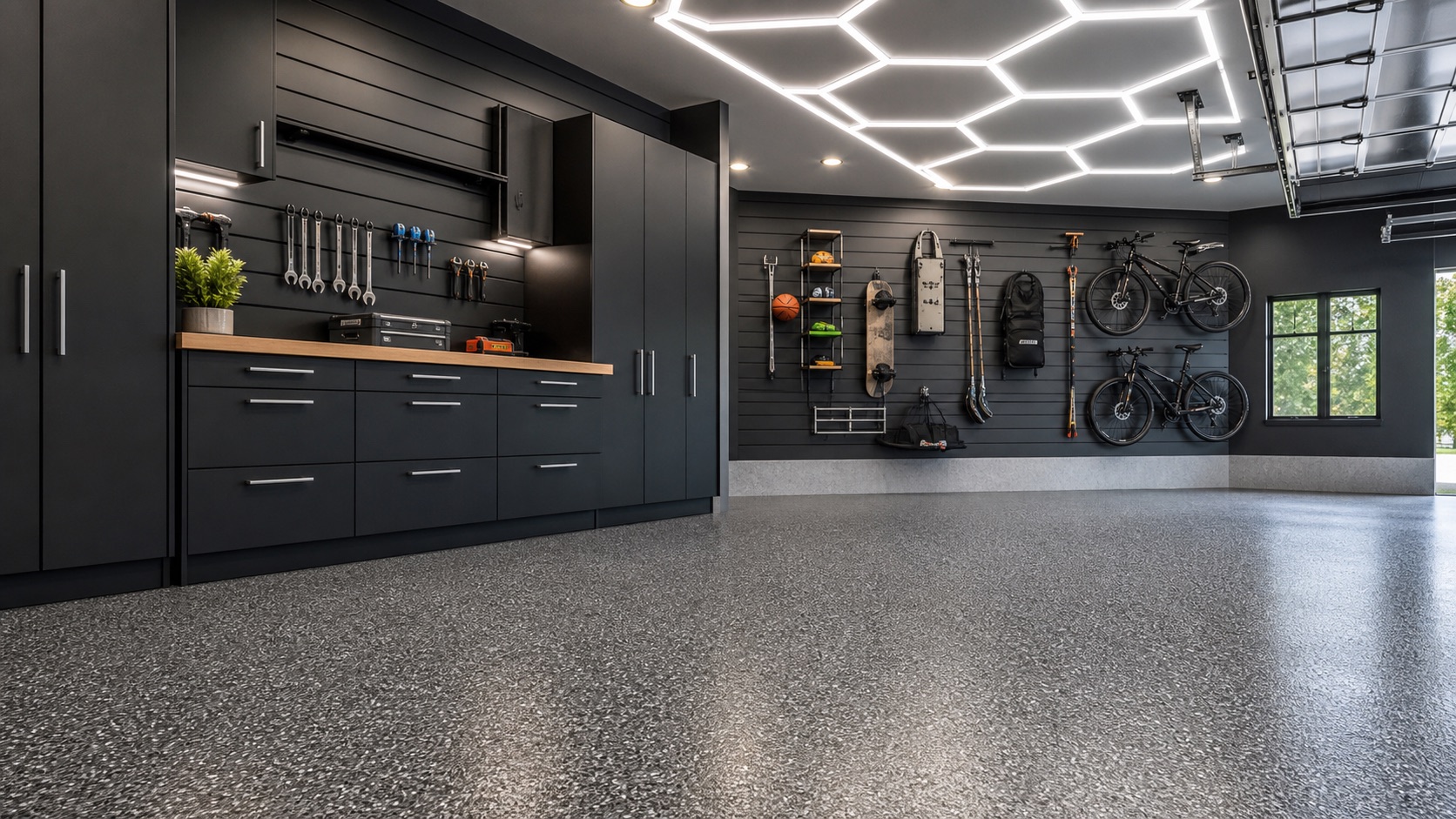
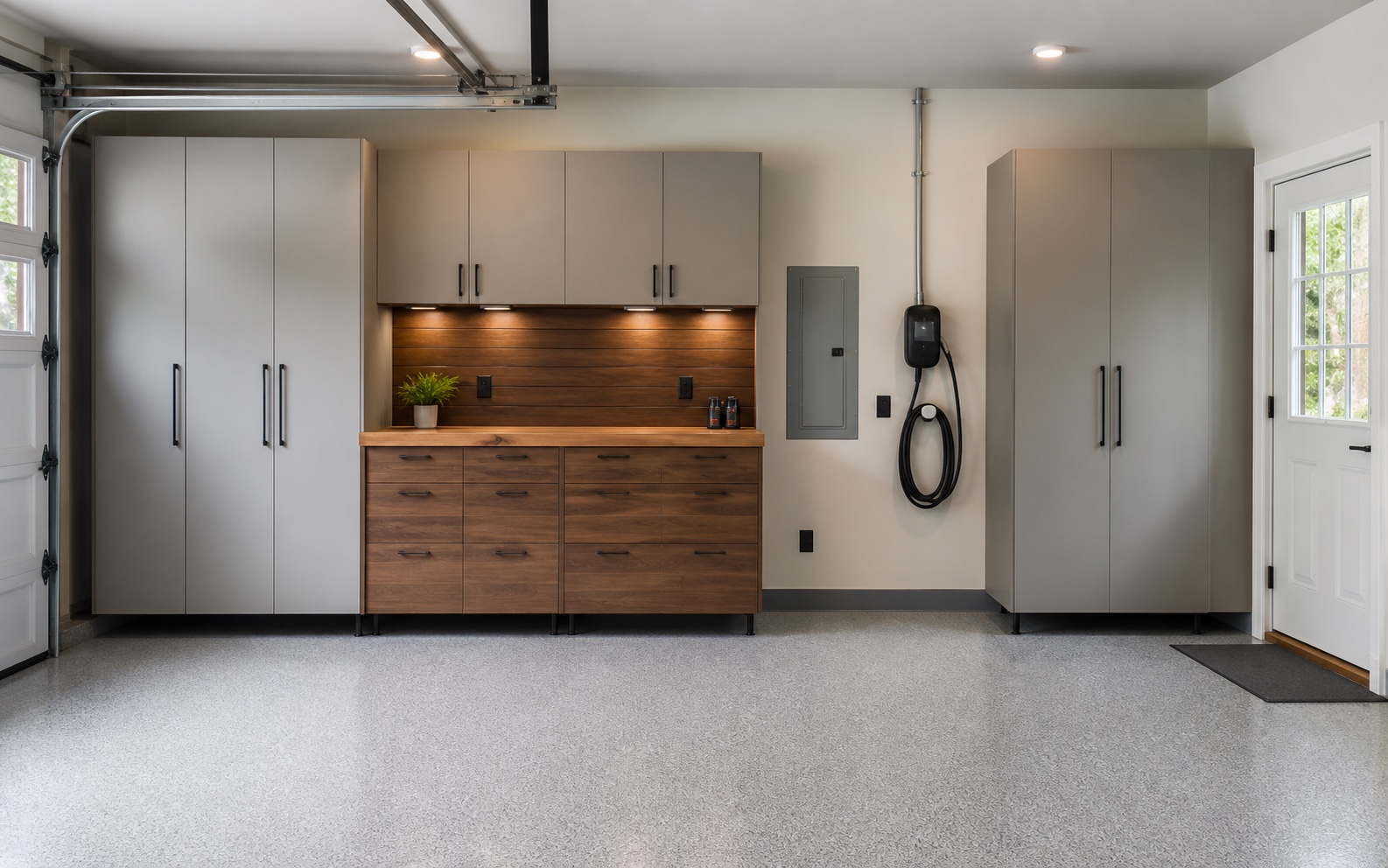
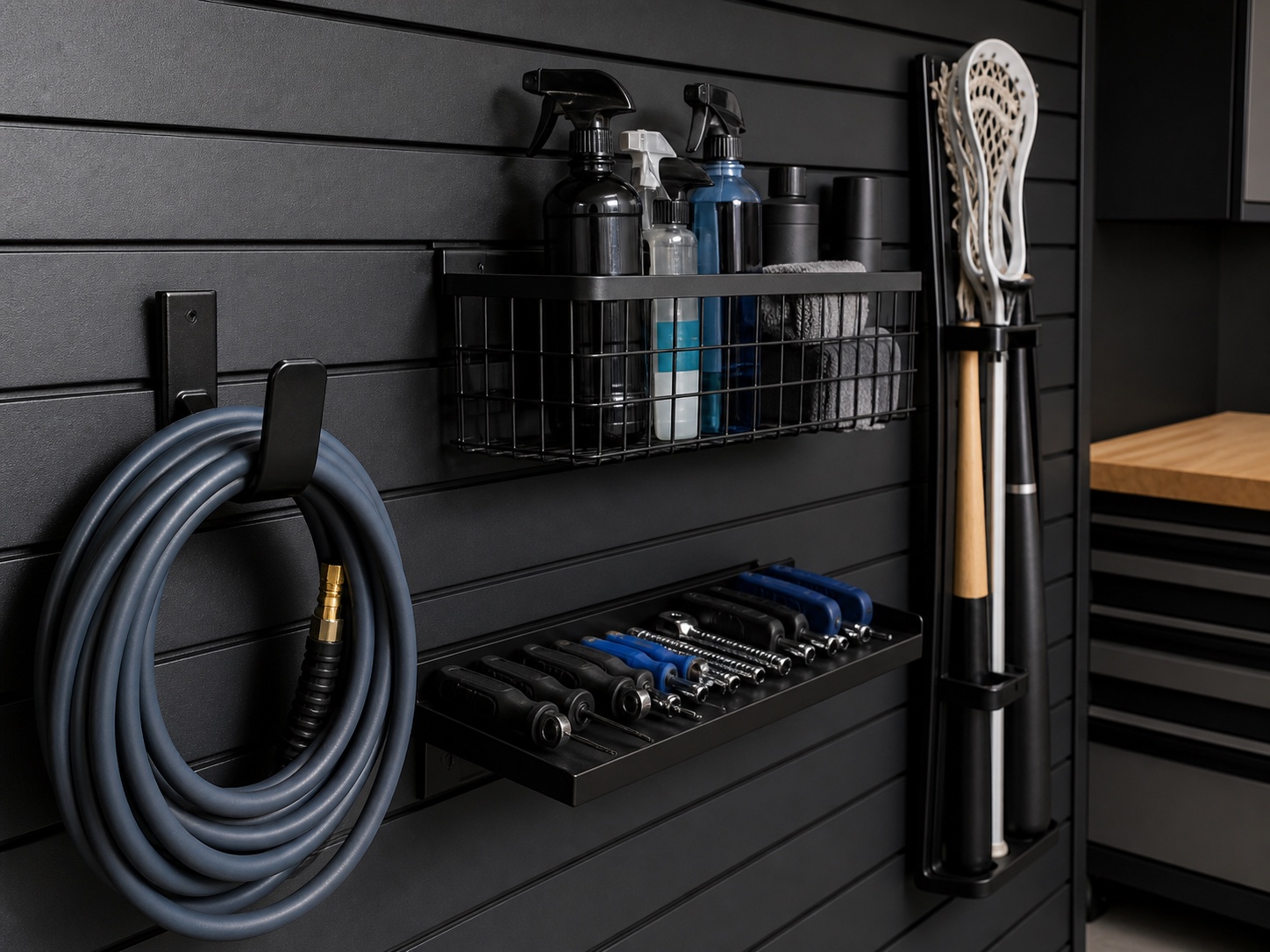
Cabinets conceal visual noise and protect selected contents. Slatwall keeps active equipment visible and adjustable. Overhead and specialty racks move appropriate bulky items away from the floor.
The strongest rooms combine systems deliberately instead of covering every surface with the same product.
Do not bury the building systems
Panels, shutoffs, outlets, controls, drains, windows, ventilation, appliances, plumbing, and inspection points need clear access. Local requirements and manufacturer instructions may define additional working space.
Storage should also anticipate future work. A new opener, electrical circuit, EV charger, lift, door configuration, or lighting system may need the exact zone a rack occupies today.
Design the return routine
A storage system succeeds when items can be returned quickly after use. Assign visible zones, keep compatible accessories consistent, and leave enough empty capacity for seasonal change.
The goal is not to fill every inch. It is to create a room that remains clear after a normal week of use.
- Label categories, not every individual object
- Place active items between knee and shoulder height
- Keep dirty and clean equipment separated
- Review the system after one season
- Preserve expansion capacity
Questions homeowners ask
Quick answers.
Should cabinets be installed before flooring?+
Sequencing depends on the selected floor, cabinet system, anchoring, leveling, desired transitions, and future flexibility. Plan both systems before installing either.
Can overhead racks go above the garage door?+
Only after structure, attachment, door travel, opener hardware, lighting, vehicle clearance, access, and intended loads are verified.
Is slatwall strong enough for bikes?+
Capacity depends on the exact panel, attachment, accessory, bike weight, engagement, and manufacturer instructions—not the word slatwall alone.

Join the discussion.
Ask a garage-planning question or share what you learned. Comments are reviewed before publication.
No published comments yet. Start the conversation.