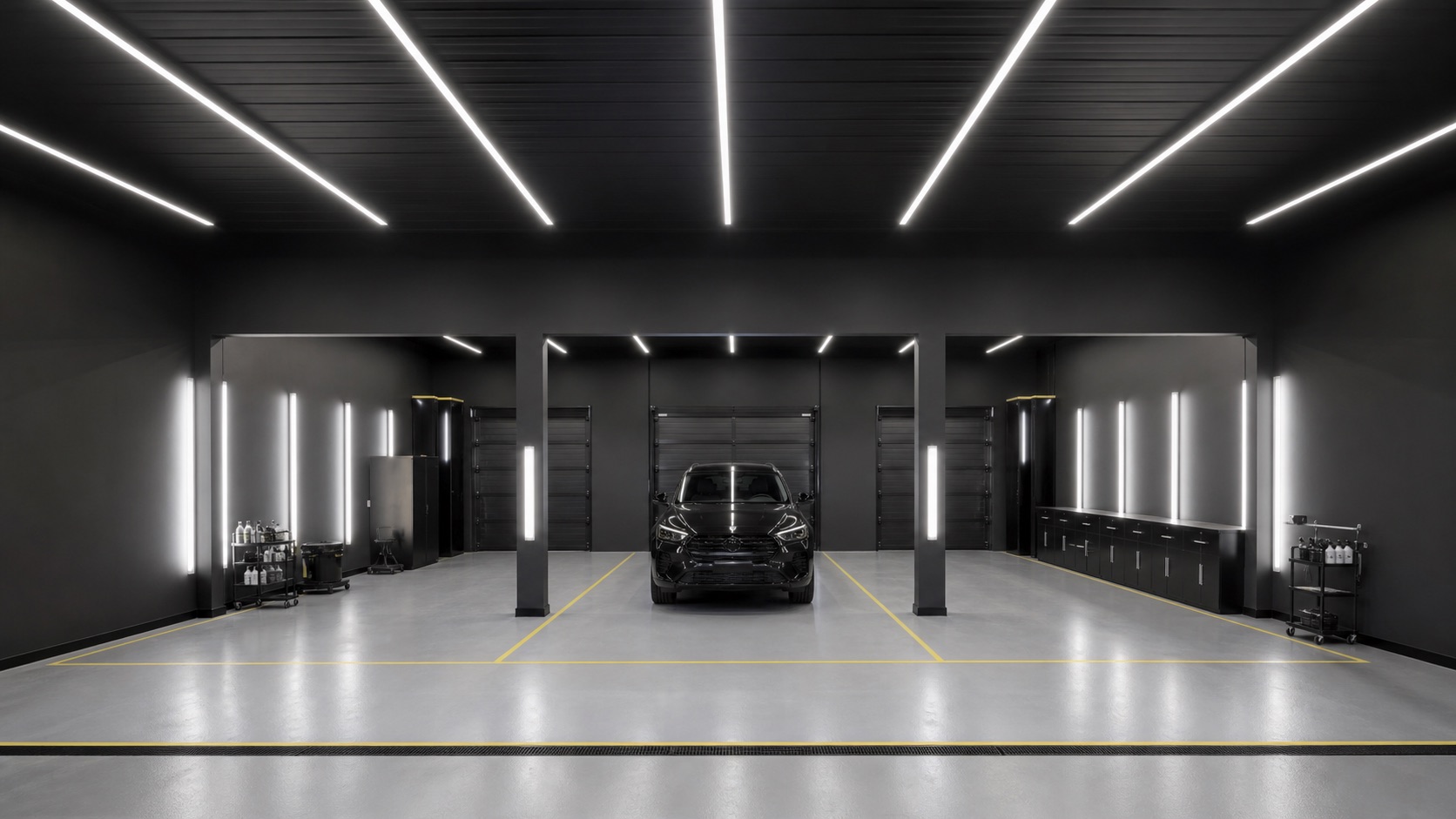
What to remember
- Workflow and downtime should control the renovation sequence.
- Flooring, lighting, storage, doors, power, air, and safety must work as one bay system.
- A focused $12K–$25K phase can solve a clear operational problem.
- Recurring care protects the upgrade and gives future capital work a documented priority.
What this decision actually controls
A small automotive shop cannot absorb a remodel designed like an empty residential room. Every day offline affects appointments, technicians, customer promises, and cash flow.
The planning process should follow a real job through arrival, inspection, lift or bay work, tools, parts, fluids, cleanup, quality control, and customer handoff.
- Vehicle mix, bay count, equipment and working clearances
- Floor condition, traction, chemicals and reopening window
- Inspection light, task light and electrical loads
- Tool, tire, fluid, parts and secure inventory storage
- Doors, air, ventilation, heat, drainage and permit screening
Plan the complete system
Start with the bottleneck that costs time or undermines trust. Complete that phase properly instead of scattering the budget across cosmetic changes.
Build a bay-by-bay schedule with protected preparation, cure, partner work, inspection, equipment reset, and reopening milestones.
What the project review should confirm
The proposal should identify what remains operational, who moves equipment, required shutdown windows, regulated partner scopes, commissioning, warranties, and reopening conditions.
A recurring plan should document floors, doors, lighting, storage, impacts, trip hazards, finishes, and the next capital priorities.
- Existing conditions and eligible preparation
- The selected system, finish, and performance direction
- Access, sequencing, protection, cure, or commissioning
- Care requirements and the limits of the approved scope
Questions homeowners ask
Quick answers.
Can a small shop stay open during renovation?+
Sometimes. Safe phasing depends on dust, fumes, access, cure, utilities, fire/life-safety, traffic separation, and the work being performed.
What should a small shop upgrade first?+
Usually the constraint causing the greatest daily loss: unsafe or failing floor, weak inspection light, disorganized tools, unreliable access, or inadequate utility planning.
How much is recurring shop maintenance?+
Early planning commonly begins around $1,200–$2,000 per year for a compact twice-yearly review and increases with bays, frequency, assets, and included service.
Join the discussion.
Ask a garage-planning question or share what you learned. Comments are reviewed before publication.
No published comments yet. Start the conversation.